
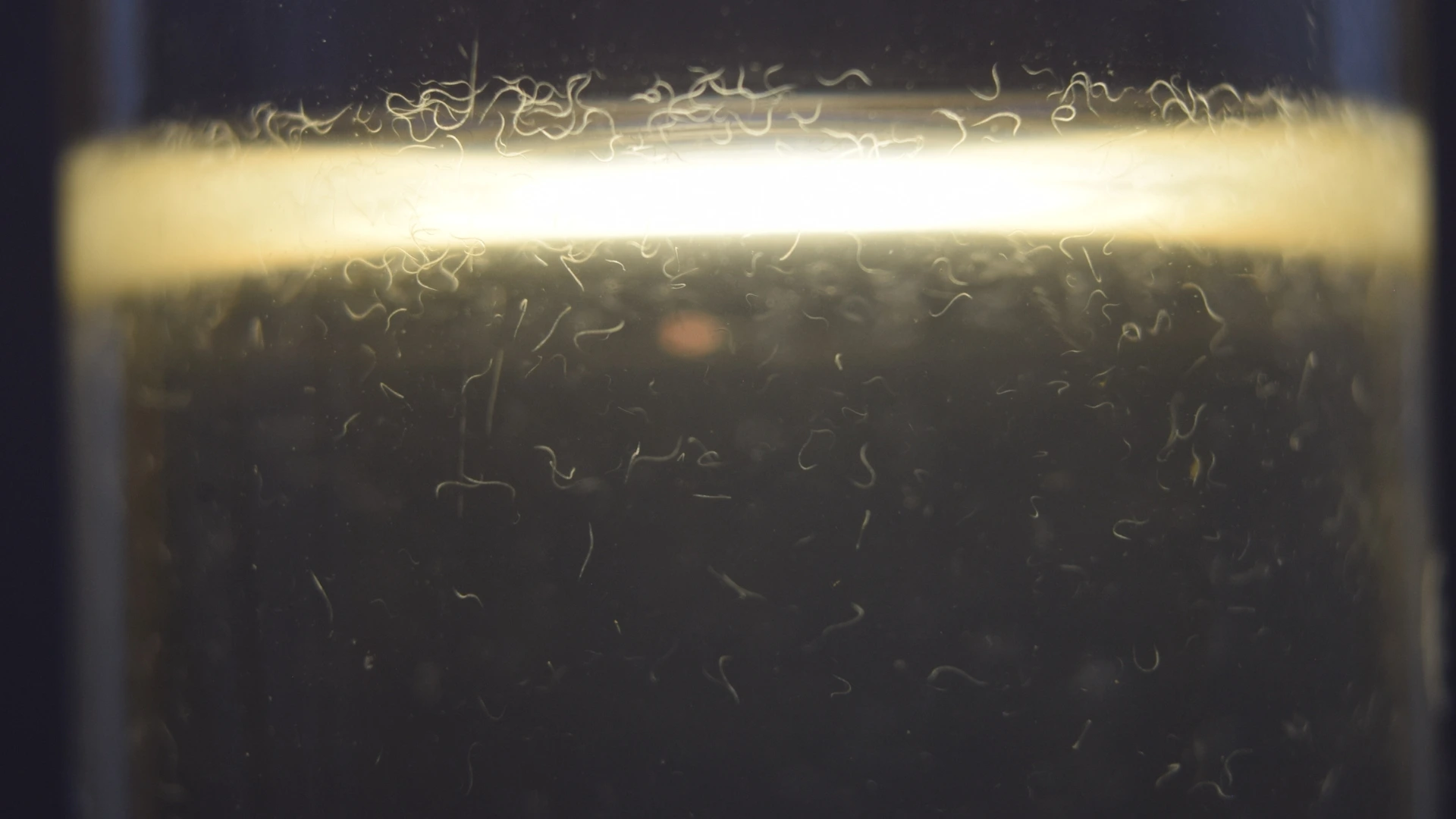
Use vinegar eels (Turbatrix aceti), 1–2 mm nematodes that stay suspended, to feed tiny fry continuously. Start a culture with 1:1 unpasteurized apple cider vinegar and dechlorinated water, apple slices or 0.5–1% sugar, in a glass jar at 20–26°C. Harvest with freshwater migration or a sieve, rinse thoroughly, and match tank parameters. Maintain pH 3–4, refresh food every 3–4 weeks, split cultures biweekly, and aerate lightly if activity drops. You’ll optimize yield and change fry.
Key Takeaways
- Vinegar eels (Turbatrix aceti) are tiny, midwater-swimming first foods that stay suspended, stimulating fry feeding without quickly fouling water.
- Start cultures using 1:1 unpasteurized apple cider vinegar and dechlorinated water in a glass jar; add apple slices or sugar; cover breathable.
- Maintain 20–26°C, dim light, avoid chlorine; refresh apple or sugar every 3–4 weeks; never shake cultures.
- Harvest by freshwater migration using filter floss in a narrow-neck bottle, or sieve and rinse; match temperature, hardness, and pH to fry tanks.
- Maintain productivity: top up vinegar-water to pH 3–4, replace food sparingly, split cultures every 2–4 weeks, and log conditions and yields.
What Are Vinegar Eels and Why They Work for Fry
Because vinegar eels (Turbatrix aceti) are free‑living nematodes that thrive in acidic media, you can culture them easily and harvest them as a reliable first food for tiny fish fry. They measure about 1–2 millimeters long yet only ~50 micrometers wide, and their continuous, midwater swimming triggers feeding in newborn fry. Unlike settling infusoria, they stay suspended for hours in freshwater, giving baby fish prolonged access to live food with minimal fouling. Their cuticle tolerates the osmotic shift from vinegar to tank water, so they remain viable until eaten. Nutritionally, they provide digestible protein, essential amino acids, and lipids suitable for initial growth. The narrow diameter fits small mouth gapes, reducing choking risk. Dose modestly, watch gut fill, and adjust frequency as fry develop. For easy setup in India, consider starting with a Vinegar Eels Live Culture from Springtails.in, which offers express shipping and pest-free, healthy cultures upon arrival.
Supplies and Setup: Starting a Strong Culture
Five inexpensive items get a robust vinegar eel culture started: unpasteurized apple cider vinegar (with the “mother”), dechlorinated water, a live starter culture, a 500–1000 mL glass bottle or jar with a breathable cover, and a carbohydrate source (thin apple slices or 0.5–1% table sugar). Combine vinegar and water 1:1 in the bottle, leaving 30–40% headspace for oxygen. Add 5–10% starter by volume. For culture containment, use glass only, a breathable coffee filter or foam plug, and a spill tray; label date and strain. Add two thin apple slices or dissolve sugar to 0.5–1% w/v. Maintain 20–26°C, dim light, and avoid chlorine. Feeding frequency is low: refresh apple slices or add 0.5% sugar every 3–4 weeks. Do not shake; swirl gently. Daily check lids.
Harvesting Methods Without Adding Vinegar to the Tank
A freshwater-migration or sieve workflow lets you harvest dense vinegar eels without dosing vinegar into your fry tank. For freshwater migration, pack a tight plug of filter floss in a narrow-neck bottle, pour culture below the plug, add dechlorinated freshwater above, and cap. Eels traverse the floss toward oxygen-rich freshwater within 4–12 hours; draw the upper layer with a pipette and feed immediately. For sieve-based harvesting techniques, pour culture through a 27–55 µm mesh or coffee filter, discard vinegar, then rinse the retained eels with several volumes of conditioned water to neutrality. Always match temperature, hardness, and pH to your fry tank conditions to prevent shock. Dose small aliquots; observe fry uptake and water clarity. If cloudy, dilute the concentrate before feeding out slowly.
Maintenance Routines to Maximize Yield and Longevity
After each harvest, reset culture parameters to sustain reproduction and reduce crashes. Top up each bottle with a 1:1 mix of apple cider vinegar and dechlorinated water to restore volume and acidity (target pH 3–4). Replace spent apple slices or add 0.5–1% sugar by volume; don’t overfeed. Maintain 20–24°C, dim light, and wide headspace for passive aeration; avoid bubbling that shears eels. Standardize water conditions by using the same source water and letting chlorine dissipate 24 hours. Split cultures every 2–4 weeks into sterile bottles to prevent senescence and maintain peak density. Keep 3–5 staggered cultures on a rotation. Rinse tools with hot water, then air-dry. As feeding strategies, favor small, frequent carbohydrate additions. Record dates, pH, temperature, and harvest yields for trend analysis.
Troubleshooting Culture Problems and Moving Fry to Larger Foods
When culture performance dips, diagnose systematically: verify pH (target 3–4), temperature (20–24°C), eel activity on the glass, odor (cleanly acidic, not rotten), and clarity (hazy from yeast/bacteria is normal; opaque, foul, or with surface films suggests overfeeding or contamination). If activity drops, aerate lightly, split, refresh 30–50% with 1:1 cider vinegar:water, then re-seed from a robust jar. With culture contamination, cull, disinfect, restart. Advance feeding when bellies fill within 15 minutes; add microworms or brine in microdoses; track fry growth. For a reliable next-step live food, Indian hobbyists can order Microworms Starter Culture through Springtails.in with express shipping and simple culturing instructions.
| Symptom | Likely cause | Corrective action |
|---|---|---|
| No glass swarm | Low O2, low temp | Add gentle aeration; warm to 22–24°C |
| Rotten odor | Bacterial bloom | Cull culture; sanitize; restart |
| Surface film | Overfeeding yeast | Reduce feed; partial refresh |
| Slow fry growth | Food too small | Introduce microworms/BSN; increase density |
Frequently Asked Questions
Are Vinegar Eels Safe Around Children, Pets, and Food-Prep Areas?
Yes, they’re safe; vinegar eels are nonparasitic and harmless to humans. For vinegar eel safety, segregate cultures from food-prep areas, seal containers, sanitize spills, enforce child supervision, and keep pets away to prevent stomach upset.
Do Vinegar Eel Cultures Produce Odors, and How Can I Control Smell?
Yes, you might coincidentally notice mild acidic odors; primary odors sources are vinegar and anaerobic byproducts. For smell reduction, use breathable lids, refresh vinegar, decant regularly, maintain 20–24°C, and restart promptly if sulfurous notes appear.
Can Vinegar Eels Be Used for Marine or Brackish Fish Larvae?
Yes, but only as a short-term starter. For marine fish and brackish fish larvae, you’ll sieve eels, rinse, then acclimate 1.010–1.020 (brackish) or 1.020–1.026 (marine) for 5–15 minutes. Feed immediately; shift to enriched rotifers/copepods next.
What’s the Cost per Month Compared to Microworms or Rotifers?
Right off the bat, you’ll spend about $1–3/month for vinegar eels, $1–2 for microworms, and $10–30+ for rotifers; this cost comparison reflects culturing methods: vinegar-sugar-apple scraps, oatmeal-yeast, versus saltwater, aeration, concentrated algal feed, and lighting.
How Should I Dispose of Old Cultures Responsibly and Legally?
Neutralize old cultures before culture disposal to minimize environmental impact and comply with regulations. Heat to 60–70°C for 30 minutes or add 10% bleach for 30 minutes, strain solids, trash. Consult wastewater guidelines; don’t release.
Conclusion
You’ve built a culture that runs like a microscopic factory: resilient and explosively productive. Feed fry with vinegar eels harvested sans vinegar, and you’ll watch bellies balloon like zeppelins while survival rates soar. Cycle two harvest methods, maintain salinity, oxygen, and temperature, and yield will snowball. When density dips or odor spikes, troubleshoot fast, then graduate fry to larger prey on schedule. Follow the procedure, and your nursery will roar like a jet at takeoff.