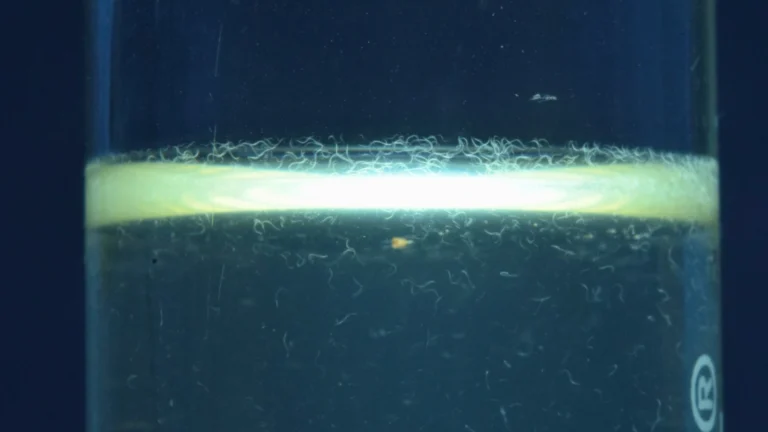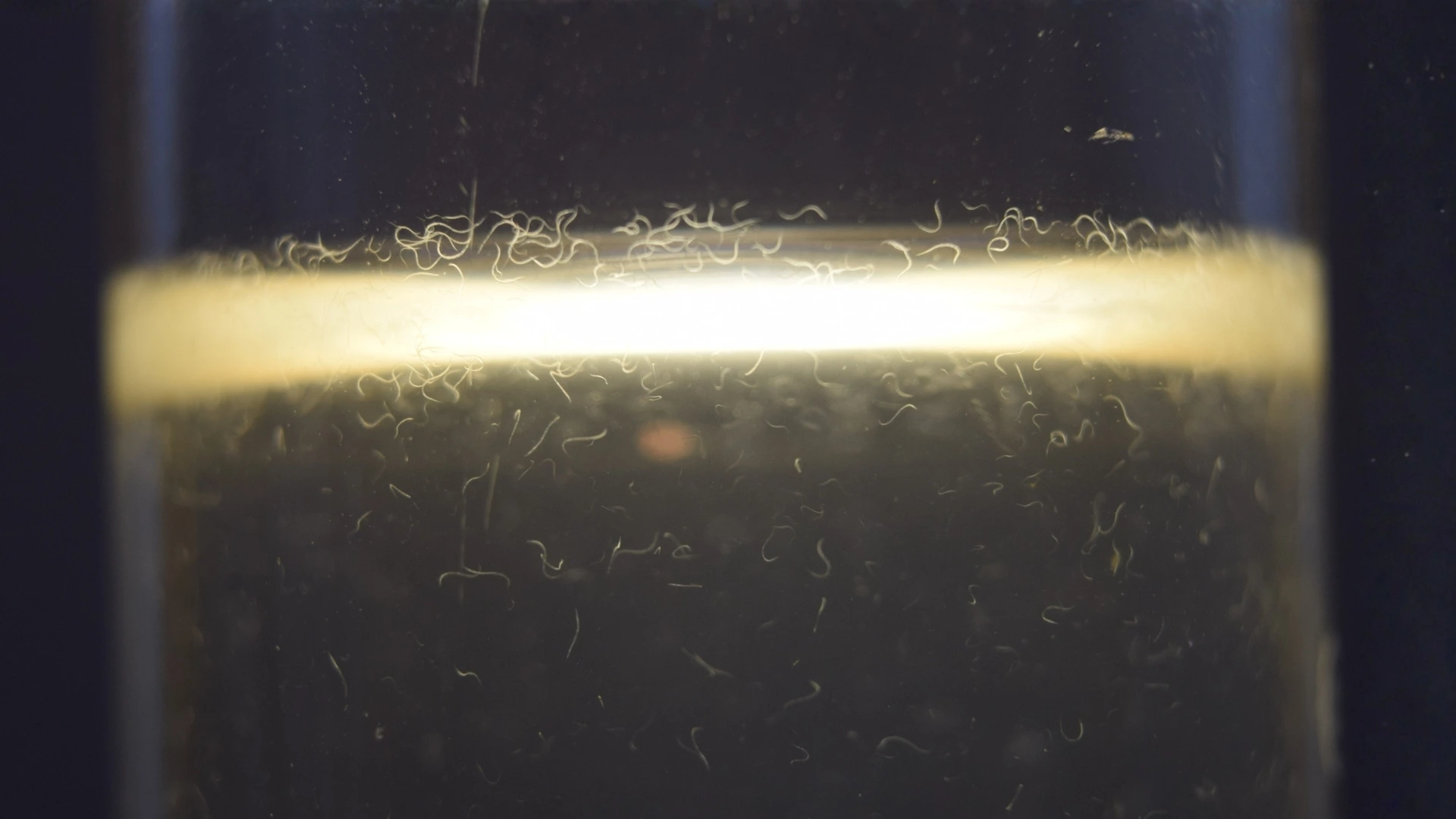
If you breed Bettas, Gouramis, or Rainbowfish, the first 3 days of the free-swimming stage are critical. The fry are often too small to eat Baby Brine Shrimp (BBS).
If you feed them egg yolk, you ruin the water quality. If you feed them powdered dry food, they often ignore it.
Vinegar Eels (Turbatrix aceti) are the solution. Unlike Microworms which sink, Vinegar Eels swim at the surface—right where your baby Bettas hunt.
Quick Comparison: Vinegar Eels vs. Microworms
Which live food is right for your fry?
| Feature | Vinegar Eels (Turbatrix) | Microworms (Panagrellus) |
|---|---|---|
| Size | Tiny (1-2mm) | Small (1-3mm) |
| Movement | Swims at Surface | Sinks to Bottom |
| Survival in Tank | 3-4 Days | 12-24 Hours |
| Maintenance | Zero (Harvest monthly) | High (Harvest weekly) |
| Best For | Newborn Betta/Gourami | Guppy Fry / Corydoras |
Don’t let your fry starve.
Buy a Vinegar Eel Starter Culture — The “Set and Forget” live food.
1. Setting Up a Culture in India (The “Budget” Method)
Many Western guides say you must use organic Apple Cider Vinegar (ACV) with the “Mother.” In India, a bottle of imported Bragg’s ACV costs ₹600+. You do not need to spend that much.
The Indian Recipe:
You can use cheap synthetic vinegar (White Vinegar) if you provide the nutrients.
- The Mix: 50% Dechlorinated Water + 50% White Vinegar (or cheap Apple Cider Vinegar).
- The Nutrient: Add 2-3 slices of Apple (with skin) and a teaspoon of sugar.
- Why? The apple rotting in the vinegar creates the bacterial bloom (Mother) that the eels eat.
- The Container: A glass bottle with a narrow neck (like a wine, ketchup, or syrup bottle) is best.
- The Starter: Pour in your Vinegar Eel Culture.
2. How to Harvest (The “Filter Trick”)
Crucial Warning: Never pour raw vinegar into your fry tank. It will crash the pH and kill your fry.
The “Long Neck” Method (The Pro Way):
This method separates the worms from the acid using simple physics.
- Fill: Top up your culture bottle with fresh vinegar mix until it reaches the bottom of the neck.
- Block: Push a piece of Filter Wool (or a cotton ball) into the neck, just touching the liquid.
- Pour: Gently pour fresh freshwater on top of the cotton/wool.
- Wait: Wait 4-8 hours.
- The Result: The eels will swim up through the cotton to get to the oxygen in the fresh water. The vinegar stays trapped below.
- Harvest: Use a pipette to suck out the clean, vinegar-free worms from the top and squirt them directly to your fry.
3. Biology & Lifespan
- Scientific Name: Turbatrix aceti
- Diet: Acetobacter bacteria and Yeast.
- Reproduction: Viviparous (Live-bearing). A female produces up to 45 babies every 8-10 days.
- Hardiness: They are incredibly tough. They can survive pH ranges from 1.6 to 11. Unlike Microworms which crash in heat, Vinegar Eels are stable in Indian room temperatures.
Frequently Asked Questions (FAQ)
Q: Can I use commercial vinegar brands found in Indian markets?
A: Yes, but most are pasteurized (bacteria-free). You must add apple slices to re-introduce the bacteria, otherwise, the eels will starve.
Q: Does the culture smell?
A: It smells like apples and pickles. It is a clean, fermented smell, unlike the “yeasty” smell of Microworms or the “rotten” smell of Grindal Worms.
Q: How often do I change the vinegar?
A: Almost never. Simply top it up with 50/50 water and vinegar every few months as it evaporates. Replace the apple slices once every 6 months.
Q: Can I feed them to adult fish?
A: No. They are too small. Adults will ignore them. They are strictly for the first 1-3 weeks of a fry’s life.
Conclusion
If you are serious about breeding surface-dwelling fish, Vinegar Eels are mandatory. They bridge the gap between “egg yolk” and “Baby Brine Shrimp.”
Get your culture started before your fish spawn.
Order Vinegar Eels Here
One culture lasts for years.