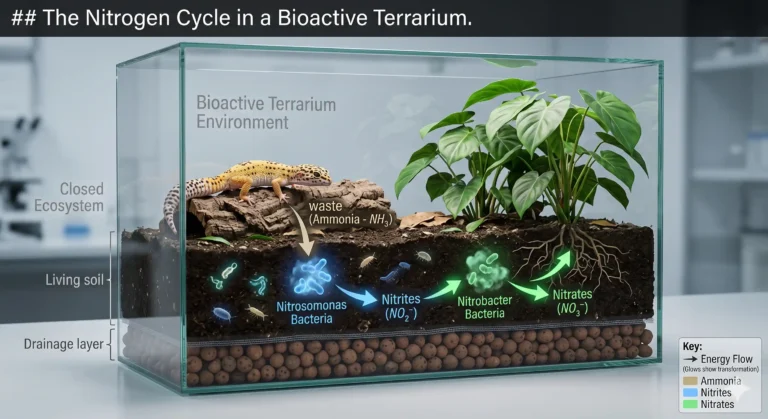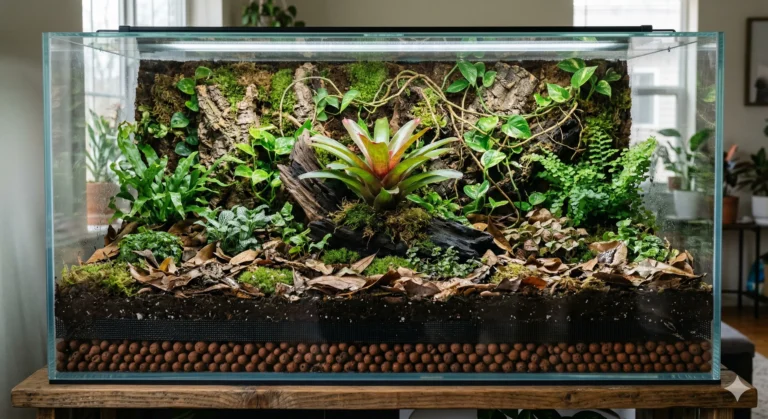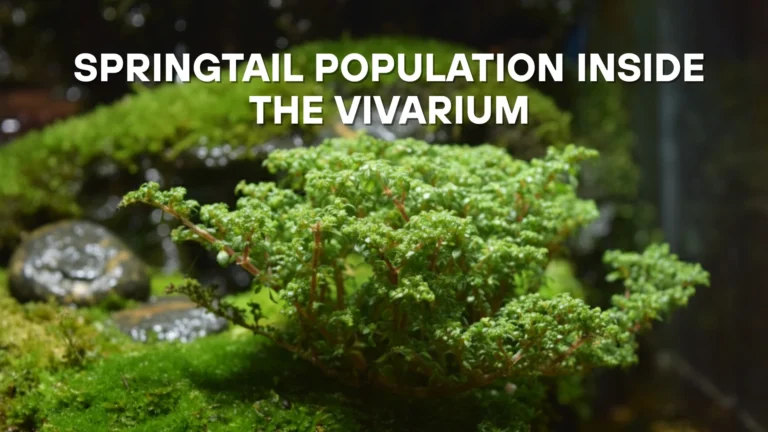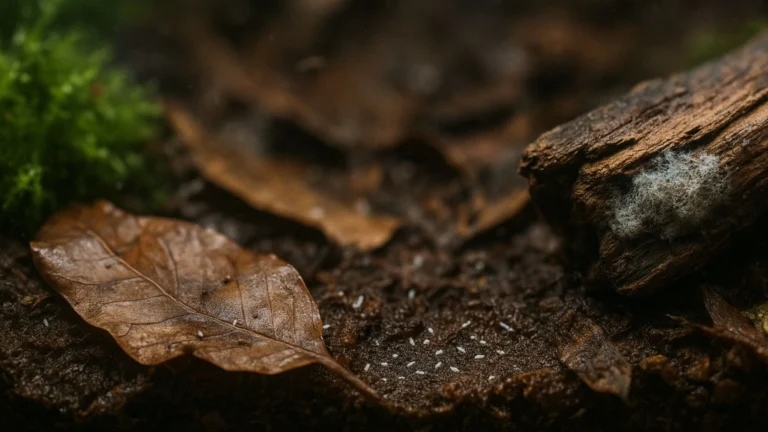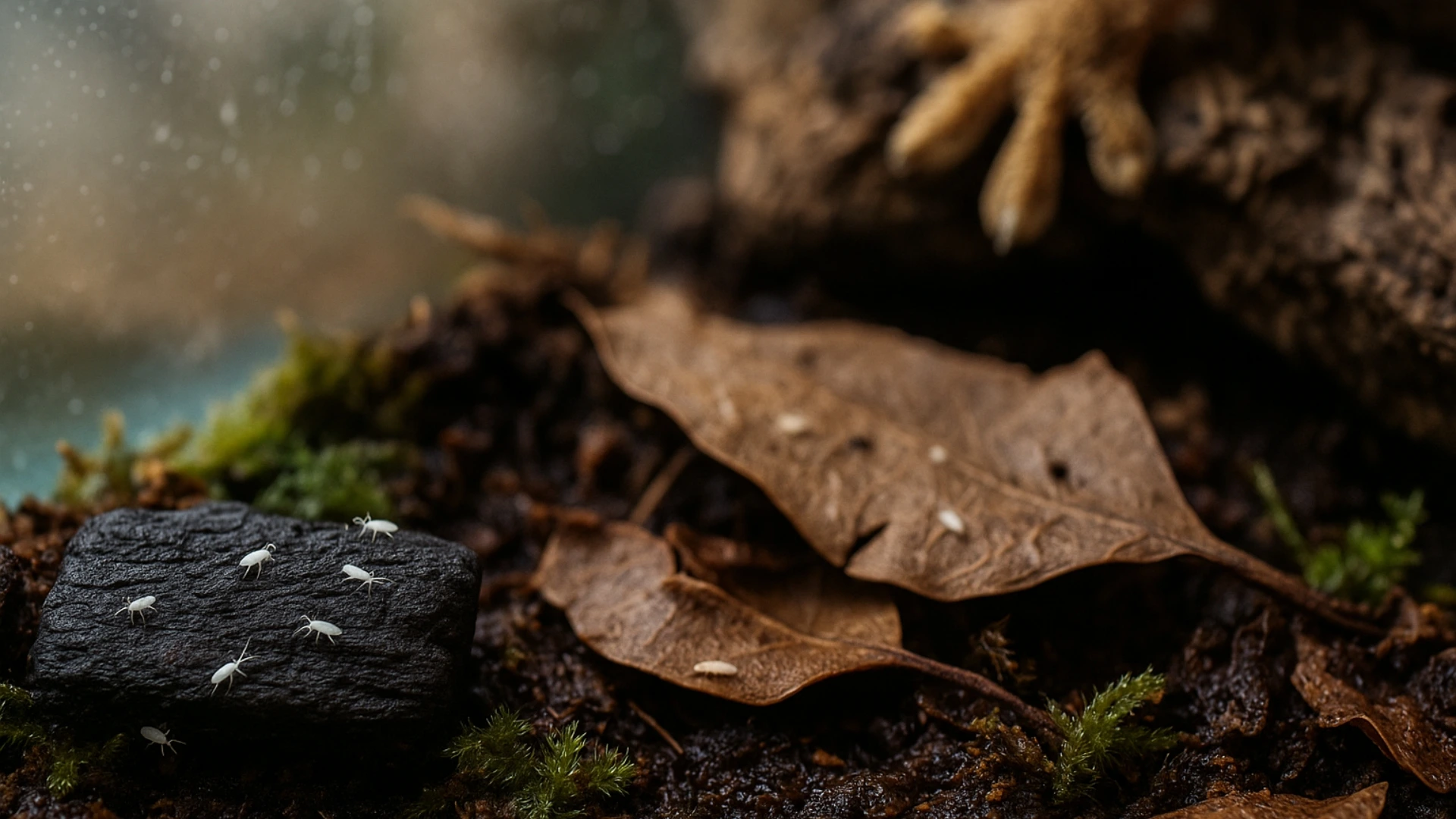
Use springtails (Folsomia candida, Sinella curviseta) as micro-feeders and cleanup crews. For dart frogs, especially Ranitomeya and young Dendrobates, they trigger strong feeding and process waste. With tropical geckos, keep a moist refuge and yeast films to boost reproduction. In humid snake enclosures, they break down shed and mold, stabilizing humidity. For humid tarantulas, they clear leftovers without disturbance. Culture on damp clay, avoid dryouts, and fine-tune moisture. More species cues and maintenance tips await.
Key Takeaways
- For dart frogs, springtails serve as micro‑feeders and cleanup, ideal for Ranitomeya and juveniles; add small portions daily to support froglets and recovering adults.
- For tropical geckos, springtails boom at high‑70s to low‑80s °F; keep a consistently moist refuge and avoid overfeeding yeast to prevent crashes.
- In humid snake vivariums, springtails reduce waste and mold while aerating substrate; use tropical species, seed lightly, and adjust moisture based on population trends.
- For humid tarantulas, springtails consume leftovers, feces, and mold; add leaf litter, mist lightly, and use Folsomia candida or Sinella curviseta.
- Culture springtails on damp calcium‑rich clay with light yeast, allow weeks to multiply, then harvest soil‑free with a collection riser; avoid pesticides and dryouts.
Springtails for Dart Frogs
Routinely, springtails serve as both micro‑feeder and cleanup crew for dart frogs in bioactive setups. You leverage their high protein, tiny size, and constant movement to trigger strong feeding responses in newly morphed froglets, especially Ranitomeya feeding and Oophaga juveniles. They’re readily taken by Ranitomeya variabilis, R. imitator, Epipedobates anthonyi, and young Dendrobates tinctorius, and uneaten individuals remain harmless while they process waste, mold, and shed, stabilizing nutrient cycles. Culture Temperate White Springtails (Folsomia candida) on calcium‑rich clay to add trace minerals, keep media damp—not wet—and offer small yeast feedings. Let cultures reproduce for several weeks before harvesting to guarantee a sustainable supply. For keepers in India, pest‑free cultures with express shipping help ensure reliable, clean starter populations. A 3D-printed Springtail Collection Riser enables soil‑free harvesting, letting you transfer feeders without charcoal or clay entering the tank. Tap or pour portions into the vivarium daily for fragile froglets, and for recovering, underweight adults. Monitor cultures to prevent crashes.
Springtails for Geckos
Leveraging springtails in gecko vivariums gives you a dual‑purpose cleanup crew and micro‑feeder that aligns well with tropical species. In bioactive builds, they consume mold, decaying leaves, and waste, cutting harmful bacteria and supporting plant roots by aerating substrate. For crestie integration, tropical species such as Thai Reds thrive at high‑70s to low‑80s°F, matching common arboreal husbandry targets. Under these conditions, tropical springtails exhibit rapid reproduction, with populations often doubling within weeks. Maintain a consistently moist refuge—leaf litter and sphagnum over charcoal or clay/Terra mixes—so eggs don’t desiccate. Avoid enclosure dryouts; even brief dehydration crashes populations. Spot‑feed with yeast films on charcoal or decomposing leaf matter, but don’t overfeed, which depletes oxygen. Springtails also offer safe, supplemental prey for small or juvenile geckos, encouraging foraging. Pairing with isopods is effective; provide cork bark to stabilize microhabitats and populations. For sourcing, choose pest-free cultures with express shipping from Springtails.in to seed bioactive gecko enclosures reliably.
Springtails for Snakes
Why add springtails to a snake terrarium? They break down shed skin, feces, and missed prey, keeping waste low and humidity stable—both support clean sheds and shedding assistance. By grazing mold and fungi, they provide respiratory protection, especially for tropical species that need higher humidity. Their movement aerates substrate, improving gas exchange and moisture retention, which benefits boas, pythons, and other humidity-tolerant snakes and their plants in bioactive setups. Their population trends can act as a bioindicator of enclosure balance, signaling when moisture, ventilation, or feeding need adjustment.
Set them up like any cleanup crew: choose tropical springtails for warm, humid enclosures; use bioactive soil with charcoal or clay; and you keep moisture consistent with misting or a humidifier. Avoid pesticides and substrate sterilants. To seed safely, source pest-free cultures from eco-focused suppliers in India with express shipping to minimize transit stress. Seed established enclosures lightly, monitor moisture, and remove excess mold. Skip arid species; springtails crash in dry tanks quickly.
Springtails for Tarantulas
While tarantulas ignore them, springtails function as a true clean-up crew, consuming only decaying matter—leftover prey, feces, shed exuviae, and mold—to lower pathogen and mold loads in bioactive enclosures.
Use them only with humid tarantulas; desert species like Tliltocatl albopilosus won’t support populations. To enhance culture vigor and reproduction, a nutrient-rich formulation containing glycogen, yeast, and essential minerals can be lightly dusted onto the substrate to catalyze steady growth.
| Parameter | Recommendation | Notes |
|---|---|---|
| Humidity | 70–90% RH | Maintain consistent moisture, avoid waterlogging. |
| Substrate | Deep mix with leaf litter | Provides food, refuge, gas exchange. |
| Species | Folsomia candida, Sinella curviseta | Match to enclosure temperature. |
| Feeding | Detritus; add fish flakes sparingly | Remove uneaten protein if mold spikes. |
Choose Folsomia candida or Sinella curviseta to match moisture. For colony maintenance, add leaf litter; mist lightly; supplement fish flakes when waste is scarce. Springtails don’t disturb feedings and provide indirect molting assistance by suppressing mold near hides.
Frequently Asked Questions
Are Springtails Safe for People With Mold Allergies?
They’re conditionally safe; if you’ve mold allergies or respiratory sensitivity, limit exposure and Allergen transfer from mold-associated springtails. Keep habitats drier, fix leaks, ventilate, dehumidify, remove mold, consider cedar oil, seek remediation for persistent populations.
How Do I Prevent Springtails Escaping Into Homes?
You’ll prevent escapes by sealing lids tightly, screening vents with fine mesh or tape, and plugging gaps. Use taller containers, employ Physical barriers like poly-fill or moats, and practice Substrate management: ideal moisture, controlled feeding.
Can I Mix Different Springtail Species in One Culture?
Yes, you can mix springtail species. You’ll see species compatibility and habitat partitioning. Provide substrate layers, moisture, 68–78°F, and detritus-based feeding. Monitor population balance, prevent mites, adjust ventilation; dominant breeders may outcompete others without support.
What Are Signs of a Springtail Culture Crashing?
Like a Victorian Wi‑Fi outage, you’ll spot dwindling activity and mass mortality. See booming mold, mites, anaerobic odor, excess condensation or dryness, floating corpses, stalled reproduction, lethargy. Check temperature, ventilation, water levels, and feeding immediately.
Do Springtails Introduce Parasites or Harmful Mites to Enclosures?
Springtails don’t introduce parasites or harmful mites. Evidence shows they compete with mites and reduce outbreaks. You minimize Pathogen transmission with Quarantine protocols: seed cultures, control humidity, spot-clean, and inspect reptiles and amphibians during husbandry.
Conclusion
You’ve seen how springtails fit each niche: they aerate humid dart frog substrates, patrol gecko bioactive soils, manage spot-cleaned snake tubs, and safeguard tarantula burrows from mold. By coincidence, their moisture and temperature sweet spots align with these pets’ husbandry ranges, so you boost microfauna while honoring species needs. Seed cultures, monitor waste loads, and recalibrate feeders as populations swell. Do that, and you’ll close nutrient loops, stabilize enclosures, and reduce pathogens without sacrificing welfare.