You should match springtail clades to your room climate and substrate. Temperate Isotomidae/Hypogastruridae tolerate wide diel amplitudes, intermittent moisture, and mineral‑rich, stratified litter. Tropical Entomobryidae, Paronellidae, and Symphypleona are stenothermal, humidity‑dependent, and excel in warm, stable enclosures with humic horizons and continuous water films. Temperate taxa grow slower and self‑limit; tropical lineages boom with heavy misting and litter. For dart frogs and micro tanks, tier substrates to partition niches—then learn to pair taxa with setups.
Key Takeaways
- Match room climate: temperate springtails tolerate fluctuating cool rooms; tropical lineages need warm, stable, humid enclosures.
- Substrate: temperate epedaphic taxa prefer aerated, fibrous, intermittently moist mixes; tropical euedaphic taxa favor fine, humic, continuously moist layers.
- Growth and control: tropical species boom under heavy misting and rich inputs; temperate species grow slower and tolerate leaner, drier cycles.
- Enclosure type: micro tanks and variable terraria suit temperate Isotomidae/Hypogastruridae; tropical Entomobryidae/Symphypleona excel in rainforest vivaria and paludaria.
- For frogs and sanitation: both aid mold suppression and prey provisioning; match taxa to misting habits and microhabitat tiering to avoid overgrowth.
Key Differences at a Glance
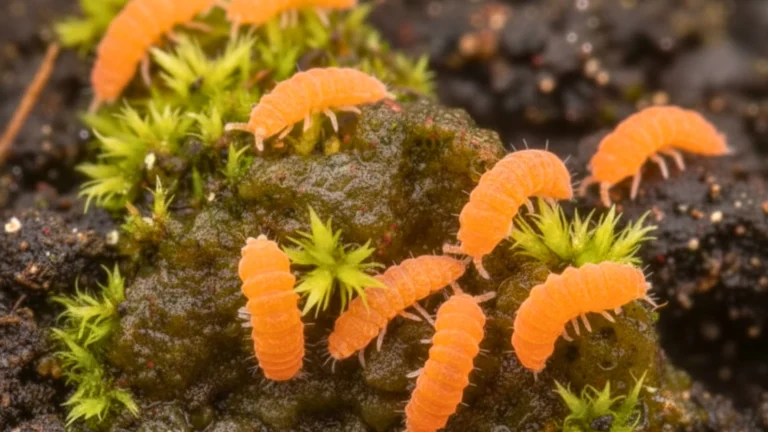
Although both belong to Collembola, temperate and tropical assemblages diverge in community structure, functional traits, and phylogenetic representation. You’ll encounter temperate communities dominated by Isotomidae and Hypogastruridae with edaphic specialists exploiting leaf litter horizons, whereas tropical inventories show higher alpha diversity with Symphypleona and Paronellidae frequent on woody debris and bryophytes. Habitat requirements differ: temperate taxa often favor mineral-rich soils and structured litter stratification; tropical taxa partition microhabitats across canopy litter, decaying wood, and epiphyte mats. Dietary preferences also shift: temperate lineages skew detritivorous-fungivorous, grazing hyphae and microalgae; tropical lineages include more algivores and microbivores exhibiting selective feeding on biofilms. Morphological syndromes mirror niches—furcula development, antennal sensilla arrays, and tibiotarsal chaetotaxy vary, influencing locomotion, resource acquisition, and community assembly in your vivarium or paludarium.
Climate Tolerance: Temperature and Humidity Ranges
Because thermal and hydric niches track lineage and habitat, temperate assemblages (e.g., Isotomidae, Hypogastruridae) show broader thermal breadth and greater cold tolerance via cryoprotective strategies and supercooling, while tropical-dominant clades (e.g., Symphypleona, Paronellidae) remain more stenothermal and strongly humidity dependent. You can align taxa to your enclosure’s temperature extremes and humidity fluctuations. Temperate lineages tolerate wider diel amplitudes, episodic chill, and recover after freeze–thaw. Tropical forms perform best within narrow mesothermal bands and decompensate under vapor pressure deficits. Set stable, lineage-appropriate setpoints and avoid thermal shocks. Monitor actual microclimate with calibrated sensors and adjust proactively, seasonally.
| Clade | Typical tolerance |
|---|---|
| Isotomidae/Hypogastruridae | ~5–28°C operative range; brief survival below 0°C with supercooling; moderate RH flexibility |
| Symphypleona/Paronellidae | ~20–26°C ideal; stress above 28–30°C; require high RH and minimal VPD |
Substrate and Moisture Preferences
Two axes define substrate and moisture niches across Collembola lineages: depth/particle structure and water-film continuity. Temperate Entomobryidae exploit aerated, fibrous substrate composition with intermittent films; tropical Neanuridae favor humic, fine particulates sustaining continuous boundary layers. You’ll optimize moisture retention by matching pore-size distribution to cuticular permeability and ventral tube function. Epedaphic taxa tolerate oscillations; euedaphic Onychiuridae require capillary-stable horizons. In mixed vivaria, stratify layers to segregate guilds and reduce competitive exclusion. Avoid anaerobic pockets that collapse microbe-based provisioning.
- Use leaf litter over bark to support epedaphic grazing microflora.
- Add clay-rich loam to stabilize films for euedaphic taxa.
- Maintain 60–80% water-holding capacity in temperate zones.
- Keep tropical microhabitats near saturation without free pooling.
- Refresh calcium-rich grit for exoskeletal ion exchange.
Reproduction, Growth, and Population Control
You’ll compare reproductive triggers in temperate vs. tropical Collembola, evaluating photoperiod- and temperature-mediated spermatophore deposition, diapause induction, humidity thresholds, and clonal frequency (parthenogenesis) reported in field and lab cohorts. You’ll quantify growth-rate contrast via instar duration, molt frequency, degree-day accumulation, and generation time, noting diapause-prolonged ontogeny in temperate taxa and accelerated cycles in tropical lineages. You’ll evaluate population control using density-dependent models (r vs. K), with interventions targeting resource pulses and moisture (substrate drying, ventilation), plus biocontrol via predatory Acari and microbial antagonists supported by empirical trials.
Reproductive Triggers Compared
Although temperate and tropical collembolans share conserved reproductive modes (spermatophore deposition, oviposition, and indeterminate growth via repeated molts), their proximal triggers diverge with climate: in temperate taxa (e.g., Hypogastruridae, Isotomidae), photoperiod and thermal thresholds synchronize maturation, induce reproductive diapause, and time egg-laying to warm, moist intervals, whereas in tropical lineages (e.g., Entomobryidae, Sminthuridae), rainfall-driven humidity pulses and resource influxes (fresh litter and microbial blooms) primarily cue courtship and oviposition. You can tune environmental triggers to direct reproductive behavior and maintain yields.
- Set photoperiod (short-day suppresses, long-day permits) for temperate clades.
- Keep night/day thermal amplitude; brief chills cue diapause termination.
- Modulate relative humidity; 90–100% spikes stimulate tropical mating.
- Pulse feed yeast or leaf litter to mimic microbial blooms.
- Provide refugia; eggs desiccate without boundary-layer water.
Growth Speed Contrast
While tropical Entomobryidae and Sminthuridae attain maturity rapidly under aseasonal warmth and saturated air, temperate Hypogastruridae and Isotomidae develop more slowly and often insert diapause, stretching cohort duration and lowering realized voltinism. In your bioactive enclosure, you’ll observe accelerated growth rate, compressed development stages, and shorter intermolt intervals in tropical taxa when temperatures hold near 24–26°C with high RH. Eggs hatch faster, juveniles pass instars quickly, and adults commence oviposition sooner. Temperate lineages exhibit temperature-dependent developmental plasticity; cooler regimes prolong oogenesis, extend instar series, and increase time to sexual maturity. Empirical rearing trials show Q10 effects near 2–3 for somatic growth and embryogenesis. Diet quality matters: yeast- and mold-rich substrates boost assimilation efficiency in Entomobryidae, whereas Hypogastruridae maintain slower, conservative growth trajectories under constraints.
Population Control Strategies
Because population growth in Collembola tracks temperature, moisture, and diet, effective control hinges on modulating fecundity and generation time differently across taxa: Entomobryidae and Sminthuridae amplify rapidly under warm, saturated conditions and high-quality fungal/yeast diets, whereas Hypogastruridae and many Isotomidae respond more slowly and tolerate leaner substrates. You tune abiotic drivers and resource quality to regulate cohort recruitment while preserving ecological balance.
- Lower temperature setpoints and ventilation to extend generation time in tropical Entomobryidae.
- Reduce yeast/fungal rations; favor cellulose to depress clutch size across lineages.
- Impose periodic drying cycles for Sminthuridae; maintain stable, lean humus for Hypogastruridae.
- Seed predatory mites sparingly to cap surges without collapsing population dynamics.
- Harvest adults during peak eclosion; retain juveniles to stabilize age structure.
Calibrate by clade; adjust incrementally.
Best Pairings: Isopods, Frogs, and Common Tank Setups
Given their complementary trophic roles, springtails (Collembola) pair reliably with isopods (Oniscidea) and small anurans when you match clade-appropriate climate and husbandry. For isopod pairings, temperate springtails integrate well with Armadillidium vulgare, A. nasatum, and Porcellio scaber in leaf-littered forest microcosms; tropical collembolans suit Trichorhina tomentosa, Porcellionides pruinosus, and Cubaris spp. in humid vivaria. You’ll gain synergistic detritivory, myco-/bacterivory, and soil bioturbation, accelerating fecal pellet comminution and suppressing mold. In addition, incorporating species like Folsomia candida in Indian climates can enhance the ecological dynamics of your setup, providing a robust response to varying moisture conditions. This species thrives in warmer temperatures, making it an excellent choice for climates where humidity fluctuates. Their presence can further boost the decomposition process, enriching the soil with essential nutrients.
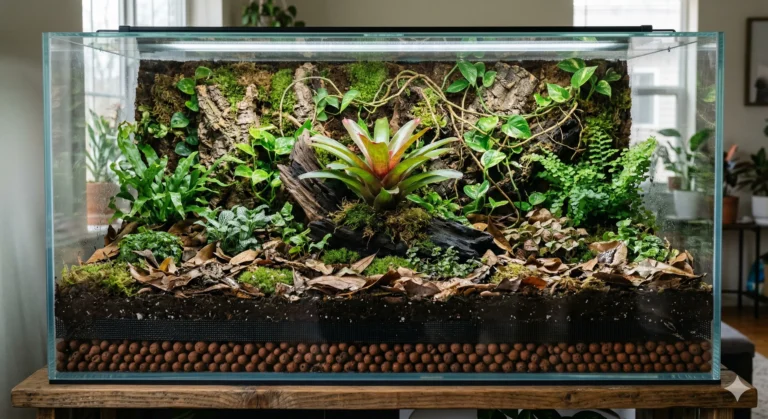
Regarding frog compatibility, Dendrobatidae and small Craugastoridae benefit from persistent microfaunal prey and sanitation, while avoiding microarthropod overabundance. Provide vertical refugia, mixed particle substrates, and bark shelters to spatially partition inquilines and reduce disturbance to anurans during foraging. Common bioactive setups include forest-floor vivaria, riparian paludaria margins, and bromeliad-centered mesocosms. Leaf litter promotes natural stratification.
Choosing for Your Space: Room Climate, Watering Habits, and Enclosure Size
Although springtails occupy many niches, you’ll choose taxa by matching their thermal and hygrometric tolerance, microhabitat tier, and body size to your room climate, watering cadence, and enclosure volume. Additionally, it’s important to consider the specific needs of the organisms that will share their environment, as springtails in bioactive vivariums play a crucial role in nutrient cycling and soil health. Ensuring that their population remains stable and thriving will contribute to a self-sustaining ecosystem. Regular monitoring of humidity and temperature levels can help maintain the ideal conditions for both the springtails and the inhabitants of the vivarium.
- For cool, fluctuating rooms, temperate Isotomidae (euedaphic) tolerate 16–22°C and episodic drying, stabilizing soils between waterings.
- In warm, stable rooms, tropical Entomobryidae (epedaphic) thrive at 22–26°C with high RH, rapidly processing molds on leaf litter.
- If you mist sparingly, select larger-bodied Neanuridae; they resist desiccation but reproduce slowly, preventing booms in nano enclosures.
- Heavy misting favors Sinella/Lepidocyrtus; high fecundity boosts cleanup in bioactive vivaria >20 L.
- For micro tanks, prioritize small-bodied Folsomia candida; for paludaria, mix tiers to partition niches.
This alignment maximizes springtail benefits and habitat customization while avoiding population crashes, decomposition or fouling.
Frequently Asked Questions
Can Temperate and Tropical Springtails Be Mixed in One Culture?
Yes, you can co-culture them, but you’ll need to assess species compatibility. Different Collembola taxa (e.g., Folsomia vs. Sinella) occupy thermal niches; mixing cultures risks competitive exclusion, altered population dynamics, and die-offs under temperature-humidity regimes. It’s important to monitor the interactions between the species closely to identify any signs of stress or competition. For instance, variations in sinella coeca plant features can influence the adaptability and success of the co-cultured taxa. Considering these factors will help maintain a stable environment that supports biodiversity while minimizing negative impacts on the respective populations.
How Do You Quarantine New Springtail Cultures to Prevent Mites?
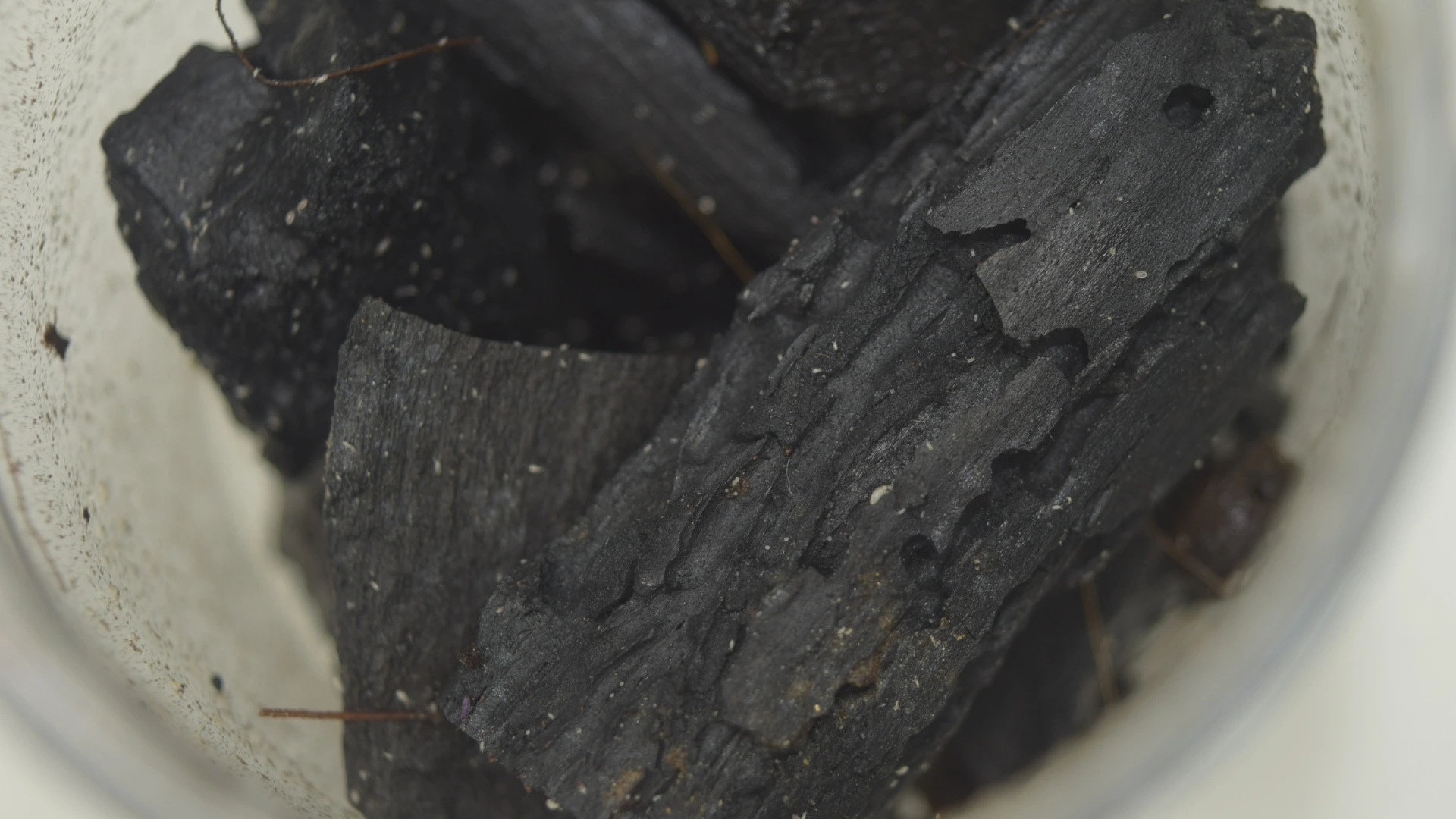
Treat quarantine like an airlock: you’ll isolate new Collembola cultures 3–4 weeks in sterile charcoal, restricted airflow. Implement quarantine procedures for mite prevention: regular stereomicroscope checks for Acari, minimal yeast, barriers, replace mesh, discard contamination.
What’s the Best Method to Seed a Vivarium With Springtails?
You’ll seed a vivarium by inoculating substrate with Collembola (e.g., Folsomia candida) on charcoal. Use sterile leaf litter. Employ seeding methods: slurry and dry sprinkle. Maintain ideal conditions: 22–25°C, 80–95% RH, microhabitat refugia, inoculum density.
Are Springtail Escapes Likely, and Can They Infest a Home?
Don’t worry—escapes are uncommon, and they won’t infest your home. Collembola (springtails) require high humidity; HVAC dryness limits springtail behavior and reproduction. As detritivores, they lack structural pest traits; IPM pest control (dryness, sealing) suffices.
How Should Springtails Be Shipped or Transported During Extreme Temperatures?
Ship Collembola in insulated, safe packaging with phase-change packs buffering temperature fluctuations. You’ll use vials with moist substrate; prioritize overnight delivery, avoid freezing or overheating, and acclimate on arrival to reduce shock and mortality documented.