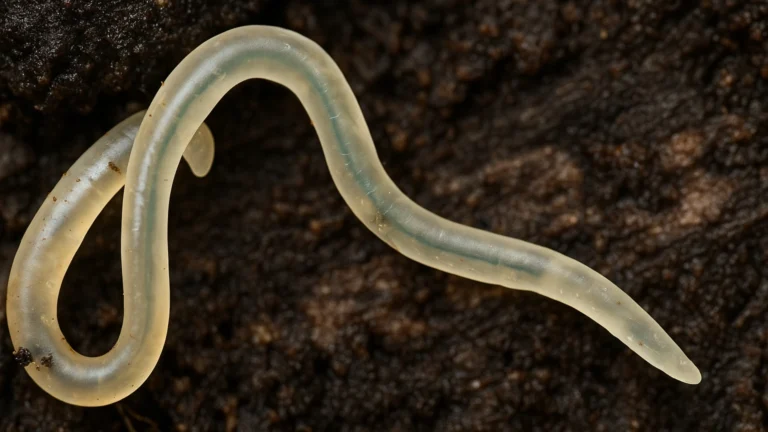
You’ll witness remarkable population growth when you maintain ideal conditions around 20°C. Grindal worm cocoons hatch in 3-4 days, producing 1-2mm juveniles that reach sexual maturity within 16 days at full 10mm length. Each hermaphroditic adult produces multiple cocoons containing 9-25 embryos, enabling your biomass to double every 3-4 days. Their compressed 28-day generation time and overlapping reproductive cohorts create exponential expansion, making them exceptionally efficient live feed cultures for aquaculture applications. Understanding these dynamics reveals the specific management techniques that maximize your yield.
Key Takeaways
- Grindal worms reach sexual maturity in approximately 16 days at optimal temperatures around 20°C, producing cocoons containing 9-25 eggs.
- Cocoon hatching occurs within 3-4 days at favorable conditions, with newly emerged worms measuring 1-2 mm in length.
- Biomass doubles every 3-4 days under ideal conditions due to overlapping reproductive cohorts and high fecundity rates.
- Adult worms live up to 30 days maximum, with most remaining viable only a few days after sexual maturity.
- Complete lifecycle from egg to adult spans approximately 16-20 days, enabling rapid population expansion through simultaneous development of multiple cohorts.
Understanding Grindal Worm Eggs and Cocoons
The reproductive architecture of Grindal worms centers on cocoons—protective capsules that each contain between 9 and 25 developing embryos. These egg characteristics demonstrate nature’s efficient packaging system for reproduction.
Cocoon formation occurs as sexually mature worms secrete specialized structures that shield developing offspring from environmental stress. You’ll observe that each cocoon represents a single reproductive event, containing eggs at various developmental stages.
The timing proves critical: worms reach sexual maturity around 3-4 mm in length when their clitellum develops. At ideal temperatures near 20°C, eggs hatch within predictable timeframes, enabling you to manage culture cycles effectively.
Understanding this foundational reproductive stage helps you anticipate population expansion rates. The cocoon’s protective design guarantees that even under moderate environmental fluctuations, your cultures maintain consistent productivity and reliability. For reliable starts and faster population growth, consider sourcing pest-free cultures with express shipping from Springtails.in.
The Hatching and Growth Process
Once cocoons are laid, you’ll notice that hatching typically begins within 3-4 days at favorable temperatures around 20°C, with newly emerged worms measuring approximately 1-2 mm in length. During this critical phase, hatching conditions—including stable temperature, adequate moisture, and proper substrate composition—directly influence emergence rates and juvenile viability. Using rinsed coco coir at field capacity and feeding a thin smear every 24–48 hours provides stable moisture and nutrition that improve hatch rates and early growth.
Following hatching, you’ll observe rapid growth as worms develop gradually toward their full 10 mm length. Key growth factors include consistent feeding, prime environmental stability, and substrate quality. By day 3-4 post-hatching, you’ll detect the clitellum’s formation at 3-4 mm, signaling sexual maturity onset. Reaching full maturity requires approximately 16 days at 20°C. Throughout this developmental window, you must maintain precise conditions to guarantee accelerated growth rates and establish a robust, productive culture foundation.
Sexual Maturity and the Clitellum Formation
As your grindal worms develop, you’ll notice the clitellum—a reproductive band—forming when they reach 3-4 mm in length, marking their sexual maturity. This visible band indicates that your worms have acquired functional male and female reproductive organs, enabling them to begin producing cocoons. By observing this morphological change, you can accurately assess when your culture’s population will enter its reproductive phase and accelerate biomass expansion.
Timing of Reproductive Band
Among the key developmental milestones in Grindal worm culture, clitellum formation marks the change from juvenile to sexually mature individuals, occurring when worms reach approximately 3-4 mm in length. You’ll observe this reproductive band as a visible thickened segment encircling the worm’s body, indicating the worm’s reproductive organs have developed fully.
The timing factors influencing clitellum formation depend critically on environmental conditions, particularly temperature. At ideal conditions around 20°C, you can expect clitellum development within the first week of hatching. However, cooler temperatures will delay this process, potentially extending development timelines.
Understanding this developmental threshold helps you monitor reproductive health in your cultures. Once clitellum appears, you’ll know cocoon production begins shortly, enabling you to anticipate population expansion and plan your culture management accordingly.
Maturity Indicators in Worms
You’ll consistently observe that sexual maturity in Grindal worms correlates directly with clitellum formation, a morphological marker that signals reproductive capability and cocoon production readiness.
The clitellum—a thickened, pigmented band encircling the worm’s body—emerges as the primary maturity indicator when worms reach 3-4 mm in length. This reproductive sign denotes that worms’ve achieved sexual competence:
- Clitellum visibility increases as worms develop, becoming distinctly observable under magnification
- Cocoon production commences shortly after clitellum formation stabilizes
- Worm coloration intensifies, shifting from translucent to cream-white
- Body diameter expands proportionally, reflecting reproductive organ development
These maturity indicators enable you to identify reproductively viable populations within your culture. At approximately 16 days post-hatch under ideal 20°C conditions, worms demonstrate full sexual maturation. Recognizing these reproductive signs allows precise culture management and predictable cocoon yield estimation.
Reaching Full Maturity in Just 16 Days
One of the most remarkable advantages of culturing Grindal worms is their rapid maturation timeline. You’ll observe worms reaching full maturity in approximately 16 days at 20°C, a timeframe that dramatically accelerates your breeding program’s productivity. This accelerated development depends critically on maintaining ideal growth conditions—specifically, temperatures between 20-25°C and substrate moisture levels at 20-40%. Under these Grindal environmental conditions, worms progress efficiently through developmental stages: hatching occurs within days, the clitellum forms at 3-4 mm, and worms continue expanding toward their 10 mm maximum length. This rapid maturation directly supports population doubling every 3-4 days under ideal conditions, enabling you to establish substantial live food cultures quickly and sustainably for your aquaculture needs.
Reproduction Rates and Population Expansion
Your grindal worm cultures expand rapidly because these organisms are hermaphroditic, allowing them to self-fertilize or cross-fertilize and produce multiple cocoons containing 9–25 eggs each. You’ll observe your population’s biomass doubling every 3–4 days under ideal conditions, a multiplication rate driven by their short 28-day generation time and high fecundity. This exponential growth trajectory makes grindal worms exceptionally efficient for sustaining continuous live food production in aquaculture systems.
Hermaphroditic Breeding Advantages
Because Grindal worms are hermaphroditic, they possess both male and female reproductive organs, which enables them to reproduce through self-fertilization or cross-fertilization with other individuals. This hermaphroditic advantage fundamentally enhances their reproductive efficiency in culture systems.
The hermaphroditic breeding model provides you with distinct advantages:
- Eliminates dependency on specific sex ratios within populations
- Enables rapid population establishment from minimal starter cultures
- Maximizes fecundity through flexible mating strategies
- Reduces reproductive bottlenecks common in dioecious species
You’ll observe that this reproductive flexibility directly supports the population’s ability to double biomass every 3-4 days under ideal conditions. Each worm produces multiple cocoons containing 9-25 eggs, compounding your culture’s exponential growth. The hermaphroditic advantage fundamentally removes reproductive constraints, enabling sustainable, high-yield live food production for your aquaculture needs.
Biomass Doubling Speed
Under ideal temperature conditions of 20-25°C, Grindal worm cultures exhibit remarkable exponential growth, with population biomass doubling every 3-4 days. This accelerated expansion stems from their hermaphroditic reproduction and high fecundity rates, where each worm produces multiple cocoons containing 9-25 eggs. You’ll observe biomass efficiency that surpasses many alternative live food cultures, enabling rapid population scaling within confined spaces. The population dynamics are further enhanced by their 28-day generation time and 30-day lifespan, creating overlapping reproductive cohorts. When you maintain prime moisture (20-40%), consistent feeding, and proper substrate management, you’ll sustain this doubling rate reliably. This rapid multiplication makes Grindal worms exceptionally cost-effective for continuous aquaculture food production, providing sustainable live feed with minimal resource investment.
Lifespan and Generational Turnover in Cultures
Grindal worms exhibit a remarkably short lifespan that directly enables rapid population expansion in culture systems. Understanding these lifespan factors is critical for optimizing culture sustainability.
You’ll observe the following timeline in your cultures:
- Sexual maturity occurs at 16 days under 20°C conditions
- Adult worms remain viable for only a few days post-maturity
- Generation time spans approximately 28 days from cocoon to new cocoon production
- Total lifespan reaches up to 30 days maximum
This compressed lifecycle creates continuous generational turnover, allowing you to harvest mature worms while younger cohorts develop simultaneously. The brief adult phase doesn’t diminish productivity—it accelerates it. You’re managing overlapping generations constantly, meaning your cultures maintain consistent biomass output. This biological efficiency makes grindal worms exceptionally valuable for sustainable aquaculture operations requiring dependable live food sources.
Frequently Asked Questions
What Temperature Range Is Optimal for Culturing Grindal Worms Successfully?
You’ll find that maintaining 20-25°C coincidentally aligns with ideal humidity levels for best grindal worm culturing. Temperature effects directly influence reproduction rates and metabolic processes, ensuring you’re achieving maximum biomass expansion efficiently.
How Do I Collect Grindal Worms From My Culture Without Damaging Them?
You’ll collect grindal worms by gently scraping aggregated surface clusters into a separate container. This worm collection technique minimizes damage prevention methods through low-force mechanical separation, leveraging their natural surface-aggregating behavior without substrate disruption.
What Substrate Materials Work Best for Establishing a Healthy Grindal Worm Culture?
You’ll create a rich, dark foundation using coconut coir or peat moss as your primary substrate. These materials retain moisture effectively while maintaining the 20-40% ideal moisture content your worms require for thriving, healthy colonies.
Can Grindal Worms Be Used as Food for All Aquarium Fish Species?
You shouldn’t feed grindal worms to all aquarium fish species. Their 10mm size makes them ideal for small freshwater fish and larger fry, but you’ll need to match grindal worm nutrition and fish feeding preferences to species-specific requirements.
How Often Should I Feed and Maintain My Grindal Worm Culture?
You’re racing against time itself—feed your culture daily with small oatmeal portions while stirring feeding areas to prevent mold. Divide and refresh cultures regularly, maintaining ideal 20-25°C conditions and 20-40% substrate moisture for sustained population health.
Conclusion
You’ve learned how Grindal worms compress their entire life cycle into a remarkable 16 days. What’s striking is that a single culture can produce up to 10,000 worms within just three weeks—exponential growth that makes them invaluable for aquaculture and research. You’re now equipped to manage populations effectively, understanding that their rapid reproduction isn’t random; it’s a finely tuned biological process optimized for population expansion under controlled conditions.