The science of microworm culture is the study of how to grow, harvest, and use the nematode Panagrellus redivivus on simple carbohydrate media so you can produce a constant supply of tiny, highly digestible, ~1–2 mm live worms that are ~40–50% protein and ideal as first foods for fish fry. Properly managed cultures are cheap, stable, and can significantly improve fry survival compared with dry foods alone.
This article is based on your fully researched document plus peer-reviewed and university extension literature on P. redivivus nutrition, larval growth, and sustainable culturing practices.RWFM Extension+1
Quick answer: why serious breeders use microworms
If you only need the short version:
- Species: Free-living nematode Panagrellus redivivus, not a parasitic “worm”.
- Size: Around 1–2 mm long and ~50 µm in diameter — perfect mouth size for small fry that can’t yet handle baby brine shrimp nauplii.FAOHome+1
- Nutrition: Roughly 40–48% protein and 17–21% lipid (dry matter), with an amino-acid profile comparable to Artemia (brine shrimp).ScienceDirect+1
- Culture method: A shallow container, a starchy medium (oats, flour, bread), yeast or bacteria as food, and a starter culture.
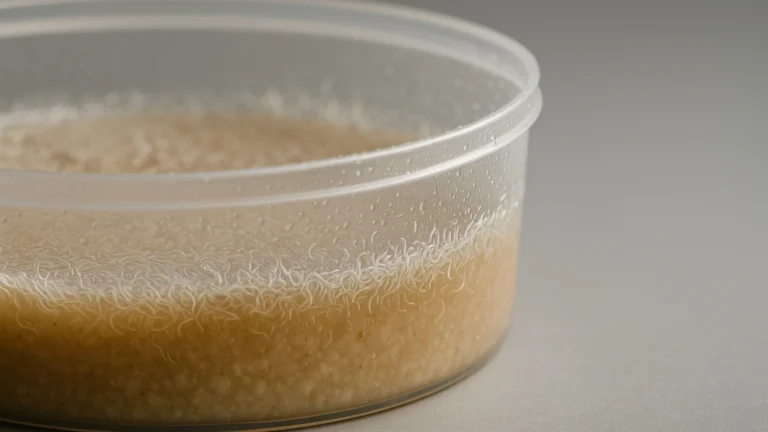
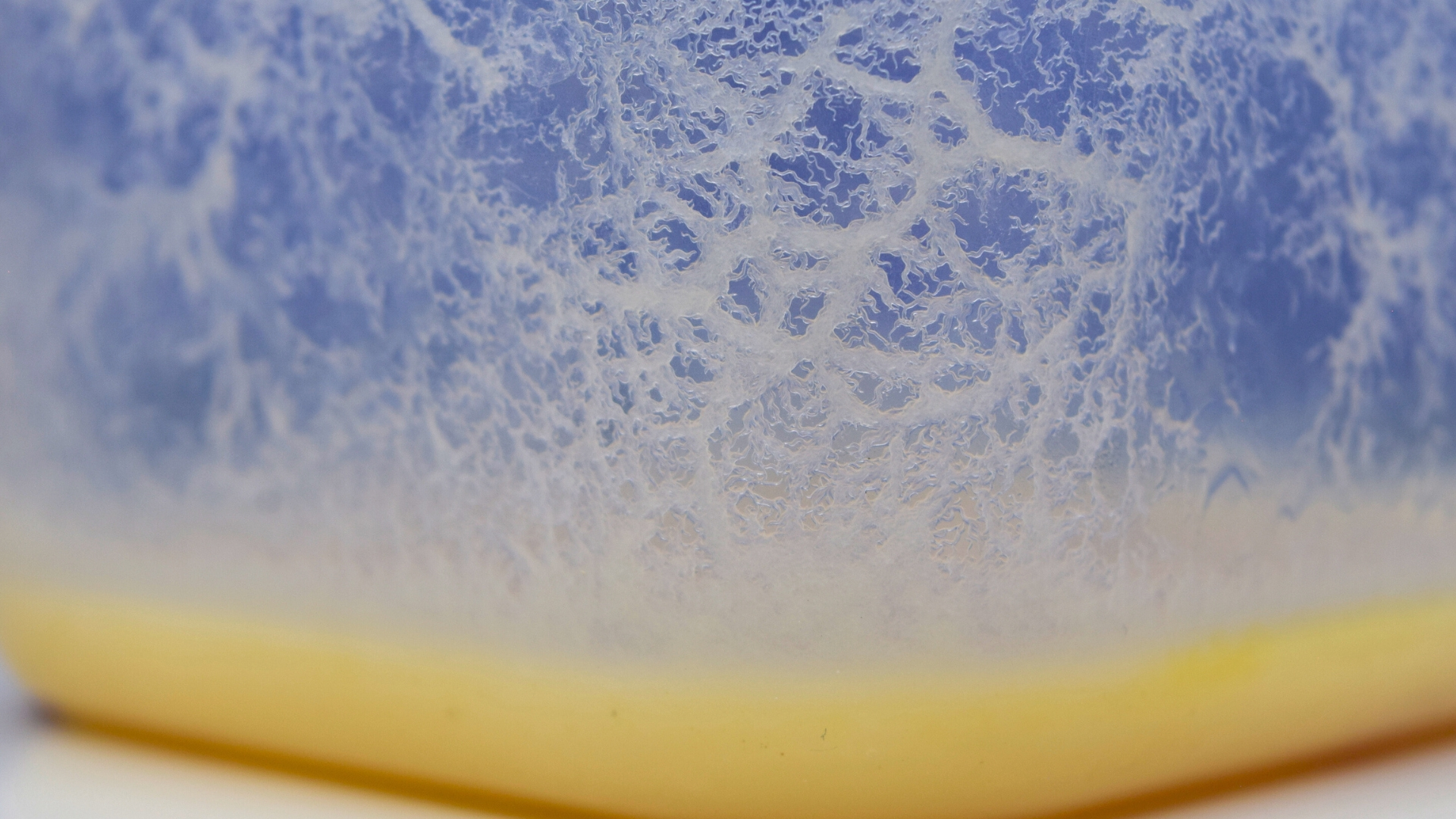
- Output: Within a few days you get dense “carpets” of microworms climbing the walls, ready to feed to fry.
- Impact on fry: Studies show P. redivivus can support fry growth and survival rates comparable to brine shrimp in many species, and clearly better than dry feeds alone.ResearchGate+1
Below we’ll unpack the biology, nutrition, culturing protocol, troubleshooting, and ecological benefits — and how microworms fit into a broader live-food strategy alongside vinegar eels, grindal worms, and even springtails in your overall fishroom or vivarium ecosystem.
1. Biology of microworms (Panagrellus redivivus)
Microworms are free-living nematodes in the genus Panagrellus, most commonly P. redivivus. They live in moist, microbe-rich substrates where they graze on bacteria and yeasts.RWFM Extension+1
Key biological points:
- Not parasitic: P. redivivus is not a fish or human parasite; it naturally lives in decaying organic matter.
- Body plan: Slender, threadlike, semi-transparent nematodes about 1–2 mm long; under magnification you can see constant wriggling motion.
- Temperature range: They reproduce fastest in the 20–29 °C (68–85 °F) band commonly used in aquarium rooms.
- Life span: About 20–25 days from birth to death under culture conditions.
- Reproduction: Females can produce hundreds of offspring over their short lifespan, which is why cultures explode quickly once established.
If you’d like a species-focused overview (taxonomy, morphology, habitat), you can link this article internally to your detailed Panagrellus redivivus profile.
2. Nutritional science of microworms
From a fry-nutrition standpoint, microworms are attractive because they combine correct particle size, movement stimulus, and a strong nutrient profile.
2.1 Macronutrients
Across multiple studies on P. redivivus cultured on standard cereal/yeast diets:
- Protein: roughly 40–48% of dry weight
- Lipid (fat): around 17–21% of dry weight
- Carbohydrates: the remaining fraction, with some fiber and glycogen. ScienceDirect+1
This places microworms slightly below enriched baby brine shrimp for protein, but with:
A balanced amino-acid profile that closely matches Artemia, including essential amino acids required for growth.FAOHome+1
Excellent digestibility for tiny fry
2.2 Live movement and feeding response
Because microworms wriggle and slowly sink, they trigger strong feeding responses:
- Fry that ignore powdered dry foods often start feeding immediately on microworms.
- Their slow sinking and tendency to crawl on surfaces keep them available to fry that hang mid-water or near the bottom.
This “behavioral nutrition” — the combination of movement, size, and location in the water column — is one reason microworms often outperform dry micro diets in the earliest days of life.
2.3 Gut-loading potential
Microworms are micro-bioreactors: what you feed the culture medium changes what’s inside the worms.
- Enriching the medium with spirulina, high-quality cat food, or formulated fry diets can improve fatty acid and vitamin profiles of the worms themselves.
- This is the same principle breeders use when enriching brine shrimp nauplii.
You can also cross-link from here to your grindal worm nutritional profile to help readers compare different live worms nutritionally.
3. How microworm cultures actually work
A microworm culture is basically a controlled micro-ecosystem:
- Starchy medium (oats, flour, bread) provides a carbon source.
- Yeast and bacteria colonize the medium.
- Microworms graze on these microbes, not directly on the starch.
- As they multiply, worms crawl onto the container walls, where you harvest them for feeding.
3.1 Choosing the medium
Research and extension guides consistently show good results from:
- Rolled oats or wheat flour
- Bread soaked in water
- Other low-cost agricultural products (e.g., livestock oats) as the main substrateRWFM Extension+1
Your culture medium only needs to be:
- Moist, not soupy
- Shallow (1–2 cm deep)
- Exposed to air (with fine ventilation holes)
3.2 Container and setup
A basic, research-aligned setup looks like this:
- Use a food-grade plastic tub or jar (e.g., yogurt tub).
- Add a thin layer of cooked oats / flour paste / mashed bread.
- Sprinkle a small amount of baker’s yeast on top or mix it into the medium.
- Add a tablespoon of starter culture onto the surface.
- Cover with a lid that has pin-sized air holes (covered with cotton or filter floss to stop fruit flies).
- Keep at room temperature in your fishroom.
Within 2–3 days at 24–26 °C, you should see a visible creamy film of worms climbing the sides.
3.3 Culture lifespan and rotation
A single microworm tub typically:
- Peaks in productivity for 2–3 weeks, then
- Gradually crashes as the medium sours, dries, or is overrun by yeast/mold.
To avoid running out:
- Maintain at least 2–3 cultures in rotation, started about a week apart.
- Every 1–2 weeks, seed a new container with a scoop of worms from a strong, existing tub.
This rotation strategy is similar to how you might run multiple grindal worm life-cycle cultures to avoid catastrophic crashes.
3.4 Harvesting without fouling your tanks
The safest, research-aligned way to harvest:
- Use a clean finger, spatula, or cotton bud to collect worms from the walls,
- Rinse them gently in a small cup of dechlorinated water, then
- Pour or baste them into the fry tank in small amounts.
This reduces:
Organic waste that could stress fry
Excess yeast/starch entering the aquarium
Risk of bacterial blooms
4. Microworms in aquaristics: effect on growth and survival
4.1 Growth and survival vs dry foods and brine shrimp
Controlled trials with P. redivivus show:
- Fry fed microworms grow significantly better than those fed only dry diets.
- In species such as Synodontis petricola catfish, microworms produced faster growth than dry food, though brine shrimp still gave the very fastest growth in some regimes.ResearchGate+1
- Several extension and experimental studies report survival rates jumping from 10–30% to 70–90% when live foods such as microworms are included for early fry stages.
For your readers, it’s useful to frame microworms as:
“The bridge between infusoria and brine shrimp” — ideal for very small mouths, excellent survival impact, and much easier to culture at home than constant infusoria.
You can also encourage them to explore other live-food options on your site, like what are vinegar eels? for ultra-tiny surface-feeding fry.
4.2 Where microworms shine
Microworms are especially effective for:
- Egg-laying species with tiny fry (tetras, rasboras, ricefish, dwarf cichlids)
- Bottom-oriented fry that struggle to chase swimming brine shrimp
- Hobbyists who do small batch breeding and need a low-maintenance live food
For more ornamental-aquaculture context, university extension publications specifically recommend microworms as a practical first food for freshwater ornamental fry due to their size, movement, and ease of culture.Florida Virtual Campus Journals+1
5. Step-by-step culturing protocol (science-aligned)
Below is a research-backed, hobby-friendly microworm protocol distilled from your document and scientific/extension literature.
5.1 Ingredients and equipment
- 2–3 small plastic tubs with lids
- Rolled oats OR wheat flour OR mashed bread
- A pinch of baker’s yeast
- Dechlorinated water
- Microworm starter culture
- Stirring spoon/spatula
5.2 Initial setup
- Mix the medium
- Cook a small portion of oats with water OR
- Mix flour with water into a thick paste OR
- Soak bread in dechlorinated water and squeeze out excess.
Aim for porridge consistency — wet but not dripping.
- Add to container
- Spread the paste 1–2 cm thick over the bottom.
- Inoculate with yeast
- Sprinkle a small pinch of baker’s yeast onto the surface and lightly mix.
- Too much yeast can cause alcohol production and early culture crash.
- Add starter worms
- Place 1–2 tablespoons of your microworm starter on top of the medium.
- Don’t bury the worms; they should sit on the surface.
- Ventilation and placement
- Poke pin-sized holes in the lid and cover them with cotton or filter floss.
- Store the culture in a dark or dim area at room temperature (around 24–26 °C).
Within a few days you’ll see the surface becoming glossy and then a sheen of tiny, moving worms climbing the walls.
5.3 Daily routine
- Check smell: A healthy culture smells like mild yeast / fermented dough.
- Harvest lightly: Scrape a thin layer from the walls once or twice per day, feed, and let the culture recover.
- Avoid over-harvesting: Leave enough worms to maintain the population.
5.4 Culture renewal
Every 2–3 weeks:
- Prepare a fresh tub with new medium (as above).
- Transfer a spoon of worms from the wall of the old culture to the new one.
- Label the tubs with start dates to keep your rotation clear.
Maintaining 2–3 tubs in staggered rotation is similar in spirit to keeping multiple springtail cultures for reptile vivariums or vinegar eel starter cultures as backup food sources.
6. Troubleshooting common microworm culture problems
6.1 Mold growth
Why it happens
- Medium is too wet
- Poor air circulation
- Old food or contamination by airborne spores
What to do
- If mold is localized, scoop it out and continue.
- If the culture is heavily overgrown, rescue a clean scoop of worms from the walls and start a new tub with fresh medium.
- Adjust moisture so it’s damp, not soggy, and ensure very fine but real ventilation.
You can also point springtail keepers to your article on good vs bad mold in springtail cultures, since mold management logic is similar across micro-cultures.
6.2 Bad smell (alcohol / ammonia)
A strong alcoholic or rotten smell usually means:
- Excess yeast → alcohol production
- Medium rotting anaerobically
Fixes:
- Start a fresh culture with less yeast.
- Make sure the layer is thin and well-ventilated.
- Keep the culture away from extreme heat (which accelerates spoilage).
6.3 Fruit flies and other pests
Fruit flies love warm, fermenting media.
- Always keep tiny, filtered ventilation holes — not open lids.
- If flies invade, harvest worms into dechlorinated water; worms sink, fly eggs/larvae usually don’t survive.
- Seed a new, clean container in a different location.
For readers already dealing with mites or gnats in other cultures, cross-linking to your springtail pests (gnats & mites) troubleshooting guide gives them a broader pest-control strategy.
6.4 Nutritional imbalance in fry
Over-reliance on only microworms for too long can lead to:
- Poor fin or skeletal development
- Vitamin and fatty-acid deficiencies
Research and extension guidance recommend:simplydiscus.com+1
- Use microworms heavily in days 1–7 post-free-swimming.
- Introduce baby brine shrimp and quality dry foods from around day 7.
- Gradually reduce microworm percentage after the second week.
You can gently nudge readers toward a diversified live-food toolbox by also mentioning alternatives like grindal worms (see your grindal worm life cycle) once fry are large enough.
7. Ecological and economic benefits of microworm culture
7.1 Low-cost, high-value live food
Extension literature and experimental hatchery work make it clear: microworms are extremely cheap to produce. Rolled oats or flour are inexpensive, and once you have your starter, per-feeding cost is close to zero compared to commercial fry foods or constant brine shrimp hatching.
This is particularly attractive for:
- Breeders running multiple spawns at once
- Hobbyists in regions where live food options are limited or costly
- Small-scale ornamental producers looking to improve margins
7.2 Using waste streams as culture media
One powerful sustainability angle: organic waste as feed.
- Vermicomposting and vermiculture research shows how agricultural and household organic wastes (vegetable scraps, manures, paper/cardboard) can be converted by invertebrates into high-value biomass and nutrient-rich compost.IJTSRD+1
- The same principle applies when you use inexpensive by-products — like livestock oats or bakery offcuts — as microworm substrates: you’re upcycling low-value carbohydrates into premium fry food.
While most hobbyists will stay with simple oats or flour, serious breeders and small farms can integrate microworms into larger waste-reduction and circular-economy systems.
7.3 Supporting micro-ecosystems
Because microworms are part of a decomposer food web (microbes → nematodes → fish fry):
- They help close nutrient loops between your culture tubs and aquarium systems.
- Combining microworms with detritivore crews (like springtails and isopods, introduced via your what are springtails (Collembola)? guide) helps readers think of their fishroom as a set of interlinked micro-ecosystems rather than isolated tanks.
For broader educational content and updates, you can also internally reference your main Springtails.in blog at the end of this section.
8. Microworms vs other live foods (quick comparison)
| Live food | Typical use stage | Main strengths | Limitations |
|---|---|---|---|
| Infusoria | First feed for extremely tiny larvae | Microscopic size, easy to seed | Unpredictable density, short window |
| Microworms | First feed for small fry; bridge to BBS | Right size, sink slowly, easy & cheap to culture | Slightly less protein than enriched BBS |
| Vinegar eels | Surface-feeding ultra-small fry | Survive longer in water, good for surface feeders | Lower density cultures, more acidic medium |
| Baby brine shrimp | After fry can take slightly larger prey | Very high protein, strong growth | Daily hatching work, cyst cost |
| Grindal worms | Juveniles and small adults | Higher biomass, good step-up food | Need soil/foam cultures, larger mouth size |
Can I Use Microworm Cultures as Food for Other Animals Besides Fish Fry?
Yes, you can use microworms as alternative feeders for various animals. Their exceptional microworm nutrition—rich proteins, fats, amino acids—makes them suitable for amphibians, reptiles, small mammals, and birds requiring live food sources.
How Long Can Microworms Survive Outside Their Culture Medium?
You’d think microworms survive indefinitely outside their medium, but they’re remarkably fragile. They’ll only persist 24–48 hours without substrate access. Maintaining culture longevity requires immediate reintroduction to fresh medium for ideal microworm survival rates.
What Is the Most Cost-Effective Alternative Medium for Culturing Microworms?
You’ll find mashed potatoes and baby cereal offer the most cost-effective alternative media for your microworm cultures. Your cost analysis reveals these alternatives sustain comparable microbial growth and worm reproduction rates while reducing expenses considerably compared to rolled oats.
Can Microworms Be Frozen or Preserved for Long-Term Storage?
You’ll find that 70% of frozen microworm cultures retain viability when properly preserved. Your best microworm preservation methods involve freezing at -20°C, though freezing microworm viability remains limited compared to maintaining active cultures through systematic sub-culturing protocols.
How Do I Identify Contamination Versus Normal Bacterial Growth in Cultures?
You’ll identify contamination indicators by monitoring for discoloration, putrid odors, and foul smells—signs of culture decline. Normal bacterial growth supports microbial activity without these negative symptoms, sustaining your worm population’s health.
Can microworms survive and breed in my aquarium?
Microworms generally do not establish permanent populations in normal aquariums:
Most are eaten quickly by fish.
Surviving worms die off within hours to a couple of days.
They don’t attach to fish or become internal parasites.
The main risk is overfeeding — excess dead worms and medium can degrade water quality, so keep portions small.
My culture smells bad and looks brown. Should I throw it away?
A strong rotten or alcoholic smell plus brown, collapsing medium usually means the culture is failing. The best approach:
Harvest any worms still visible on the walls.
Seed a fresh container with new medium and a small amount of those worms.
Discard the old tub.
How often should I feed microworms to fry?
For most species:
Days 1–7 (post free-swimming): 2–4 small microworm feedings per day.
After day 7: Start mixing in baby brine shrimp and quality dry foods.
After week 2: Gradually reduce microworms and rely more on brine shrimp and dry food.
This minimizes nutritional gaps and mirrors protocols used in ornamental hatcheries.Florida Virtual Campus Journals+1
Are microworms safe for my fish and my family?
You can format these as FAQ blocks in WordPress and, if you like, wrap them with FAQ-schema using your preferred plugin.
Yes. Panagrellus redivivus is a non-parasitic, free-living nematode used worldwide as live food in aquaculture and ornamental fish breeding. Multiple studies and university extension bulletins recommend it specifically as a safe larval food.RWFM Extension+1
For readers interested in building a complete live-food ladder, link them to:
This helps create a strong internal linking cluster around “live food cultures for fish fry,” which supports SEO.
Frequently Asked Questions
These are some of the key scientific and extension sources underlying the article. Use them as background reading or for deeper dives:
Various authors. 2020–2022. Peer-reviewed works on vermicomposting and agro-waste management demonstrating conversion of organic wastes into invertebrate biomass and vermicompost.IJTSRD+2Entomology Journals+2
Chappell, J. A. 2013. Culture Of Microworms (Panagrellus sp.) As An Alternative to Brine Shrimp for Larval Fish Forage. Texas A&M AgriLife Extension.RWFM Extension+1
FAO. Nematodes (Panagrellus redivivus) as live food for fish larvae. In: Live Food in Aquaculture Manuals.FAOHome
Affandi, I. et al. 2019. Growth and survival of enriched free-living nematode Panagrellus redivivus as live food. Aquaculture Reports.ScienceDirect+1
Biedenbach, J. M. et al. Panagrellus redivivus mass produced on solid media as live food for Litopenaeus vannamei larvae. (Research article and associated summaries).Academia
Focken, U. et al. 2007. Panagrellus redivivus (Linné) as a live food organism in the early rearing of the catfish Synodontis petricola. Aquaculture Research.ResearchGate
Brüggemann, J. 2012. Nematodes as live food in larviculture – a review. Journal of the World Aquaculture Society 43:739–763.Wiley Online Library
Ramee, S. et al. 2019. Microworm Culture for Use in Freshwater Ornamental Aquaculture. EDIS, University of Florida.Florida Virtual Campus Journals