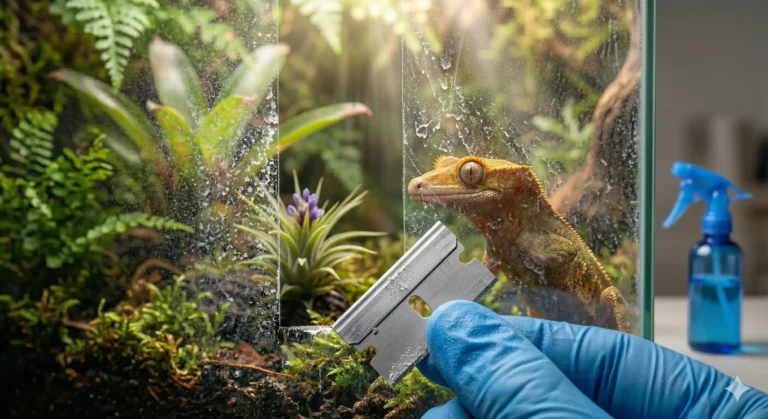
You rely on springtails (Collembola, 0.3–3.0 mm) as detritivores that thrive at 10^3–10^5 m^-2. They graze fungi and biofilms, fragment litter, and boost CO2 efflux 10–30% while excreting ammonium that lifts inorganic N 5–25%. By cropping hyphae, they cut mold cover 30–60% in 7–10 days and raise microbial diversity. Their tunneling increases macroporosity 8–25% and hydraulic conductivity 15–40%, stabilizing moisture. Culture on charcoal at >90% RH; proper seeding lets these janitors transform your system further.
Key Takeaways
- They graze on mold/fungi, reducing mold cover 30–60% and spore output, maintaining microbial balance.
- They accelerate decomposition by fragmenting detritus, increasing CO2 efflux 10–30% and nutrient mineralization.
- Their excretion mobilizes nitrogen and phosphorus, boosting inorganic N availability 5–25% for plants and microbes.
- Foraging and tunneling improve soil structure and porosity, enhancing aeration and moisture regulation by 15–40%.
- They thrive in moist, cool microhabitats; sustain populations with high humidity and light feeding when seeding bioactive setups.
What Are Springtails and How They Live
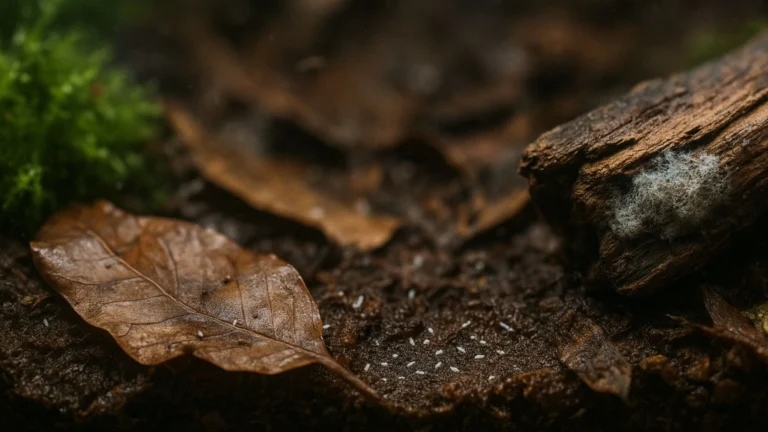
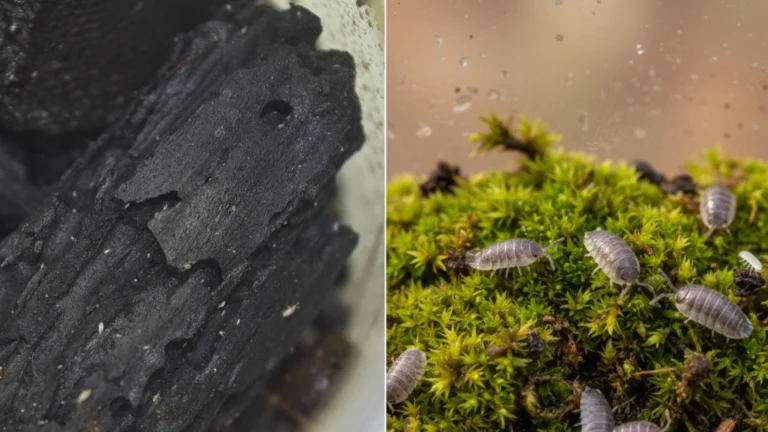
Collembola—springtails—are basal hexapods (not insects) typically 0.3–3.0 mm long that inhabit moist soil, leaf litter, and decaying wood at densities commonly 10^3–10^5 individuals per m^2, with peaks >10^6 in rich litter.
You can recognize springtail anatomy by the furcula (forked jumping organ), retinaculum (latch), and collophore (ventral tube) used for water balance and adhesion.
They lack tracheae; you’ll see cutaneous gas exchange across a waxy, microstructured cuticle that limits desiccation.
Their environmental adaptations include hygrosensory antennae, ocelli tuned to low light, and rapid jumps reaching >100 body lengths s^-1 to evade predators.
They prefer relative humidity >90% and temperatures 10–20°C, retreating to pores when vapor pressure deficit rises.
Most molt throughout life; many reproduce parthenogenetically, with clutch sizes ~10–50.
Males deposit spermatophores on substrates.
Decomposition and Nutrient Cycling
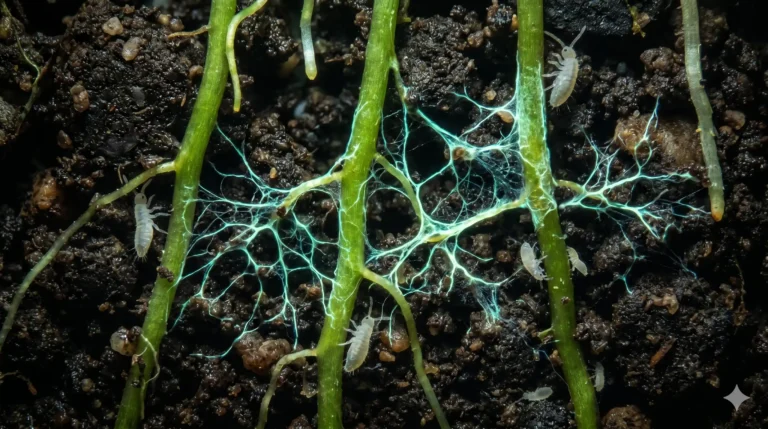
While hidden in litter and soil pores, springtails drive decomposition by grazing primarily on fungal hyphae, spores, and biofilms, fragmenting detritus into fecal pellets tens to hundreds of micrometers across that expose fresh surfaces to microbial attack. You accelerate carbon turnover by comminuting leaf and wood fragments, boosting CO2 efflux and mineralization rates by 10–30% in controlled mesocosms. At field densities (10^4–10^6 individuals m^-2), your ingestion and egestion cycle organic matter with C:N near 20–40 toward forms microbes can rapidly decompose. Through microfauna interactions, you excrete ammonium, mobilize phosphate, and redistribute microbial hotspots, increasing inorganic N availability by 5–25%. By selectively grazing and mixing horizons, you enhance aggregate stability and porosity, facilitating oxygen diffusion and moisture retention that sustain ecological balance and nutrient cycling.
Mold Control and Microbial Balance
Although they stay hidden, springtails exert strong top-down control on mold dynamics by selectively grazing hyphae and spores, clipping advancing mycelial fronts, and breaking biofilms into micro-aggregates that shift resource access.
At densities of 5–20 individuals per cm2, you can expect 30–60% reductions in mold cover within 7–10 days via preferential feeding on fast-growing fungi. Their scraping mouthparts remove ~0.2–0.8 mm of hyphal extension, suppressing colony velocity and spore output by 50%. By fragmenting biofilms, springtail behavior increases bacterial-fungal interfaces and shifts competition, raising microbial diversity (Shannon index +0.2–0.5). You gain functional redundancy: pathogen CFUs decline while beneficial saprotrophs persist. Monitor with plate counts and qPCR targeting ITS/16S to verify trajectories quantitatively, and calibrate stocking (0.5–2 per gram substrate) to maintain stable, low-mold equilibria.
Soil Structure, Aeration, and Moisture Regulation
Grazing that suppresses fast-growing fungi also reshapes the substrate’s physics: springtail foraging, tunneling, and pelletizing reorganize particles into micro-aggregates and reopen clogged pores, changing how air and water move.
You gain higher functional porosity: 30–200 µm biopores and 50–250 µm pellets raise macroporosity 8–25% and hydraulic conductivity 15–40%.
Oxygen diffusion increases, keeping redox potential above 300 mV, which curbs anaerobic hotspots.
Moisture regulation improves as capillary storage rises while preferential flow decreases, flattening dry-down curves by 20–35%.
By fragmenting litter and distributing microbial inocula, springtails accelerate N and P mineralization, boosting soil fertility and cation exchange capacity.
Aerated, buffered substrates suppress root-rot incidence and favor antagonistic microbes, contributing to pest control through habitat filtering rather than direct predation.
This stabilizes structure under fluctuating loads.
Best Practices for Culturing and Seeding in Vivariums
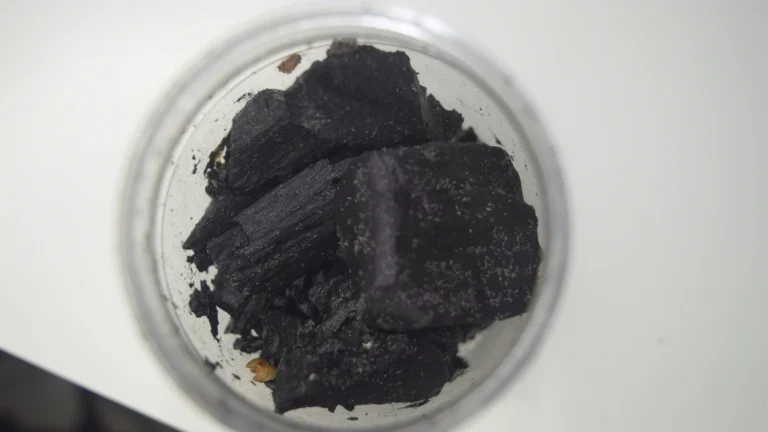
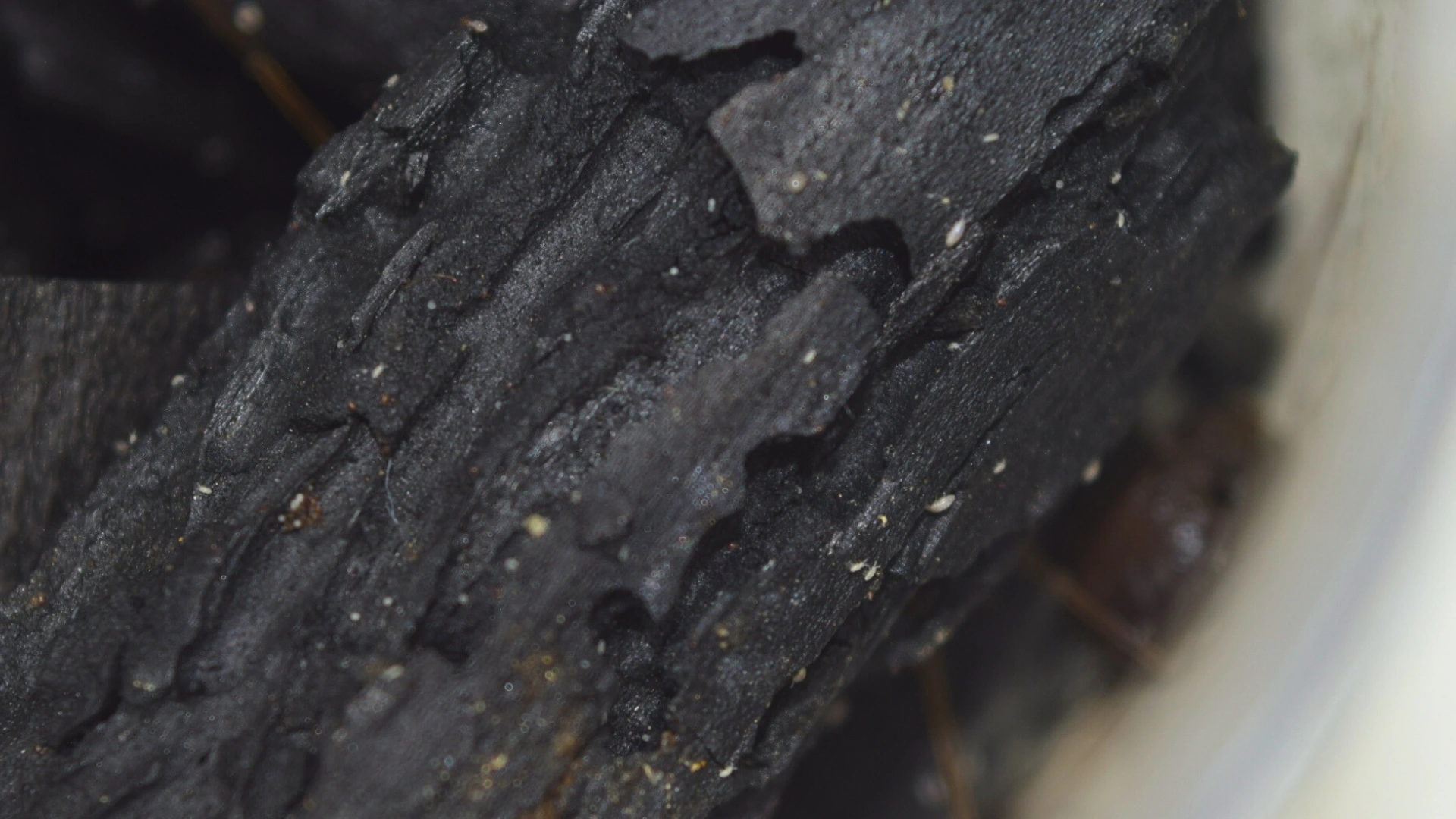
Typically, you’ll establish springtail cultures on rinsed horticultural charcoal (2–5 mm) in a vented, lidded container, maintaining a thin water film (0.5–1 mm), pH 6.0–7.5, 21–24°C, and high humidity (>90% RH) to sustain rapid doubling every 7–10 days. Feed 0.1–0.2 g inactive yeast per 500 mL culture weekly; avoid residue. Split cultures every 3–4 weeks to prevent crashes. For seeding methods, flood-rinse 50–100 mL slurry onto the vivarium’s litter and microhabitats, targeting 100–300 individuals per liter of enclosure volume. Quarantine cultures 14 days; discard any with mites or odor. Track densities with 1 cm2 charcoal counts and adjust inputs. These culturing techniques yield stable, high-throughput inocula.
| Parameter | Target | Frequency |
|---|---|---|
| Yeast feed | 0.1–0.2 g/500mL | Weekly |
| Split ratio | 1:2–1:3 | 3–4 weeks |
| Seeding density | 100–300/L | Setup, maintenance |
Frequently Asked Questions
Are Springtails Safe for Reptiles, Amphibians, and Invertebrates Cohabiting Vivariums?
Yes— an ounce of prevention applies: you’ll find springtail compatibility with reptiles, amphibians, and invertebrates. They don’t bite, prefer fungi/detritus, densities 50–500/cm², humidity 60–90%. Habitat benefits include mold suppression ≥70%, improved nitrate cycling, fewer pathogens. Additionally, proper springtail care in terrariums can significantly enhance the overall health of the ecosystem. By maintaining optimal conditions such as temperature and substrate moisture, hobbyists can maximize the population’s benefits. This not only creates a balanced environment but also supports the well-being of the reptiles and amphibians housed within.
How Do I Ethically Source Springtail Cultures Without Harming Wild Populations?
You source springtails ethically by purchasing lab-cultured, lineaged strains (≥F10); don’t buy wild-caught. Verify ethical breeding, sustainable practices, COI records, and biosecurity. Seek species-level IDs (e.g., Folsomia candida), 14–21‑day generation times, 5–10% outcrossing, pathogen screening.
Can Springtails Become Household Pests or Escape and Infest Homes?
No—they won’t overrun homes like a plague. Springtail behavior requires >70% RH, microfungi, and cover; escaped cultures desiccate quickly. For pest management, you’ll win by dehumidifying to <45% RH, fixing leaks, sealing entry points, vacuuming.
What Legal Restrictions Exist on Transporting Springtail Species Across Regions?
You’ll face transport regulations: many jurisdictions restrict soil/leaf-litter movement and require species identification, origin documentation, and permits (e.g., USDA APHIS 7 CFR 330; EU Reg. 1143/2014). Noncompliance risks seizure and fines ($10k–$250k) and quarantine orders
Do Springtails Carry Diseases or Trigger Allergies in Humans?
Like quiet custodians, they don’t spread pathogens; no disease transmission exists. You might encounter springtail allergies rarely: isolated case reports and small IgE-positive cohorts (<30 subjects) suggest sensitization after occupational exposure. Overall risk remains low.