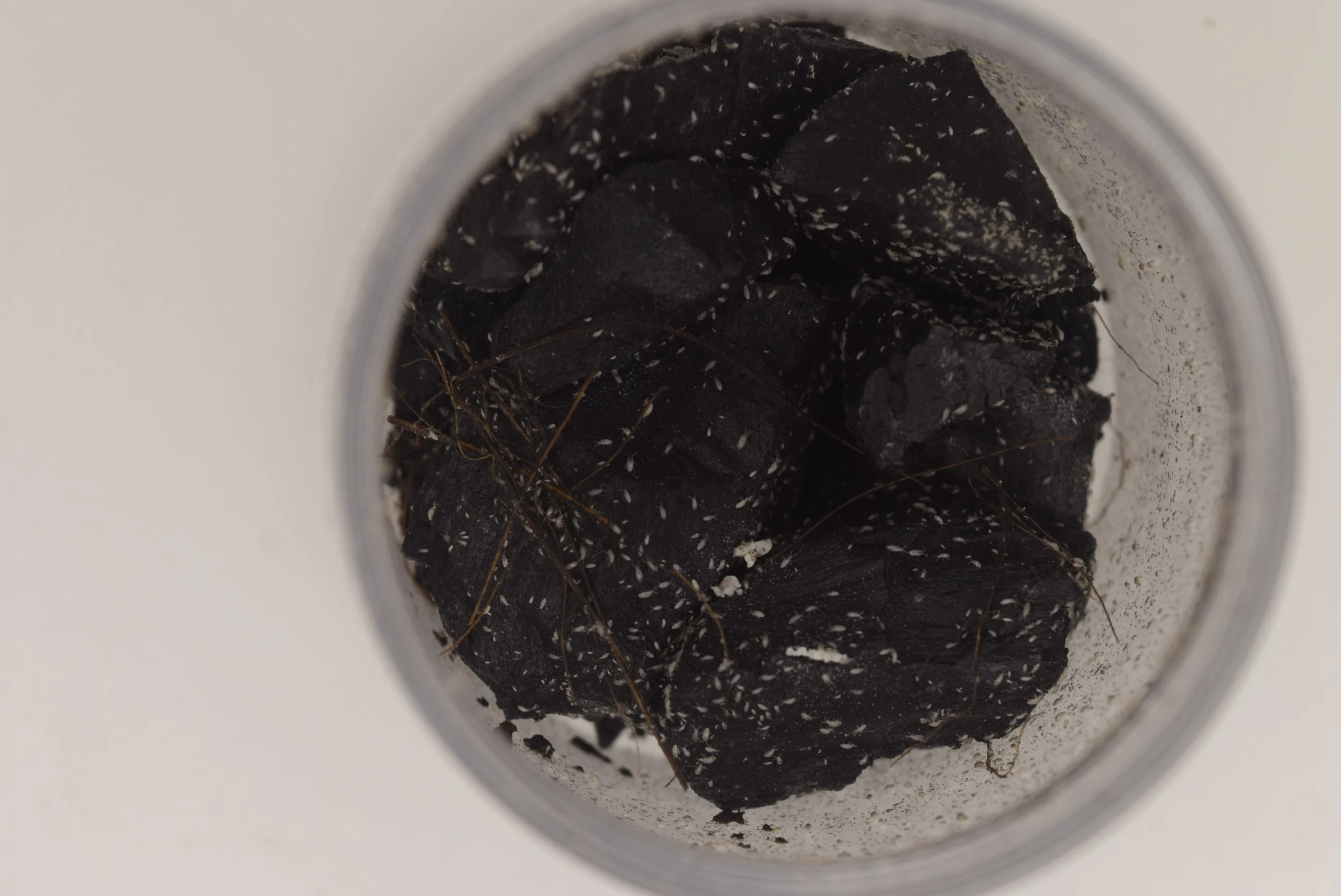
Building a self-sustaining bioactive ecosystem requires a dedicated microscopic workforce. Every day, hobbyists ask us if they can skip springtails and use other bugs to manage their enclosures. While springtails remain the industry standard for mold suppression and waste management, specific setups often prompt keepers to look for different microfauna.
Whether you are constructing a dry, arid environment where moisture-dependent insects perish, or you simply want to experiment with different clean-up crews, understanding the exact roles of different terrarium detritivores is essential. Here at our Springtails.in facility in India, we have spent years observing how different decomposers interact and survive our local weather extremes. Managing these ecosystems requires precision. Throughout this article, we examine the biology, efficiency, and limitations of the most popular alternatives to springtails.
Can I use earthworms instead of springtails?
Earthworms function as macro-detritivores that actively aerate soil and break down large organic matter, making them highly suitable for deep-substrate setups. They cannot replace springtails, which specialize in consuming microscopic mold spores and fungi. A balanced bioactive terrarium requires both organisms occupying different ecological niches for optimal waste management.
Evaluating Earthworms as Terrarium Detritivores
Earthworms are universally recognized for their exceptional composting abilities. In India, native species like Perionyx excavatus (the Indian blue worm) and Lampito mauritii are incredibly efficient at breaking down organic waste in warm climates.
Despite their efficiency in outdoor compost bins, earthworms present significant challenges when used as the primary clean-up crew in a closed glass terrarium:
- Substrate Destruction: Earthworms are voracious eaters. In the confined space of a vivarium, they rapidly consume the organic matter within the soil. Over time, this intense feeding activity degrades the structural integrity of your expensive substrate, turning it into a dense, muddy sludge.
- Depth Requirements: Most common earthworm species require several inches of deep soil to thrive and regulate their body temperature. Shallow terrarium substrates force them to the surface, leading to rapid desiccation.
- Threat to Live Plants: When dead organic matter runs out, earthworms will indiscriminately consume the living root systems of your terrarium plants.
- Aesthetic Disruption: Earthworms alter the topography of the enclosure. They frequently smear messy worm castings along the viewing glass, ruining the display.
For these reasons, earthworms serve as excellent secondary decomposers in massive, deep-soil enclosures but fail entirely as a direct substitute for the targeted mold-suppressing capabilities of springtails.
Dwarf White Isopods: Partners, Not Replacements
If you are looking for a highly efficient macro-detritivore, dwarf white isopods (Trichorhina tomentosa) are the perfect addition. Measuring less than 0.5 centimeters in adulthood, these microscopic crustaceans possess distinct ecological behaviors.
Unlike larger species, dwarf whites are primarily fossorial. They spend their entire lives buried within the upper layers of the substrate, providing excellent, non-destructive soil aeration. Their small size ensures they never uproot delicate mosses or shallow-rooted plants.
However, it is a massive misconception that isopods can replace springtails. These organisms exhibit perfect ecological niche partitioning.
- Macro vs. Micro Processing: Isopods utilize their powerful mandibles to break down tough, bulky organic matter like leaf litter. Springtails focus entirely on microscopic fungal spores and mold.
- Synergistic Waste Management: As isopods digest large material, they expel smaller particulate waste. Fungi immediately target this leftover waste. This is exactly where springtails intervene, consuming the emerging mold before it becomes visible to the naked eye.
- Preventing Crashes: Without springtails, an isopod-only enclosure will inevitably succumb to severe fungal blooms.
For a deeper understanding of how these two organisms interact, read our detailed comparison on springtails vs isopods.
Soil Mites: Beneficial Microfauna or Unwanted Pests?
When springtails are entirely absent from a terrarium, wild soil mites often emerge to fill the ecological void. The most common mites found in healthy terrarium soils are Oribatid mites. Known as “turtle mites” due to their heavily armored, spherical bodies, Oribatids are harmless detritivores. They feed on decaying organic matter, algae, bacteria, and fungi.
While Oribatid mites process waste efficiently, relying on them in a captive environment introduces major risks:
- Sluggish Metabolism: Compared to the hyper-active movements of springtails, soil mites are exceptionally slow. They cannot process rapid influxes of waste or suppress sudden mold outbreaks with the same efficiency.
- Unsettling Aesthetics: When soil mite populations peak, they swarm in massive, dense clusters on the terrarium glass. This looks highly unsanitary and is visually unappealing for display enclosures.
- The Threat of Parasites: To the untrained eye, beneficial Oribatid mites are indistinguishable from devastating pests. If you rely on wild mites, you risk accidentally breeding parasitic spider mites (which destroy live plants) or grain mites (Acarus siro), which reproduce explosively and stress terrarium inhabitants.
If you suspect an infestation, learn how to properly identify and manage these intruders through our guide on springtail pests in India.
Culturing and Maintenance in the Indian Climate
Managing live cultures year-round has taught us how volatile the Indian climate can be. Culturing a delicate microfauna ecosystem requires aggressive environmental manipulation to prevent total colony collapse during extreme seasonal shifts.
Surviving the Indian Summer
During the peak Indian summer, indoor temperatures frequently exceed 35°C. Prolonged exposure to extreme heat is lethal to temperate springtails and heavily stresses tropical isopods. Exposing a sealed glass terrarium to direct sunlight triggers “Thermal Cracking,” resulting in shattered glass and the rapid desiccation of your soil.
We employ strict cooling protocols in our facility. Keep your enclosures away from direct light. Instead of frequent surface misting—which evaporates instantly and causes chaotic humidity spikes—inject water directly into the lower layers of the substrate. This allows the moisture to evaporate slowly upward, creating a stable, cool microclimate deep in the soil where your clean-up crew can retreat during peak heat.
Navigating the Monsoon Humidity
The Indian monsoon brings months of torrential rain, driving ambient indoor humidity past 90%. While detritivores love moisture, stagnant, waterlogged environments are catastrophic.
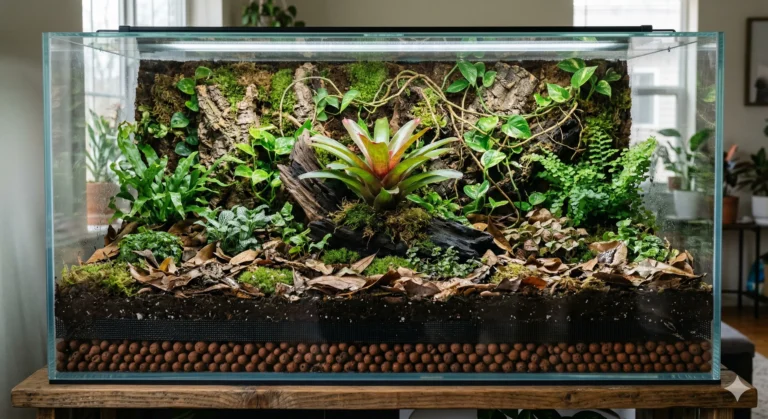
In a closed terrarium lacking proper drainage during the monsoon, the soil quickly becomes anaerobic. To prevent a monsoon crash, you must build a robust false bottom using LECA clay balls or gravel. Drastically reduce your misting schedule, as the ambient air provides sufficient moisture. Ensure your enclosure has adequate screen ventilation to allow the top layer of the soil to experience necessary dry-out periods.
Establishing Your Bioactive Clean-Up Crew
Sourcing wild-caught organisms from local gardens is a massive risk. Wild soils harbor lethal predators, centipedes, and pathogenic fungi that will obliterate an enclosed ecosystem. For guaranteed biological stability, sourcing clean, scientifically verified cultures is non-negotiable.
For best results, we highly recommend seeding your tank with the guidance found in our essential guide for bioactive vivariums.
All cultures at Springtails.in are grown in-house, with proper care and personally researched to keep it pest-free. We breed our microfauna to withstand the specific rigors of the Indian climate. Every order is backed by our Live Arrival Guarantee and delivered safely to your doorstep via Pan-India Express Shipping.
Frequently Asked Questions
Do terrariums actually need bugs to survive?
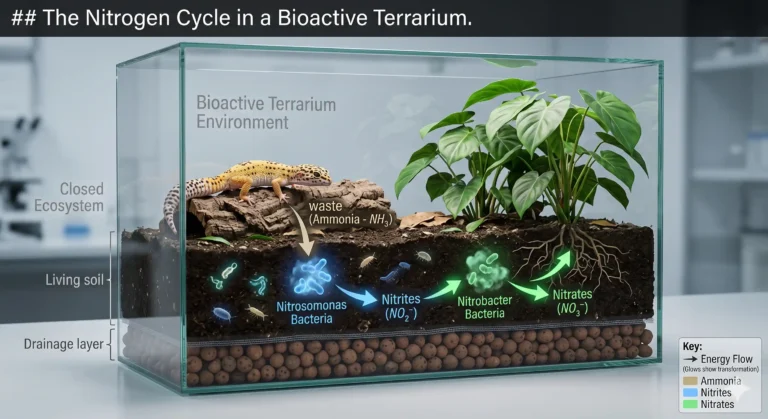
A temporary, decorative plant jar can survive without insects. However, any long-term sealed terrarium, or an enclosure housing a reptile, absolutely requires a clean-up crew. Without terrarium detritivores to process decaying organic matter, the substrate rapidly accumulates toxic ammonia and succumbs to suffocating fungal blooms.
Will dwarf white isopods eat my springtails?
No. Isopods and springtails occupy different ecological niches and do not prey upon one another. Isopods focus on consuming macro-decay, such as large leaf litter and feces. Springtails focus entirely on microscopic fungal spores and mold. They operate synergistically to ensure total waste breakdown.
How can I identify if I have harmful soil mites?
Beneficial Oribatid soil mites are slow-moving, heavily armored, and resemble tiny beads crawling within the soil. They are harmless. Conversely, fast-moving mites that congregate on the bodies of reptiles are parasitic snake mites. Mites that spin fine webs on the undersides of plant leaves are destructive spider mites. Any rapid influx of mites surrounding grain-based supplementary food indicates a grain mite infestation.
Can springtails escape the terrarium and infest my house?
Springtails pose zero threat of household infestation. They are strictly bound to environments with extremely high moisture levels. If a springtail escapes the confines of a terrarium, the dry ambient air of a standard household will cause the organism to desiccate and perish within minutes. They possess no capacity to survive or breed inside human dwellings.