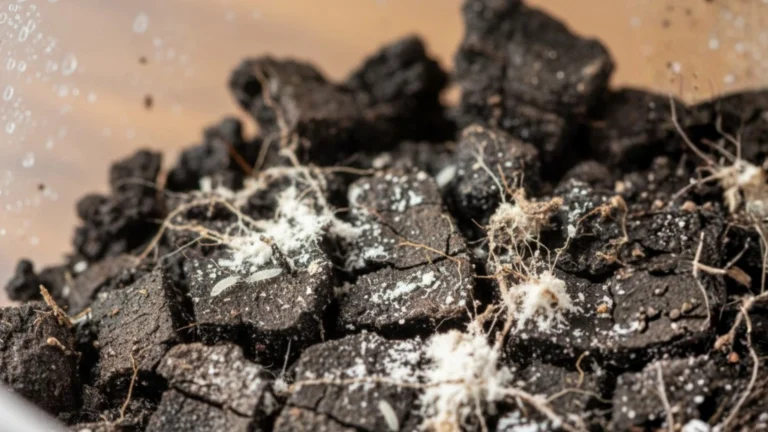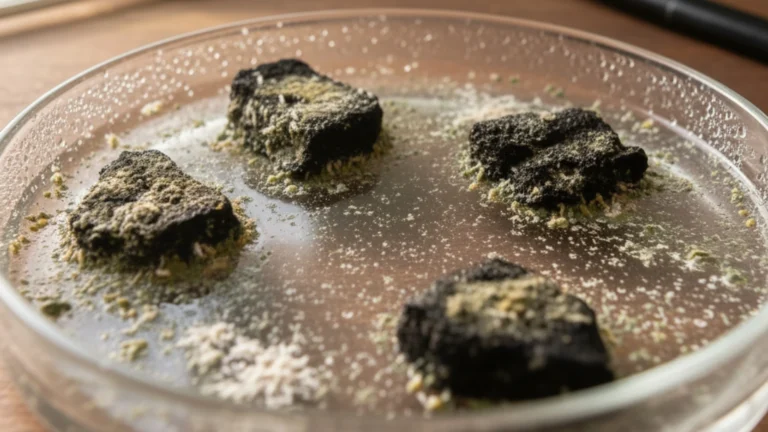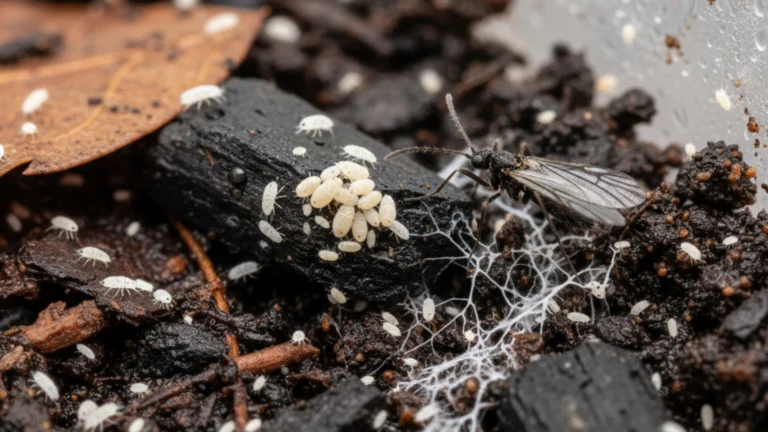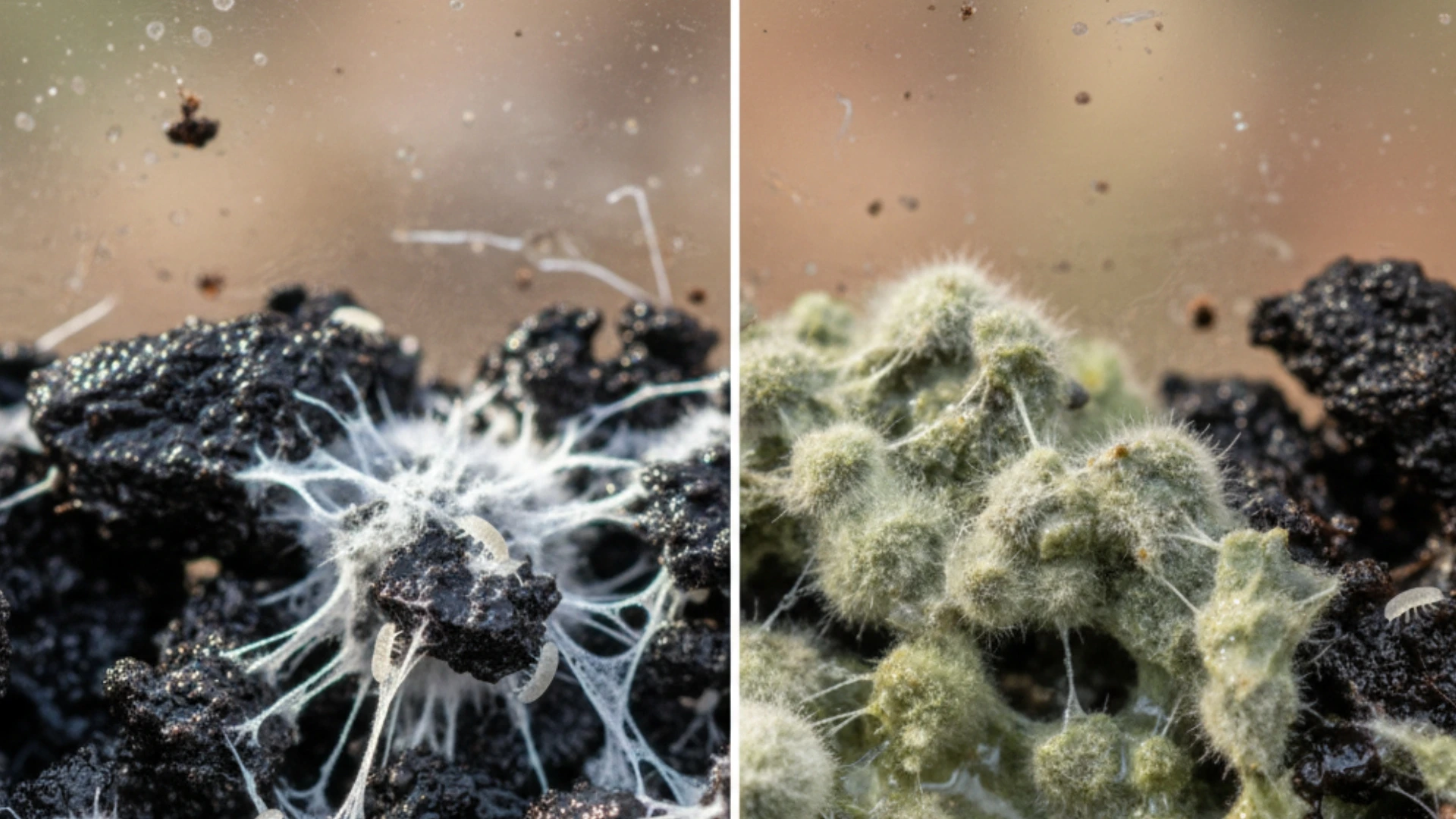
You can triage with eyes, but don’t assume safety. Uniform white mycelium (e.g., Saccharomyces cerevisiae) or pale conidial heads of Aspergillus oryzae are typical of food-grade fungi. Red flags include black, slimy Stachybotrys-like mats, rapidly spreading cottony growth with musty odor (Chaetomium, Mucorales), dark sectoring, and persistent discoloration. Visuals can’t quantify spores or health risk; standardized air/bulk/swab testing confirms identity and viability. If you’re unsure, isolate, mask, discard, and sanitize—then learn to prevent and verify.
Key Takeaways
- Visual inspection finds discoloration and mycelial mats but cannot identify species or risk; lab testing quantifies spores and distinguishes safe from harmful molds.
- Beneficial cultures often show uniform white mycelium or characteristic Penicillium blue‑green, Aspergillus oryzae pale heads, or yeasty Saccharomyces budding without slimy films.
- Red flags: black slimy soot-like colonies, rapid cottony spread with musty odor, dark margins, dense matted mycelium, or recurring airborne spores suggest contamination.
- Health risks include allergies, asthma flares, and rare invasive infections; seek care for chest tightness, fever, hemoptysis, confusion, or if immunocompromised.
- If contamination appears, isolate and discard with N95, sanitize surfaces, fix moisture, control humidity 30–60%, and improve ventilation to prevent recurrence.
Visual Clues vs. Lab Testing: How Far Can Your Eyes Take You?
How far can your eyes take you with mold? You can spot discoloration, textura alterations, and mycelial mats on damp walls, ceilings, or HVAC fins, especially when you apply raking lighting techniques and systematic photographic documentation. Visual inspection helps trace moisture sources, but it can’t quantify spores or discern Aspergillus from Stachybotrys, nor infer health risk. Many colonies share chromatic patterns; innocuous and hazardous taxa often look alike. Hidden reservoirs inside cavities remain invisible. In short, inspection detects growth and moisture sources, while testing identifies species and spore levels.
To move beyond inference, you need testing. For aquarium and terrarium hobbyists working with live cultures, sourcing pest-free products helps prevent introducing unwanted fungi, complementing proper inspection and testing. DIY swabs, tapes, or air cassettes are convenient, yet small samples, missing outdoor controls, and collection errors drive false negatives/positives. Professional sampling uses standardized air/bulk/swab methods, with controls, culture, microscopy, and molecular assays to identify genus, species, and viability, guiding targeted remediation efforts.
Common “Good” Fungi and Their Typical Traits
Cheese rinds, soy ferments, and bread dough showcase “good” fungi whose biology you can harness rather than fear. You’ll recognize consistent, substrate-matched growth and metabolic clarity. Penicillium spp. form velvety blue‑green colonies; their enzymatic profiles include proteases and amylases that sculpt rind texture and aroma and support industrial applications from cheese affinage to bioprocessing. Aspergillus oryzae produces pale conidial heads and secretes potent amylolytic and proteolytic systems, converting grains and soy into sugars and peptides for koji, miso, and sake. Rhizopus spp. display cottony stolons with rhizoids; in tempeh they knit substrates via mycelial binding while hydrolyzing starches. Saccharomyces cerevisiae appears as budding, unicellular yeast, driving ethanolic fermentation and leavening with predictable kinetics. Together, these taxa transform complex biomass without generating toxic metabolites. In doing so, they serve as essential decomposers, secreting enzymes to break down organic matter and recycle nutrients into usable forms. Safely.
Red Flags: Signs Your Culture Harbors Harmful Mold
When a culture deviates from predictable, substrate‑matched growth toward traits tied to water‑damage fungi, treat it as a red flag. You should scrutinize Black Colonies with slimy, soot‑like surfaces on cellulose media; these often indicate Stachybotrys or Memnoniella. Cottony to woolly, rapidly spreading colonies emitting a musty odor suggest Chaetomium or Mucormycetes on drywall paper, wallpaper paste, or jute. Look for darkened margins, erratic sectoring, and dense aerial mycelium that mats rather than sporulates consistently. For aquarists maintaining Microworms starter cultures for fish fry, keep live cultures pest‑free and eco‑friendly and watch for off‑odors or discoloration that may indicate contamination. Quantify airborne Hyphal Fragments; levels exceeding 100/m³ imply active growth proximal to your culture environment. Note recurrent settling spores that seed new colonies on damp plates, lids, or nearby sheetrock. Persistent discoloration on incubator surfaces or baseboards, coupled with musty headspace, corroborates water‑intrusion–associated contamination. Prioritize containment and source elimination. Because Stachybotrys presence is considered elevated even at very low concentrations, any detection warrants prompt remediation and source removal.
Health Risks and When to Seek Professional Help
Why does indoor mold matter? You inhale spores and volatile compounds that provoke rhinitis, conjunctivitis, dermatitis, cough, wheeze, and asthma exacerbations. Prolonged exposure can cause flu‑like malaise, headache, fatigue, and hypersensitivity pneumonitis. Vulnerable groups—people with asthma, COPD, pregnancy, children, older adults, and the immunocompromised—face higher risk. Invasive disease is rare but severe: Aspergillus spp. (aspergillosis) and Mucorales (mucormycosis) can invade tissue and vessels; mortality for invasive aspergillosis exceeds 50% in some cohorts. Prevent indoor mold growth by maintaining relative humidity between 30–60%, ensuring adequate ventilation, and promptly repairing moisture problems within 48 hours.
Seek medical care urgently for chest tightness, hypoxia, fever with cough, hemoptysis, severe headache, confusion, or rapidly worsening symptoms, and immediately if you’re on chemotherapy, corticosteroids, biologics, or post‑transplant. Discuss diagnostics (spirometry, IgE, imaging, galactomannan) and treatment options, including inhaled bronchodilators/steroids for asthma, antihistamines, and, when indicated, antifungals (e.g., voriconazole, amphotericin B).
Prevention and Safe Remediation Steps for Home Cultures
Although cultivating beneficial fungi such as Saccharomyces cerevisiae and Pleurotus spp. can be low risk, you should center prevention and conservative remediation on hygienic technique, source control, and respiratory safety. Prioritize Tool Sterilization and clean work surfaces with alcohol-based disinfectants; segregate raw substrates and casing ingredients in covered, dry storage. Use thermally treated substrates and validated preparation records to limit unwanted microbes. Practice Airflow Management: maintain gentle, clean air with fresh exchange while avoiding drafts that desiccate cultures or spread spores. Site intakes away from exhausts and pollution. Keep floors drained and prevent standing water. For aquarium and terrarium keepers, choosing pest-free cultures from reliable suppliers helps prevent cross-contamination and unwanted pests in home setups. During colonization, white mycelium is a normal sign, whereas black, purple, or green growth indicates contamination that should be discarded promptly. If contamination appears, isolate the vessel, don an N95 or P100, bag and discard the affected material, and sanitize the area. Post-crop pasteurization and communication with neighbors reduce risk.
Frequently Asked Questions
How Can I Document Mold Growth for Insurance or Landlord Disputes?
Create a Photographic Timeline with timestamps, documenting moisture sources. Log discoveries and communications. Collect Witness Statements. Obtain inspection reports, species identification (Stachybotrys chartarum, Aspergillus spp.), chain of custody, repair estimates, invoices, and correspondence supporting causation, damages, and liability.
What Are the Costs and Timelines for Professional Mold Species Identification?
You’ll pay $250–$1,000 for inspection, plus sampling $250–$500. Laboratory pricing: swab $200–$300, air $250–$350; culture adds ~$50. Turnaround estimates: inspection 2–4 hours, lab 3–5 business days, reports another day; expedited Stachybotrys chartarum testing costs more.
Can Mold Spores Cross-Contaminate Adjacent Fermentations Through Shared Airlocks?
Yes. Shared airlocks permit spore transfer during low CO2 or airlock leakage. Airborne conidia of Aspergillus and Penicillium traverse imperfect seals. You’ll maintain positive pressure, dedicated airlocks, filtration, and sanitization to substantially reduce cross-contamination risk.
Are There Legal Restrictions on Mailing Suspect Mold Samples to Labs?
Yes—but don’t you follow USPS postal restrictions and hazard labeling requirements for microbiological samples? Package per DMM Exhibit 8.4, classify RG1–RG3 cultures of Aspergillus spp. or Stachybotrys chartarum, maintain chain-of-custody, and avoid nonmailable regulated waste.
How Do I Preserve a Culture Sample Chain of Custody Properly?
You’ll preserve chain of custody by barcoding vials, doing sample sealing, recording timestamps, signatures, storage conditions, locations, implementing access logging. Verify identity via morphology or qPCR of taxa like Aspergillus fumigatus or Escherichia coli upon-receipt.
Conclusion
You sharpen your sight, but you still submit suspicious spots to science. Favor familiar flora—Saccharomyces cerevisiae or Penicillium chrysogenum—showing uniform color, consistent colonies, and predictable perfume. Flag foes—Aspergillus niger or Stachybotrys chartarum—exhibiting erratic edges, rapid spread, or respiratory reactions. Protect health: wear PPE, prevent propagation, and pursue professional testing when symptoms surge. Practice prevention: control humidity, clean surfaces, and contain cultures. When in doubt, don’t dally—discard, decontaminate, and document. Seek medical evaluation with persistent exposure.