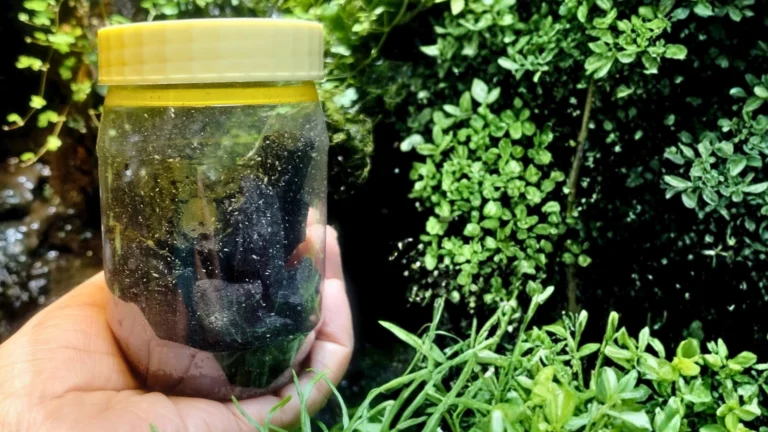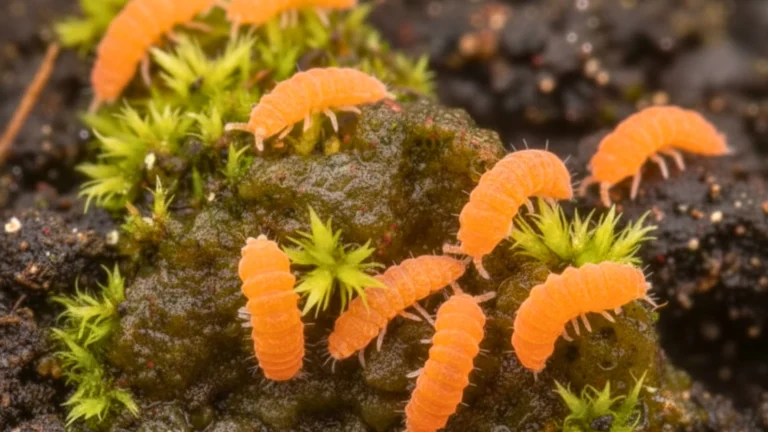
Your Collembola (e.g., Folsomia candida) stall when: RH mis-set (target 70–80% at substrate), temperatures off (tropical 24–29°C; temperate 16–24°C), misfeeding (nutritional yeast 10–50 mg per 500 cm², 2–3 times/week), pest pressure (Acarus siro, Sciaridae), poor/compact media, senescent, waste‑loaded cultures, or bad airflow/waterlogging. Use 3–4 inch porous layers (charcoal/lava/sphagnum), keep water ~33–50% depth, add gentle crossflow, and log thermohygro data. Correct portions and cadence, quarantine pests, and reset aging lines; the fix is systematic—details ahead below.
Key Takeaways
- Keep culture within species’ thermal range—tropicals 75–85°F, temperates 60–75°F; avoid large swings; acclimate gradually and provide cool/warm microclimates.
- Maintain 70–80% RH and a 3–4 inch layered, porous substrate; keep water at 33–50% depth, mist lightly, never waterlog.
- Feed powdered nutritional yeast 2–3 times weekly, 10–50 mg per 500 cm²; aim for complete consumption within 24–48 hours; adjust portions accordingly.
- Ensure gentle cross-ventilation with fine vents or screens; prevent hypoxia and mold; schedule brief air exchange every 72 hours or add micro-fans.
- Control mites and fungus gnats; watch for mycelial halos and biofilm; cut feeding, increase aeration, heat-treat components, and replace contaminated media.
Humidity Imbalance: Keep Substrate Evenly Moist and Prevent Dry-Out
Maintaining an even moisture field across the substrate is the primary control point for Collembola (springtail) reproduction. You should target 70–80% RH for red forms and maintain species-specific setpoints; some taxa require >95% RH, while dryouts near 0% RH can kill cultures in under an hour. Prioritize Hygrometer Placement at substrate level, away from vents and walls, to resolve gradients, and log readings daily. For newcomers, the Beginner’s Guide explains humidity targets, ventilation, and routine care to keep springtail cultures thriving. Build layered leaf litter, coconut fiber, sphagnum, and decayed wood to buffer water and oxygen. Run a Misting Routine with dechlorinated or distilled water: frequent, light pulses that keep media moist, never waterlogged. Add ventilation to curb mold, avoid local heating, and maintain depth for stable microclimates. If reproduction stalls, correct uneven drying before population collapse and fecundity recovers rapidly. In nature, they are abundant in deciduous woodland leaf litter, where moist microhabitats support stable populations.
Temperatures Outside Species Range: Match Tropical vs. Temperate Needs
Once moisture is stable, reproduction still stalls if culture temperature sits outside species-specific thermal niches. You must match taxa to Thermal Limits: tropical collembolans perform at 75–85°F with minimal fluctuation; activity halts below 65°F and sudden cold triggers die‑offs. Temperate species optimize at 60–75°F, tolerate moderate swings, but suffer reduced fecundity above ~80°F and stress or mortality ≥85°F. Large diurnal swings depress metabolism, impair detritivory, and precipitate crashes. When relying on temperate species, use heavy initial seeding to buffer slower reproduction during warmer or fluctuating conditions.
- Instrumentation: deploy calibrated digital thermometers, data loggers, and thermostatically controlled heat mats or tape; avoid vents, windows, and sun.
- Habitat tuning: warm tropical cultures to ≥75°F; for temperate cultures in heat, increase ventilation and provide cool microclimates. For supplemental feeding during slow springtail periods, consider Grindal worms, a high-protein, pest-free live culture suitable for aquariums and terrariums.
- Acclimation Strategies: shift cultures gradually when shifting seasons; insulate enclosures; choose species aligned to enclosure isotherms.
Overfeeding or Underfeeding: Adjust Nutritional Yeast and Feeding Frequency
You’ll spot overfeeding in Collembola cultures by fungal overgrowth, yellowing or moldy patches, ammonia odor, and animals clustering away from hypoxic, saturated substrate. You should feed at 2–3 intervals per week, aligning with cohort development to sustain continuous oogenesis and high fecundity. For those also raising fish fry, consider supplementing with Microworms starter cultures from Springtails.in, a nutritious, pest-free live option that’s easy to maintain. You’ll apply a light, even dusting of nutritional yeast per feeding that’s fully consumed within 24–48 hours to limit microbial blooms and preserve substrate aeration. Maintain moisture in the substrate, as springtails prefer damp, dark areas for survival.
Signs of Overfeeding
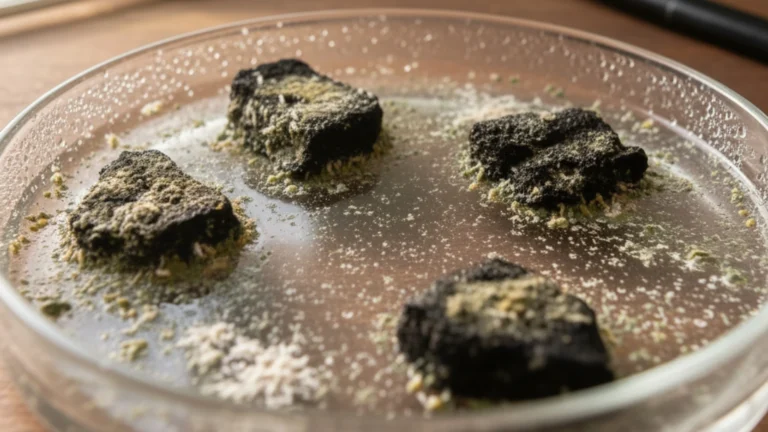
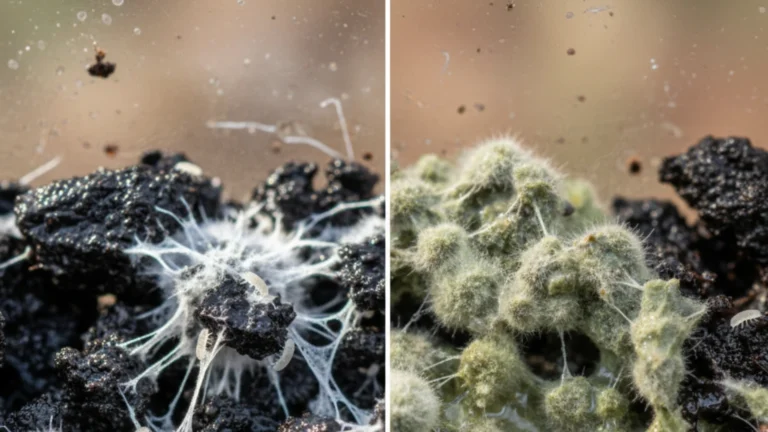
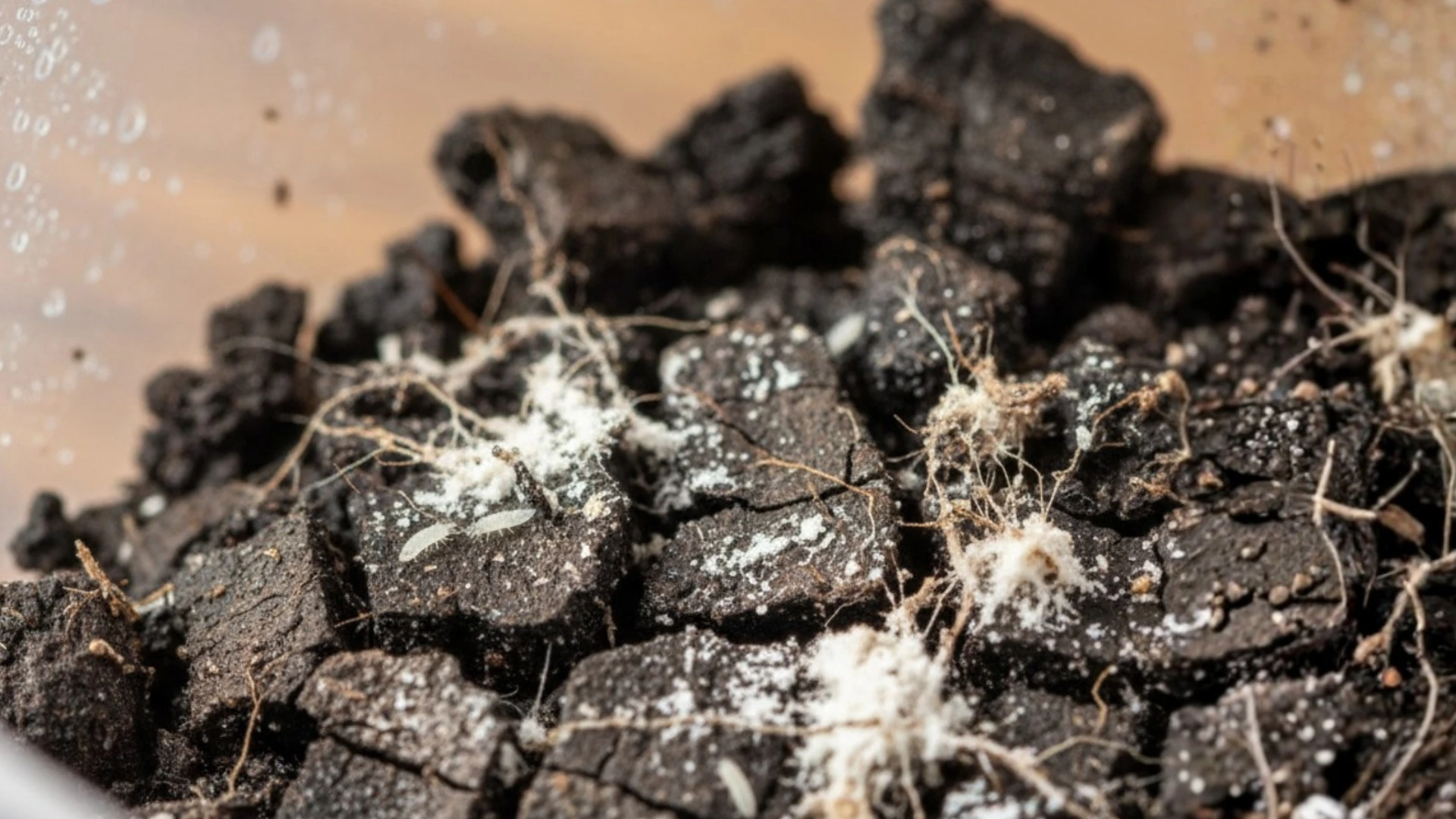
If a springtail culture shows a film of hyphae on leftover yeast, a growing “mold mountain,” substrate discoloration or slime, or a surge of mites (e.g., grain mites Acarus siro), you’re overfeeding. You’ll also note reduced activity along the surface and uneaten clumps of yeast persisting between checks, indicating nutrient surplus and fungal dominance. Expect respiration barriers as hyphal mats blanket the substrate, precipitating rapid crashes. Early recognition of these symptoms is critical so you can adjust feeding and restore balance before losses escalate.
1) Visual diagnostics: opaque mycelium halos, glossy biofilm, and darkened or slick charcoal/soil matrix covering >50% of the surface.
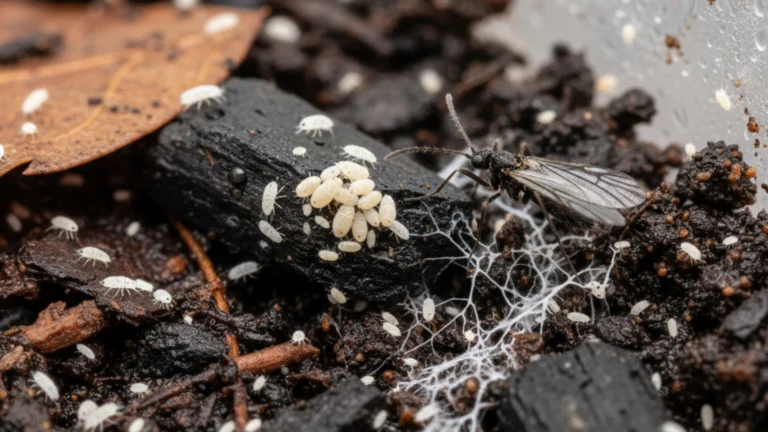
2) Faunal shift: explosive Acaridae counts at food patches, with springtails displaced to container walls, decreased jump response, and elevated mortality.
3) Substrate degradation: odor, capillary saturation zones, and collapsing microfauna recruitment, evidenced by fewer juveniles and egg clusters.
Optimal Feeding Intervals
How often should you feed a culture to maximize Folsomia candida reproduction? Target a 2–3 day interval that synchronizes with air exchange every 72 hours; this cadence elevates fecundity and maintains ideal O2–CO2 balance. For nascent colonies, extend intervals slightly until residual food consistently clears; for dense cultures, retain the 2–3 day cadence but confirm complete consumption before each feeding. Use a monitoring schedule: inspect residue, moisture (damp, never flooded), and activity. If leftovers persist, lengthen the interval; if food desiccates or activity drops, shorten it. Weekly or biweekly intervals can sustain mature, stable cultures but depress reproduction. Powdered yeast or proprietary diets support cuticle formation and breeding synchronization; small, controlled supplements are optional. Maintain 65–75°F and avoid extremes to stabilize microbes and moisture. Prefer a fine, dried powdered diet stored airtight and dispensed from a spice jar; powdered food disappears quickly and helps you verify timing before the next feed.
Nutritional Yeast Portions
A tiny pinch—about 10–50 mg per 500 cm² culture surface—of nutritional yeast per feeding sustains Folsomia candida fecundity while avoiding substrate saturation and mold blooms. Feed once or twice weekly; increase toward 50 mg in dense, reproductively active cohorts at 20–24°C. Crumble the yeast between fingers and sprinkle it onto the substrate or charcoal for even coverage.
- Overfeeding indicators: mycelial mats within 24–48 h, anaerobic odor; action: skip 1–2 feedings, increase aeration.
- Underfeeding indicators: slowed molting, reduced oviposition, longer doubling time; action: add 5–10 mg, supplement with dry rice grains.
- Portion control: dust yeast thinly and evenly across 500 cm².
Select yeast with fine particle size; verify Storage stability (sealed, desiccant, <20°C) to preserve amino acids and B-vitamins. Do a small Brand comparison; some flake varieties clump, elevating mold risk. Adjust by culture area, not container volume.
Pest Infestations (Mites, Fungus Gnats): Prevent, Detect, and Reset Cultures
Why do springtail (Collembola) cultures stall or collapse? Pest pressure. Implement quarantine protocols to prevent accidental predator introduction and microarthropod hitchhikers. Mites (Acari) and fungus gnats (Sciaridae) depress reproduction by consuming biofilm and feed, and larvae scar substrates. Detect early: inspect with 10–20× magnification; look for moving dots that break surface tension (springtails float; mites sink). You’ll note adult gnats near moist lids; use sticky traps. Track metrics—reduced jump frequency, fewer neonates, and patchy foraging indicate infestation. To start clean and maintain productivity, source pest-free cultures from eco-focused suppliers that guarantee live, healthy cultures on arrival.
Prevent: fully sealed tubs with filtered vents; bake or sterilize charcoal; minimize brewer’s yeast; sanitize tools; split off mite-free sections regularly. Since springtails favor moist habitats and are often associated with mold, control condensation and airflow in culture areas to reduce mold and mildew that can draw pests and stress cultures.
Reset: discard heavy blooms; wet-sieve and transfer clean adults to sterile media; heat-treat media; trial mushroom pieces. Monitor moisture and reinfestation weekly for two consecutive weeks.
Poor Substrate Choice or Compaction: Use Aerated, Sanitized Media With Good Flow
You’ll select low-compaction, high-porosity media (horticultural charcoal, lava rock, calcium clay) to preserve aeration and locomotion in Collembola cultures. You’ll engineer airflow channels and keep water at ~33–50% of substrate depth to maintain surface oxygenation, prevent anaerobiosis, and stabilize fecundity. You’ll sanitize media and tools and favor inert substrates that resist mites and pathogenic fungi, reducing pest load while retaining a balanced microbial consortium for nutrition. Since springtails naturally prefer moist, decaying substrates, maintaining high humidity without flooding supports steady grazing and population growth.
Choose Low-Compaction Substrates
When springtail cultures stall, prioritize a low-compaction substrate with high porosity to maintain oxygen diffusion and prevent anaerobic zones. For Collembola, choose inert, porous matrices that resist waterlogging and allow unhindered locomotion and oviposition. Favor hardwood lump charcoal over briquettes, and avoid any charcoal with additives or accelerants.
- Select media: hardwood lump charcoal varieties from sustainable sourcing, lava rock, or calcium-bearing clay blends with a peat fraction. Avoid regular soil, coco, or heavy clays. Target depth 3–4 inches to prevent lower-layer compaction.
- Prepare and hydrate: optionally rinse charcoal, then moisten with distilled water to 1/3–1/2 substrate depth; avoid saturation that collapses pore spaces and induces anaerobiosis.
- Maintain porosity: gently fluff the layer periodically, remove decomposed food residues, and replace media if populations plateau despite feeding; switch to charcoal or calcium clay when densification occurs.
Ensure Airflow Channels
Although substrate porosity sustains oxygen diffusion within the matrix, Collembola cultures also need consistent container-scale air exchange to avert hypoxia, CO2 accumulation, and mold proliferation. You should design ventilation using airflow mapping: distribute multiple 0.5–1 mm perforations across the lid and sides, standardize spacing, and confirm gentle crossflow. Apply prudent mesh selection—stainless 200–300 micron screens prevent escapes while maintaining flux. Avoid sealed jars; crack lids or schedule brief openings if passive exchange is limited. Maintain 70–80% RH by balancing vent area and misting. Use low-speed micro-fans or computer blowers to disrupt stagnation without desiccating. Prevent channel collapse by mixing peat:topsoil (1:1) with sphagnum and coarse leaf litter; avoid compacting clays and over-saturated charcoal, which suppress O2 and reproduction. Monitor behavior to verify adequate exchange. Keep temperatures within 70–80°F (21–27°C) to align ventilation with metabolic demand.
Sanitize to Prevent Pests
Even with mapped crossflow, Collembola reproduction stalls if the substrate carries pests, salts, or compacts; prioritize sanitized, aerated media that maintain oxygenated pore spaces. You’ll curb Diptera incursions and microbial blooms by sterilizing charcoal and clay, rinsing dust, and using de-salinized coco coir only from vetted Supply Sourcing. Keep moisture at one-third to one-half substrate depth; avoid pooling collapses pore networks.
- Heat-treat components (80–100°C, 30–60 min), then cool in sealed containers. Document Batch Tracking to trace failures.
- Build a graded matrix: chunky charcoal or lava rock base, clay fines intermixed, light coir binder. Target porosity and capillary flow without compaction.
- Maintain hygiene: sanitize tools, lids, and feed; mist lightly with distilled water; inspect weekly for larvae, mold, or anaerobic odor, and cull contaminated lots.
Culture Aging and Waste Buildup: Refresh and Split Cultures Regularly
Because springtail (Collembola) cultures undergo substrate aging and metabolite accumulation, you should refresh and split them on a defined schedule. Implement rotation schedules and broodstock banking: restart cultures 1–2 times per year and maintain parallel “fresh” and “old” lines to buffer sudden breakdowns. Aging media biofoul with wastes, fostering mites and fungus gnats, depressing oviposition and juvenile recruitment.
To reset physiology and reduce density-dependent stress, transfer an aliquot to clean containers with sterilized clay or charcoal-based substrate and feed only pasteurized inputs. Split older cultures into multiple smaller setups to lower waste loading, limit pathogen spread, and allow quarantine of declines. Use several containers for redundancy, track feeding and cleanliness weekly, and discard lines showing contamination. Expect reproduction to rebound on renewed substrate rapidly.
Inadequate Ventilation or Excess Waterlogging: Improve Air Exchange Without Drying
While Folsomia and other Collembola tolerate near-saturation humidity, they crash quickly in hypoxic, waterlogged cultures; poor air exchange can yield stagnant odors and CO2 accumulation that kills within days. You should implement cross-ventilation without desiccation by combining fine vents and moisture-retentive substrates. Target substrate moisture like a damp sponge, never puddled; maintain microgradients with leaf litter and eggcrate.
1) Optimize Mesh selection: cover multiple 3–5 mm holes with ~35 μm ultrafine mesh to permit O2 flux while preventing neonate escape.
2) Perform Lid modifications: distribute vents on opposing sides and lid for convective flow; avoid large, uncovered apertures that accelerate drying.
3) Manage water: mist lightly with dechlorinated distilled or rainwater; monitor for condensation, remove leachate, and refresh culture when odor or mortality rises.
Frequently Asked Questions
Does Chlorinated Tap Water Harm Springtails or Their Eggs During Misting?
Yes. You’re exposing Collembola and their eggs to chlorine toxicity during misting, impairing embryogenesis and suppressing microbial trophic resources. Use dechlorination techniques—aging, activated carbon, sodium thiosulfate; maintain stable moisture to optimize hatching and neutral pH.
How Does Starting Population Size Affect Time to Visible Reproduction?
You shorten time to reproduction by seeding initial densities; they overcome Allee effects and Density thresholds, accelerate mating encounters, and reach exponential growth within 3–4 weeks, whereas sparse founders show lag phases and slower maturation.
Can Constant Vibrations or Loud Noise Stress Cultures and Reduce Breeding?
Yes; in Collembola cultures, continuous vibrations or loud noise elevate Stress Physiology, suppressing feeding and oogenesis. You’ll observe reduced fecundity and increased mortality. Habituation Potential appears low; mitigate with vibration isolation, acoustic damping, humidity, nutrition.
Do Light Cycles or Darkness Influence Springtail Activity and Mating Success?
You’ll observe activity in darkness, reduced under light, minimized under UV. Photoperiod responses modulate Collembola foraging; mating success hinges on hygrometry: spermatophore deposition and uptake peak in humid microhabitats. UV sensitivity drives avoidance, preserving moisture.
Are Nearby Cleaners, Fragrances, or Pesticides Suppressing Culture Reproduction?
Yes—you’re depressing Collembola reproduction; cleaner residues, fragrances/VOCs, and pesticide drift reduce microbial forage, disrupt 70–80% RH, and induce stress pathways documented in Folsomia candida. Isolate cultures, purge aerosols, replace substrate, and verify recovery by weekly counts.
Conclusion
You’ve tuned humidity, temperature, and trophic inputs, so your Collembola should rebound. Maintain 60–80% RH and 18–24°C for temperate taxa; 75–95% RH and 22–26°C for tropical species. Meter feedings of Saccharomyces-based yeast weekly, monitor for Acari and Sciaridae, and migrate cultures when detritus density spikes. Select sanitized, springy substrate to stop compaction, and sustain steady ventilation without waterlogging. Track eclosion intervals and adult densities; split cultures at 2–3× carrying capacity for sustained, strong reproduction cycles.