Cultivating a balanced, self-sustaining glass ecosystem requires precision, proper biological integration, and an understanding of specific plant requirements. Within these miniature environments, bryophytes—commonly known as mosses—serve as the biological foundation. Because mosses lack a traditional vascular root system, they absorb moisture and nutrients directly through their leaves via osmosis. This anatomical trait makes them uniquely equipped to thrive in high-humidity enclosures.
However, sourcing and maintaining terrarium moss India presents unique challenges. The extreme environmental shifts of the subcontinent, ranging from the intense heat of the summer to the heavy, stagnant humidity of the monsoon, demand rigorous substrate engineering and biological defense mechanisms. Building a sustainable moss terrarium involves selecting the correct taxonomy, engineering a functional water cycle, and deploying microfauna to prevent fungal overgrowth.
How do you keep terrarium moss alive?
Terrarium moss requires an enclosed environment with 70 to 90 percent relative humidity, indirect full-spectrum lighting, and a well-draining, moisture-retentive substrate. Caretakers must hydrate the moss exclusively using dechlorinated or distilled water. Introducing microfauna like springtails prevents aggressive mold outbreaks that rapidly destroy moss fronds in stagnant, damp conditions.
The Trenoya Approach to Bioactive Ecosystems
At our Trenoya culturing facility in India, observing the interactions between microfauna and flora has shaped our approach to bioactive terrariums. A successful closed terrarium is a functional bioreactor. Sourcing terrarium moss India and placing it in a jar is insufficient; the environment must support continuous nutrient cycling and gas exchange.
The primary cause of terrarium failure is a lack of biological balance. When humidity is trapped inside a glass vessel without adequate airflow, organic matter rapidly decays. We engineer our enclosures on Springtails.in to replicate the forest floor, ensuring every element—from the drainage layer to the live insect cleanup crew—works in synergy. Local expertise dictates that maintaining this balance requires specialized strategies to combat the extreme heat and humidity fluctuations specific to the Indian climate.
Selecting the Best Moss for Your Terrarium
While India possesses diverse native bryoflora across the Western Ghats and the Himalayas, wild-collected temperate mosses generally fail when introduced to the static, warm environment of a closed tropical terrarium. The static humidity suffocates temperate species adapted to high airflow and winter dormancy. Successful long-term cultivation requires selecting commercial tropical or subtropical moss varieties.
Mosses are categorized by their distinct growth patterns, which determine their functional placement within an enclosure :
- Acrocarpous Mosses: These varieties grow vertically, forming dense, tightly packed mounds. They are excellent for establishing topography, creating miniature hills, and adding structural depth to the terrarium landscape.
- Pleurocarpous Mosses: These varieties grow horizontally, spreading quickly to form low, branching carpets. They provide essential ground cover, helping to lock moisture into the underlying substrate.
| Moss Species | Common Name | Growth Habit | Terrarium Application | Humidity Needs |
| Leucobryum glaucum | Cushion Moss | Acrocarpous | Foreground topography, miniature hills | 70-90% |
| Taxiphyllum barbieri | Java Moss | Pleurocarpous | Epiphytic growth on hardscape (wood/rock) | 90%+ |
| Hypnum cupressiforme | Sheet Moss | Pleurocarpous | Flat substrate ground cover, moss carpets | 70-85% |
| Thuidium delicatulum | Fern Moss | Pleurocarpous | Textured ground cover, background climbing | 75-90% |
| Dicranum scoparium | Mood Moss | Acrocarpous | Midground accents, dense velvet patches | 70-85% |
Cushion Moss (Leucobryum glaucum)
Cushion moss is highly sought after for closed terrariums due to its plump, structural mounds. It possesses specialized water-storing cells called leucocysts. When dehydrated, the moss takes on a pale, silvery-green hue, but it transforms into a vibrant, deep green when fully saturated. This species requires bright, indirect light to maintain its compact shape.
Java Moss (Taxiphyllum barbieri)
Originally popularized in aquascaping, Java moss thrives when grown emersed in a high-humidity closed terrarium. It is the premier choice for covering hardscape elements like driftwood and dragon stone. Because it lacks roots entirely, it relies heavily on ambient moisture and requires humidity levels consistently above 90%.
Sheet Moss (Hypnum cupressiforme)
Sheet moss forms a flat, continuous carpet across the terrarium floor. It grows in cohesive layers that can be easily manipulated and draped over the substrate. Sheet moss requires a shaded, consistently moist environment and will quickly turn brown if exposed to direct sunlight or arid conditions.
Companion Flora: Ideal Closed Terrarium Plants
While a pure moss landscape is aesthetically striking, incorporating companion plants creates a more robust ecosystem. The root systems of higher plants stabilize the substrate, while their broad leaves provide necessary micro-shade for the underlying moss layer. Companion flora must share the exact environmental requirements as the moss: high humidity tolerance, low to moderate light needs, and a preference for consistently damp substrate.
Superior closed terrarium plants for Indian setups include :
- Fittonia albivenis (Nerve Plant): Thrives in 80%+ humidity and features striking, heavily veined foliage in shades of pink, red, and white. This provides a dramatic visual contrast against a solid green moss carpet.
- Ficus pumila (Creeping Fig): A vigorous climbing vine that rapidly scales hardscape elements and glass backgrounds. It requires regular pruning to prevent it from entirely overshadowing the moss layer.
- Peperomia spp.: Varieties such as Peperomia rotundifolia (Trailing Jade) feature small, semi-succulent leaves that retain moisture effectively without rotting in high humidity.
- Pellaea rotundifolia (Button Fern): Ferns share an evolutionary lineage heavily tied to high-moisture environments. Small ferns add verticality and a feathery texture that complements pleurocarpous mosses.
Cacti and arid-adapted succulents (such as Echeveria or Haworthia) must be strictly avoided. These plants require dry soil and high airflow; placing them in a 90% humidity moss terrarium results in rapid tissue rot.
Engineering the Bioactive Substrate Matrix
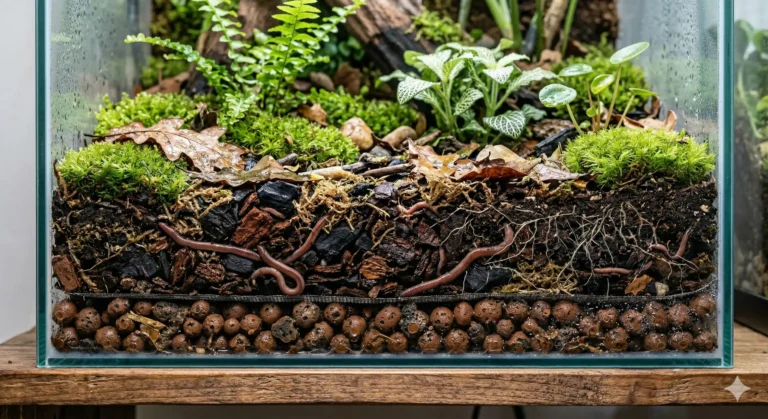
Moss cannot survive on sterile, compacted garden soil. Because moss absorbs moisture directly from the microclimate immediately above the soil surface, the substrate must function as an efficient moisture reservoir that simultaneously permits oxygen exchange. In a bioactive terrarium, the substrate also acts as the primary bioreactor, housing the beneficial bacteria and microfauna required to sustain the ecosystem.
A highly engineered bioactive substrate matrix must be constructed in distinct functional layers:
- The Drainage Aquifer: Closed terrariums lack drainage holes. An artificial water table must be created at the base of the vessel to capture excess water and prevent the organic soil from becoming waterlogged. This layer should consist of 1.5 to 2 inches of lightweight, porous material such as expanded clay aggregates (LECA) or lava rock.
- The Permeable Barrier: To prevent the fine organic substrate from migrating down into the drainage aquifer, a synthetic fiberglass mesh or landscaping fabric must be installed. This allows water to percolate downward while keeping the soil elevated.
- The Organic Bioactive Mix: The organic layer must perfectly balance water retention, aeration, and structural integrity.
For optimal moss cultivation, the substrate mix should closely mimic natural forest soil. As detailed in our comprehensive guide on the best bioactive substrate, a reliable formulation consists of :
- 60% Horticultural Charcoal: Provides colonization sites for beneficial nitrifying bacteria, prevents compaction, and filters water impurities.
- 20% Coconut Coir: An inert, fibrous material that provides excellent moisture retention.
- 10% Long-Fiber Sphagnum Moss: Acts as a “hydration station” within the soil matrix, holding up to twenty times its weight in water to ensure localized humidity pockets.
- 10% Processed Leaf Litter: Provides a slow-release nutrient source that fuels the microbial food web.
Why Springtails Are Mandatory for Mold Prevention
The single greatest threat to a closed moss terrarium is the proliferation of pathogenic mold and fungi. The exact conditions required for moss to thrive—high humidity, stagnant air, and damp organic substrates—are the exact conditions required for rapid fungal blooming. White cobweb mold (Hypomyces) and green mold (Trichoderma) will inevitably consume decaying organic matter, overtake the moss fronds, and collapse the entire ecosystem if left unchecked.
The absolute mandatory solution for mold prevention is the introduction of Collembola, commonly known as springtails.
The Ecological Function of Springtails
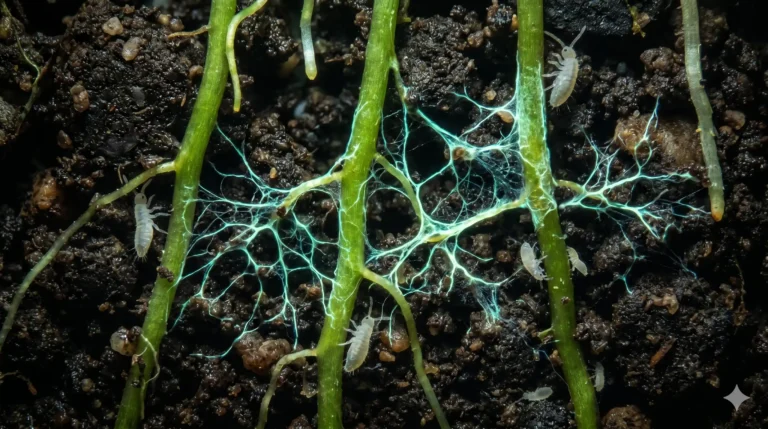
Springtails are microscopic, wingless detritivores that operate as the “invisible janitors” of the terrarium. Their primary dietary source is saprotrophic fungi, mold spores, algae, and decaying botanical matter. By aggressively grazing on these elements, springtails perform several critical functions :
- Direct Mold Eradication: Springtails consume fungal spores before they bloom into large, visible mycelial mats. A healthy colony outcompetes mold for resources, keeping the moss clean and vibrant.
- Nutrient Cycling: As springtails consume decaying organic waste, their digestive processes convert this waste into bioavailable macronutrients. These nutrients are deposited directly back into the substrate, acting as a continuous, organic fertilizer for the moss.
- Soil Aeration: Through their constant subterranean movement, springtails create microscopic tunnels in the substrate matrix. This bioturbation facilitates oxygen exchange, prevents the soil from becoming compacted, and directly benefits the respiration of the moss rhizoids.
For an in-depth understanding of how these organisms interact with enclosed environments, review our guide on springtails in terrarium.
Sourcing Biosecure Microfauna
A frequent and catastrophic error made by novice terrarium builders is attempting to harvest wild moss and wild springtails from outdoor environments. Wild-collected materials frequently harbor predatory mites (Stratiolaelaps scimitus), centipedes, and agricultural pests that systematically hunt and eradicate the springtail population, leaving the terrarium defenseless against mold.
To ensure absolute biosecurity, the ecosystem must be seeded with laboratory-cultured, sterilized colonies. For best results, we recommend seeding your tank with Trenoya live Springrails culture.
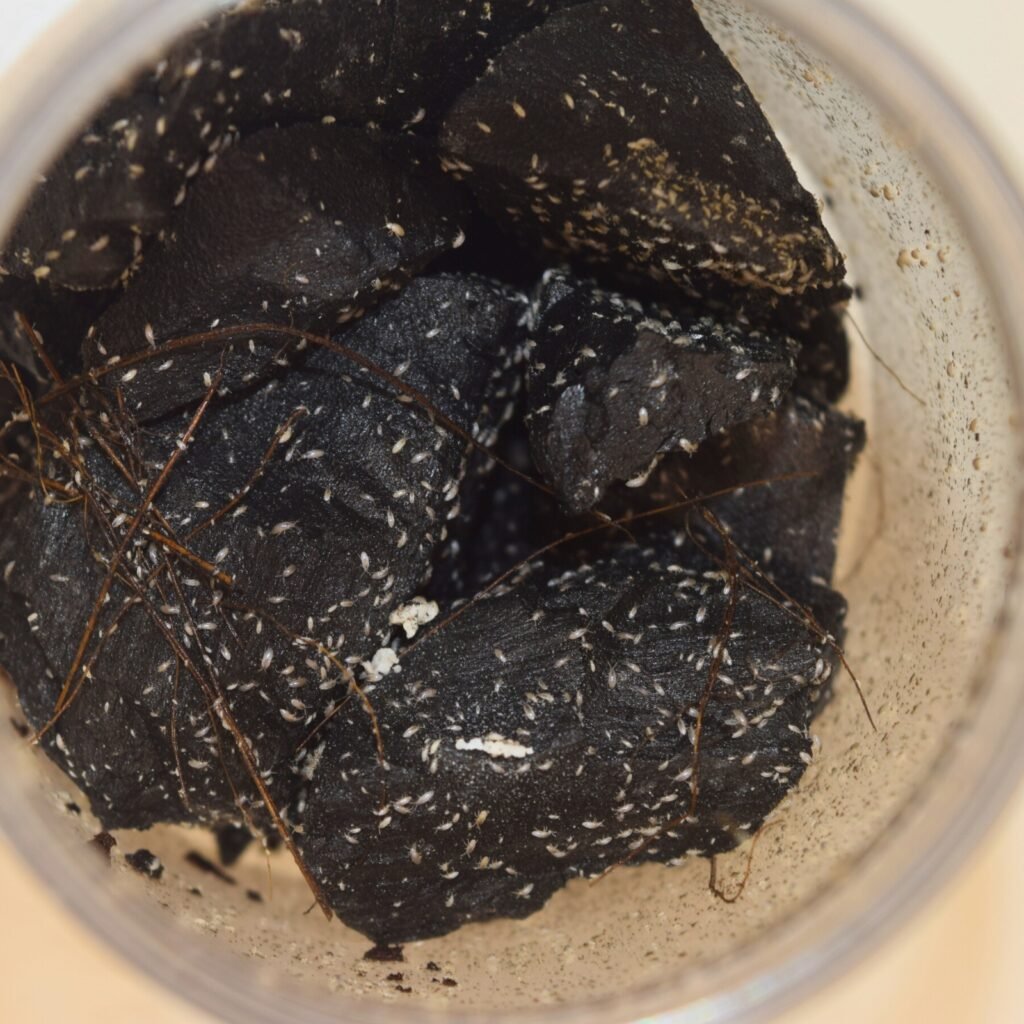
TRENOYA Springtails (Cleanup Crew) — Live Culture Starter (India)
Seed your bioactive terrarium with a pest-free, starter-ready springtail culture. Perfect for mold control and waste cleanup. Live Arrival Guarantee + Pan-India express shipping.
Our Trenoya cultures are Pest-Free, Home-Grown in India, and arrive safely with a Live Arrival Guarantee via our Pan-India Express Shipping. Introducing a robust starter culture establishes the biological defense mechanisms required to sustain a healthy moss environment.
Navigating the Indian Climate: Summer Heat and Monsoon Care
The Indian subcontinent presents a uniquely hostile external environment for closed terrariums. The extreme dichotomy between the scorching summer months and the hyper-humid, stagnant monsoon season requires dynamic management strategies. A static care routine will result in failure as the external ambient conditions fluctuate.
Summer Heatwave Management
The primary threats during the Indian summer are desiccation, thermal shock, and the greenhouse effect. Glass terrariums effectively trap solar radiation; if a closed vessel is struck by direct sunlight during a 40°C summer day, the internal temperature will rapidly spike past 50°C. This excess heat cooks the moss, exterminates the springtail population, and can induce thermal cracking in the glass.
| Threat | Biological Impact | Mitigation Strategy |
| Direct Sunlight | Rapid internal temperature spikes, thermal cracking of glass | Relocate to a north-facing room; utilize LED grow lights (5000K-6700K) instead of natural sunlight. |
| High Ambient Heat | Rapid evaporation, moss desiccation, springtail death | Move the terrarium to the coolest, lowest point in the residence; keep away from active heat sources. |
| Moisture Loss | Moss fronds turn crisp, silver, or pale | Monitor condensation daily. Apply a light misting of chilled, distilled water if the soil appears dry. |
Monsoon Humidity Management
During the southwest monsoon, ambient indoor humidity in coastal and southern Indian cities routinely exceeds 85%. The combination of high ambient moisture and restricted airflow inside a closed glass vessel creates a saturated, stagnant environment that heavily favors aggressive mold outbreaks and cyanobacteria proliferation.
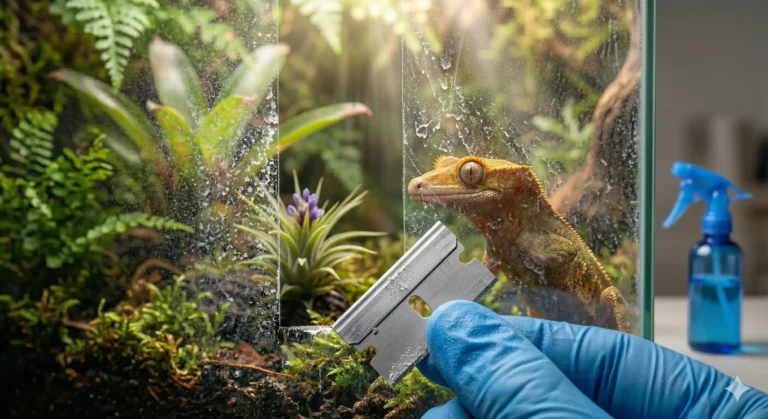
- Condensation Monitoring: The water cycle inside the terrarium is visual. Light condensation should appear on the glass in the morning and evening, clearing during the day. If the glass remains heavily obscured by large droplets of condensation for 24 continuous hours, the ecosystem is critically waterlogged.
- Forced Ventilation: During the monsoon, caretakers must remove the terrarium lid for 30 to 60 minutes every alternate day to facilitate gas exchange and allow the stagnant, saturated air to vent. This disruption of the stagnant air column is a highly effective mechanical deterrent against fungal spores settling on the moss leaves.
- Watering Cessation: Absolutely no supplemental misting should occur during the monsoon season unless the substrate is visibly bone dry. The ambient humidity introduced during ventilation periods is generally sufficient to sustain the moss.
Frequently Asked Questions
Why is my terrarium moss turning brown?
Moss turns brown primarily due to dehydration, waterlogging, or mineral burn. If it is crisp and pale, it requires immediate misting. If it is dark, mushy, and smells sour, the terrarium is over-watered, the substrate has gone anaerobic, and it requires immediate ventilation. Additionally, using chlorine-heavy tap water causes chemical burns, leading to severe yellowing and browning.
How do springtails stop moss from molding over?
Springtails are microscopic detritivores that operate as obligate fungivores. They aggressively graze on fungal spores, white cobweb mold, and decaying organic matter. By consuming these elements, they actively eradicate the mold before it can spread and smother the moss, converting the waste into bioavailable fertilizer for the plants.
Do closed terrariums need air holes?
A perfectly balanced closed terrarium does not strictly require permanent air holes, as the plants recycle oxygen and carbon dioxide through photosynthesis and cellular respiration. However, periodically opening the lid for 20 to 30 minutes every few weeks (or more frequently during the humid Indian monsoon) is highly recommended to flush stagnant air and deter mold growth.
How often should a closed moss terrarium be watered?
A properly sealed closed terrarium rarely requires watering, as it forms a self-sustaining water cycle via evaporation and condensation. It may only require a light misting every 3 to 6 months. Caretakers should only add distilled water when the condensation completely vanishes from the glass and the moss feels physically dry to the touch.
Can I use outdoor moss in my indoor terrarium?
Using wild-harvested outdoor moss is highly discouraged. Wild moss from the Indian environment frequently harbors predatory soil mites, centipedes, and agricultural pests that will eradicate your terrarium’s beneficial springtail population. Additionally, temperate outdoor mosses often fail to adapt to the constant heat and static humidity of a closed tropical terrarium.