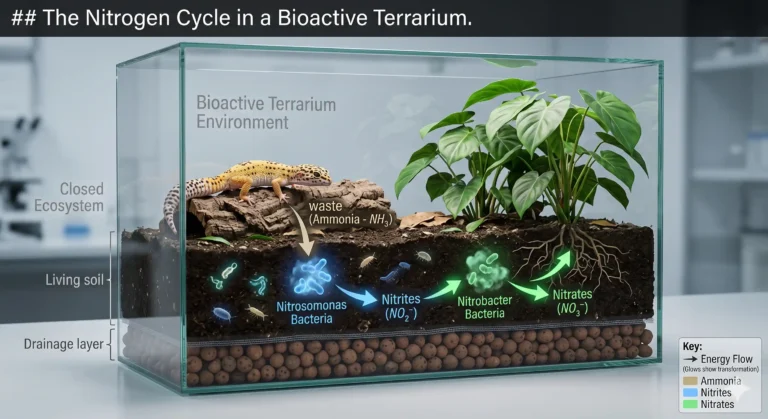
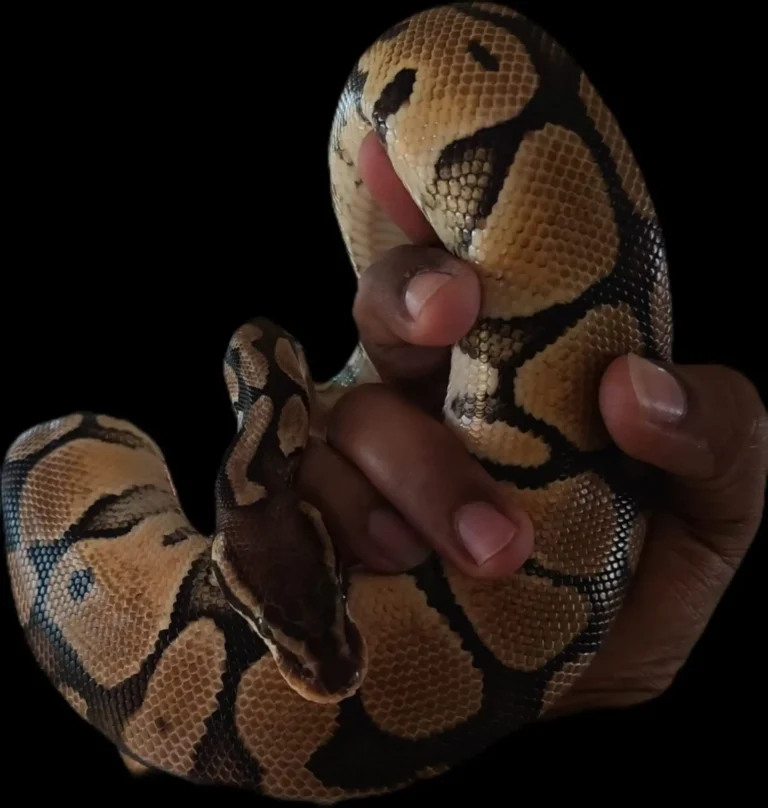
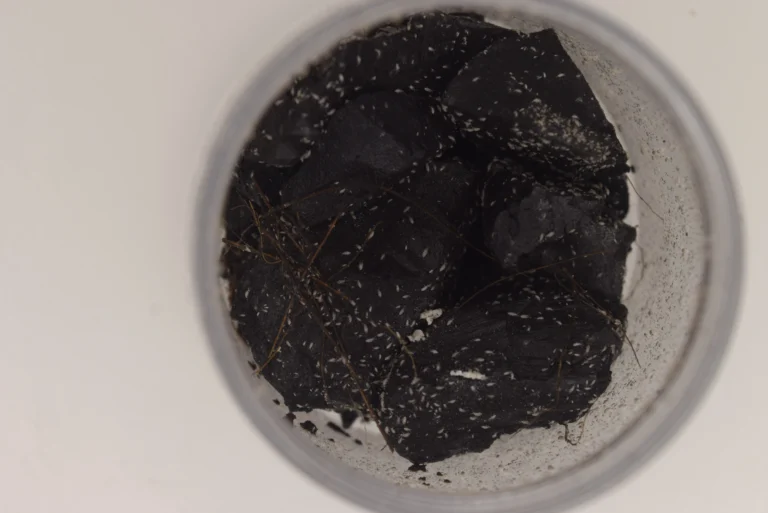
The establishment of a bioactive ecosystem represents a significant advancement in modern herpetoculture and invertebrate husbandry. Unlike sterile, artificial setups that demand constant manual sanitation, a bioactive enclosure utilizes the biological mechanisms found on natural forest floors to recycle organic waste, suppress pathogenic organisms, and maintain soil health. At the absolute foundation of this intricate biological engine lies the substrate layer, which must be continuously fueled by biodegradable organic matter to function effectively.
Within the specific context of the Indian subcontinent, managing these ecosystems introduces distinct geographical and climatic variables. Regional parameters—ranging from intense summer heatwaves that threaten to desiccate enclosures to prolonged monsoon seasons that push ambient humidity to saturation points—demand a highly calibrated approach to ecosystem management. The selection, preparation, and integration of botanical elements, specifically leaf litter, act as the primary stabilizing forces against these environmental extremes.
A thriving ecosystem depends upon the precise introduction of detritivores—primarily Collembola (springtails) and Isopoda (woodlice). These organisms operate symbiotically with saprophytic fungi and beneficial bacteria to consume animal feces, decaying plant matter, and excess food. Establishing this balance requires high-quality microfauna. Cultures that are Home-Grown in India, rather than lab-grown or imported, exhibit significantly higher survival rates because they are already acclimatized to regional barometric and thermal baselines.
Why do bioactive tanks need leaf litter?
Leaf litter acts as the primary biological driver and food source for detritivores like isopods and springtails. Decomposing leaves release essential nutrients into the substrate, retain soil moisture, regulate humidity levels, and provide necessary microclimates that offer shelter and reduce stress for terrestrial reptiles and amphibians.
The Science of Detritivores: Springtails and Isopods
To fully comprehend the application of leaf litter, an analysis of the biological profiles of the organisms that consume it is required. The primary agents of decomposition in a bioactive terrarium occupy different but overlapping ecological niches, working in tandem to process organic material across multiple stages of decay.
Collembola (Springtails)
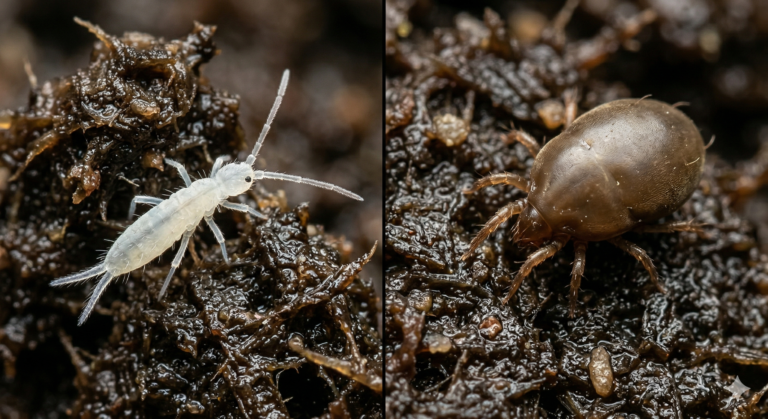
Springtails are microscopic hexapods, typically measuring between 0.5 and 4 millimeters in length. They are characterized by a specialized forked appendage called a furcula located on their abdomen, which allows them to jump significant distances when threatened.
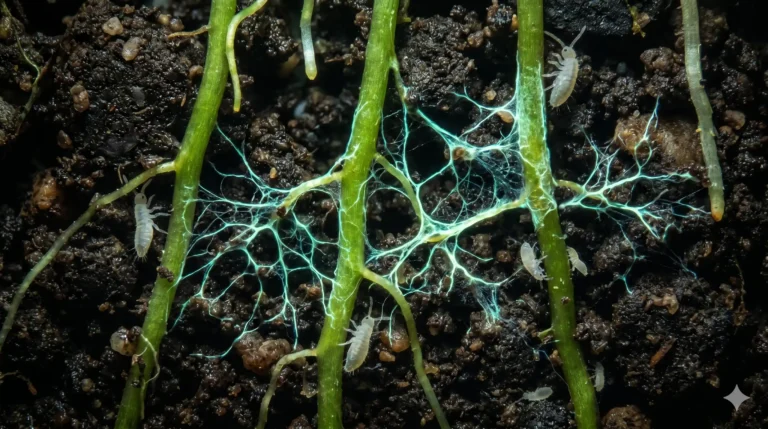
Springtails function as the microscopic sanitation department of the terrarium. Their mouthparts are not adapted for chewing large, tough leaves, but rather for grazing on the soft, microscopic fungal hyphae and bacterial biofilms that grow on the surface of decomposing organic matter. As leaves sit in a humid environment, saprophytic fungi begin to break down the tough lignin and cellulose. Springtails swarm these fungal blooms, consuming the spores and preventing the mold from overrunning the enclosure. For hobbyists looking to establish this critical biological defense, utilizing a(https://springtails.in/shop/springtails/springtails-live-culture-starter) provides a reliable, established population of these essential organisms.
To fully understand this symbiotic relationship, reviewing the role of springtails in a bioactive setup reveals how they prevent substrate toxicity and maintain soil aeration. As they navigate through the substrate, their movements create microscopic channels that facilitate oxygen exchange, preventing the soil from turning anaerobic.
Isopoda (Woodlice)
Isopods are terrestrial crustaceans that perform the macroscopic breakdown of leaf litter. Common species utilized in the hobby include Porcellio scaber, Porcellionides pruinosus, Armadillidium vulgare, and various Cubaris species. These detritivores are equipped with strong mandibles designed to physically shred and consume dead plant material, rotting wood, and animal waste.
When an isopod consumes a fallen leaf, it extracts the available nutrients and excretes the remains as “frass.” This frass is a highly concentrated organic fertilizer, rich in nitrogen, phosphorus, and potassium, which is immediately bioavailable to the roots of live plants. Furthermore, the mechanical shredding of the leaves exposes a greater surface area to the ambient environment, accelerating the secondary breakdown by bacteria, fungi, and springtails.
Isopods require a significant volume of leaf litter to thrive. Professional cultivators dictate that leaf litter should not merely be sprinkled on the surface; it must form a dense layer where the underlying substrate is completely obscured.
Physicochemical Properties of Leaf Litter
Not all leaves possess the same chemical and physical properties. The suitability of a leaf species for a leaf litter terrarium depends on its rate of decomposition, its structural integrity, and the specific biochemical compounds it releases as it breaks down.
Lignin and Cellulose Ratios
The structural framework of a leaf is composed primarily of cellulose, hemicellulose, and lignin. Cellulose provides rigidity, while lignin acts as the binding agent that makes the cell walls highly resistant to decay.
- High-Lignin Leaves: Leaves with high lignin content, such as Magnolia or Oak, are thick, waxy, and decay very slowly. These leaves serve a primarily structural role in the terrarium, providing long-lasting microhabitats and visual ground cover that can persist for several months to a year.
- Low-Lignin Leaves: Leaves with low lignin content and thinner cuticles, such as Maple or Catappa leaves, decompose rapidly. These leaves are quickly colonized by fungi and bacteria, rendering them soft enough for isopods to consume efficiently.
A scientifically optimized terrarium requires a calculated ratio of both high-lignin and low-lignin leaves to ensure structural longevity and a steady, accessible food source for the cleanup crew.
Tannins, Humic Acid, and Fulvic Acid
As leaves degrade, they leach secondary metabolites into the surrounding soil and water. Tannins are polyphenolic compounds synthesized by plants to deter herbivory and prevent microbial infections. When leaves rich in tannins are introduced to a moist terrarium environment, these compounds seep into the substrate.
The leaching of tannins, alongside humic and fulvic acids, slightly lowers the pH of the soil, pushing it toward a mild acidity. This acidic shift is highly beneficial; it mimics the natural chemistry of tropical forest floors and actively inhibits the proliferation of harmful bacteria and pathogenic fungal spores. In paludariums or enclosures with water features, these compounds stain the water a yellow-brown hue, creating a “blackwater” environment that naturally softens the water, reduces stress in aquatic amphibians, and acts as a mild antibacterial agent.
Evaluating Leaf Litter Types for Indian Terrariums
Sourcing appropriate leaf litter requires careful botanical identification. While the international hobby relies heavily on North American and European tree species, practitioners in the Indian subcontinent have access to a rich diversity of native flora that serves identical or superior ecological functions.
Indian Almond (Terminalia catappa)
An indian almond leaves terrarium represents the gold standard for bioactive ecosystems. Native to South and Southeast Asia, these large, broad leaves are exceptionally rich in tannins, flavonoids, and humic acids.
When placed in a terrarium, Catappa leaves decompose at a moderate-to-fast rate. Their relatively soft cellular structure makes them highly palatable to all species of isopods and springtails. The compounds released during their breakdown possess documented antibacterial and antifungal properties, effectively suppressing pathogenic mold outbreaks in highly humid environments. For specialized setups involving dart frogs or delicate invertebrates, Catappa leaves provide unparalleled environmental conditioning.
Oak (Quercus spp.)
Oak leaves are universally recognized as highly effective detritivore sustenance. Various species, including Live Oak, Water Oak, and Pin Oak, offer thick, durable structures that decay at a slow, predictable rate. The unique, lobed morphology of Oak leaves prevents them from packing down entirely flat; instead, they stack irregularly, creating essential air pockets and interstitial spaces. These cavities provide secure breeding grounds for microfauna and prevent the underlying soil from becoming compacted and deprived of oxygen. Isopods readily consume Oak leaves, though they often wait until fungi have softened the cuticle.
Magnolia (Magnolia grandiflora)
Magnolia leaves are prized for their immense durability. Characterized by a thick, leathery texture and a waxy cuticle, they are highly resistant to moisture and microbial breakdown. In a heavily misted tropical terrarium, Magnolia leaves can remain structurally intact for an extended duration. While isopods find them difficult to consume quickly, they serve as excellent, long-lasting visual barriers and structural shelters for small reptiles and amphibians.
Mango (Mangifera indica)
For practitioners in India, native fruit tree leaves provide an abundant and highly nutritious alternative to imported species. Mango leaves, when completely dried and brown, are robust and slightly slower to break down, offering excellent ground cover. Observations indicate that while isopods may initially bypass fresh, tough Mango leaves, they eagerly consume them once the microbial breakdown process softens the tissues.
Guava (Psidium guajava)
Guava leaves offer immense utility within bioactive enclosures. They possess naturally occurring antimicrobial properties and break down faster than Mango leaves, providing a rapid injection of organic nutrients to the detritivore population. Completely desiccated Guava leaves serve as an excellent dietary supplement for woodlice and millipedes, bridging the gap between slow-decaying structural leaves and fast-decaying supplemental foods.
Peepal (Ficus religiosa) & Banyan (Ficus benghalensis)
The use of Ficus species, particularly the iconic Indian Banyan and Peepal trees, presents a topic of frequent debate in terrarium ecology due to the presence of latex or sap in live tissues, which can be irritating or mildly toxic. However, ecological data confirms that once Ficus leaves have naturally senesced, fallen from the tree, and completely desiccated, the volatile sap compounds degrade completely.
Fully browned, crisp Peepal and Banyan leaves are safe for inclusion in bioactive systems. They provide extensive surface area and are readily consumed by Porcellio and Armadillidium isopod species. It remains critical that these leaves are collected only after they are dead and dry; green leaves must never be harvested directly from the branch for terrarium use.
Neem (Azadirachta indica)
Neem is renowned across the Indian subcontinent for its potent pesticidal properties, driven by the compound azadirachtin, which disrupts the hormonal cycles of many insects. A common assumption is that Neem leaves would eradicate beneficial terrarium microfauna. However, rigorous entomological and toxicological research demonstrates that neem biopesticides are highly selective. Studies investigating the effects of neem on non-target, beneficial detritivores, specifically the isopod Porcellionides pruinosus, concluded that neem products present zero risk to these organisms.
Dried Neem leaves can be integrated into the leaf litter matrix. They offer the unique advantage of potentially deterring true pests, such as plant-eating spider mites or thrips, without disrupting the vital decomposition activities of the isopod and springtail populations.
| Leaf Species | Breakdown Rate | Structural Integrity | Tannin Yield | Primary Utility |
| Indian Almond | Moderate-Fast | Low | Very High | Antimicrobial conditioning, primary detritivore nutrition. |
| Oak | Slow | High | Moderate | Balanced nutrition, creation of interstitial air spaces. |
| Magnolia | Very Slow | Very High | Low | Long-term hiding spaces, aesthetic ground cover. |
| Mango | Moderate-Slow | High | Low | Accessible native nutrition, robust terrarium flooring. |
| Guava | Fast | Low | Moderate | Rapid nutrient cycling, supplemental isopod diet. |
| Peepal | Moderate | Moderate | Low | Broad surface area, reliable native food source (must be fully dry). |
| Neem | Moderate | Low | Moderate | Selective pest deterrence, safe for isopods. |
Sourcing and Collecting Leaves in India
Harvesting wild leaves is standard practice, provided strict biosecurity parameters are met. Leaves must only be collected from designated pesticide-free and herbicide-free zones, well away from heavy vehicular traffic to avoid heavy metal and exhaust particulate contamination.
Only fallen, completely brown, senesced leaves should be harvested. Green leaves pulled directly from branches contain active sap and defensive chemical compounds that can be toxic to the cleanup crew and reptiles. Furthermore, every collected leaf must be rigorously sterilized to eliminate wild pathogens, invasive ants, predatory centipedes, and nematode eggs before entering the closed ecosystem.
Sterilization Protocols for Leaf Litter
Procuring leaf litter from natural environments poses significant biosecurity risks. Wild-collected leaves harbor a multitude of potential threats, including pathogenic fungi, predatory nematodes, parasitic mites, and unwanted snail eggs. Introducing contaminated organic matter into a closed, humid terrarium provides these pathogens with an environment devoid of natural predators, leading to rapid proliferation and ecosystem collapse.
Consequently, all botanical elements must undergo rigorous sterilization protocols prior to introduction. The objective is to apply sufficient thermal stress to eradicate harmful organisms without incinerating the carbon structure of the leaf or completely destroying the cellulose matrix required by detritivores.
1. Thermal Immersion (Boiling)
Submerging leaf litter in boiling water (100°C / 212°F) represents the most mechanically thorough sterilization technique.
- Bring a large pot of dechlorinated or reverse osmosis (RO) water to a rolling boil.
- Submerge the collected leaves entirely in the water.
- Maintain the boil for exactly 5 to 10 minutes.
- Remove the leaves and place them on a clean rack to cool and dry.
The rapid transfer of hydrothermal energy efficiently penetrates the leaf structure, lysing the cellular walls of bacteria, insect eggs, and fungal spores. Furthermore, boiling acts as a mechanical wash, dislodging particulate pollutants and soil debris. A secondary consequence of boiling is the rapid extraction of tannins. The resulting dark liquid can be cooled and utilized to condition aquatic features. However, boiling can cause more fragile leaves, such as Guava, to disintegrate prematurely, reducing their efficacy as structural hides.
2. Dry Heat Application (Baking)
Baking is the preferred methodology for processing large volumes of structural leaf litter, such as Oak or Magnolia, where maintaining the physical rigidity of the leaf is paramount.
- Preheat the oven to 60°C – 90°C (140°F – 200°F).
- Spread the dry leaves in a single, even layer on a clean baking sheet.
- Bake the leaves for 20 to 30 minutes, monitoring them closely.
- Remove from the oven and allow to cool completely before terrarium introduction.
Thermodynamic pathogen eradication occurs because most harmful fungal spores denature at approximately 60°C to 71°C. Maintaining the oven temperature within this precise threshold ensures absolute sterilization while mitigating the risk of combustion. Leaves must be actively monitored during this process, as excessive thermal exposure will render them overly brittle, causing them to shatter into dust rather than providing functional ground cover.
3. Cryogenic Processing (Freezing)
Subjecting leaf litter to sub-zero temperatures (-18°C / 0°F) for a minimum of 72 hours induces intracellular ice crystallization within biological contaminants. As water within the cells of pests and pathogens freezes and expands, the cellular membranes rupture, resulting in death. While freezing effectively neutralizes larger invertebrates like spiders, ticks, and ants, it is mathematically less reliable for eradicating extremophile fungal spores or certain resilient nematode cysts. Therefore, freezing is generally recommended only as a secondary measure or in instances where structural preservation of highly delicate botanicals is required.
Managing the Indian Climate: Summer Heat and Monsoon Humidity
Operating bioactive systems in the Indian subcontinent requires a deep understanding of external climatic forces. Unlike temperate regions where terrariums merely require supplementary heating, the extreme seasonal shifts in India impose unique thermodynamic and hydrologic stressors on the enclosed ecosystem. At the Springtails.in facility in India, Amitabh and the cultivation team have developed specific protocols for managing these extremes.
Managing the Summer Maximum (March to June)
During the peak Indian summer, ambient external temperatures routinely exceed 40°C (104°F) across many regions. Glass enclosures act as effective heat traps, absorbing radiant energy and preventing convective heat loss. This phenomenon can elevate internal terrarium temperatures to lethal thresholds for both the primary inhabitants and the detritivore cleanup crew. Springtails and isopods typically experience metabolic stress and potential die-offs when substrate temperatures exceed 29°C (85°F).
To mitigate thermal stress, terrariums must be repositioned away from any direct solar radiation, including ambient window light. Direct sunlight not only exacerbates overheating but introduces the risk of “Thermal Cracking,” a process where localized rapid heating causes the glass pane to expand unevenly and shatter.
Temperature regulation must rely on evaporative cooling strategies. By ensuring the substrate remains adequately hydrated and simultaneously increasing ambient airflow through the enclosure via mesh ventilation panels, the phase change of liquid water to water vapor absorbs latent heat from the terrarium atmosphere, effectively lowering the ambient temperature. However, excessive ventilation without corresponding moisture replenishment will rapidly desiccate the leaf litter layer, leading to the collapse of the isopod population. Maintaining a thick, 3- to 4-inch layer of slowly decomposing leaf litter serves as the primary defense against substrate desiccation, locking moisture into the lower soil horizons even when the surface air is dry.
Navigating the Monsoon Saturation (July to September)
The arrival of the Indian monsoon reverses the environmental stressor, replacing extreme heat with sustained, ubiquitous humidity. With external relative humidity frequently registering between 85% and 100%, the vapor pressure deficit approaches zero, meaning water evaporates exceptionally slowly. In an enclosed terrarium, standard misting schedules that were appropriate in the summer will rapidly result in waterlogged substrates.
When soil becomes saturated, the interstitial air spaces within the substrate collapse. The environment turns anaerobic, choking the root systems of live plants and decimating populations of essential aerobic soil bacteria. Anaerobic bacteria quickly proliferate in these conditions, producing hydrogen sulfide—identifiable by a distinct sulfurous, rotten-egg odor—which is highly toxic to terrarium inhabitants.
During the monsoon season, water input must be drastically reduced. The focus shifts entirely to maintaining cross-ventilation. If glass condensation becomes dense and forms large droplets rather than a fine mist, the enclosure must be temporarily opened to allow stagnant, moisture-heavy air to escape.
The primary biological threat during the monsoon is the aggressive proliferation of pathogenic mold. Fungal spores naturally exist in all environments, but they erupt into massive blooms only when provided with stagnant air, excess moisture, and decaying organic matter. In a bioactive setup, the leaf litter layer becomes highly susceptible to these outbreaks. This is the precise juncture where a robust microfauna population demonstrates its utility. By maintaining a dense, active colony of springtails, the ecosystem possesses a self-regulating mechanism that aggressively consumes fungal hyphae as rapidly as they germinate, preventing mold from enveloping the plants and hardscape.
Pathology and Pest Management in Leaf Litter Ecosystems
Even with strict sterilization protocols, bioactive terrariums occasionally face incursions from opportunistic pests. The nutrient-dense, warm, and humid environment provided by decaying leaf litter and moist soil is highly attractive to various insect species. Differentiating between beneficial detritivores, harmless saprophytes, and actively destructive pests is a critical skill for ecosystem management. Cultivators frequently consult resources for troubleshooting springtail pests in India, including gnats and mites to maintain biological balance.
Identifying and Eradicating Fungus Gnats (Sciaridae)
Fungus gnats represent the most ubiquitous nuisance in humid terrariums. The adult insects are small, dark, mosquito-like flies that swarm erratically near the soil surface. While the adults do not bite or harm reptiles, their larval stage is highly destructive. Fungus gnat larvae are tiny, translucent maggots with black heads that hatch in moist soil. While they primarily feed on decaying leaf litter and fungi, high populations will aggressively target and consume the delicate root hairs of live terrarium plants, leading to wilting, stunted growth, and eventual plant death.
Eradication relies on moisture management and biological warfare. Because fungus gnats require constantly wet topsoil to lay eggs, allowing the uppermost layer of the leaf litter and substrate to dry out between watering cycles disrupts their reproductive cycle. Biologically, a thriving population of springtails outcompetes the gnat larvae for access to fungal food sources, effectively starving the pest population. For severe infestations, the introduction of predatory mites, specifically Hypoaspis miles, provides a targeted strike force. These beneficial mites actively hunt and consume fungus gnat larvae within the substrate, posing zero threat to reptiles, amphibians, or adult isopods.
Managing Mite Incursions
Mites are a diverse taxon, and their presence in a terrarium warrants careful identification.
- Soil and Mold Mites: These are microscopic, slow-moving white or translucent arachnids often seen congregating on pieces of decaying food or rotting wood. They feed on detritus and mold. While not directly harmful to the terrarium animals, large population explosions indicate that the enclosure is severely overfed or overly wet. They can outcompete springtail cultures if left unchecked.
- Spider Mites: These are true plant pests. They congregate on the undersides of live plant leaves, sucking the sap and leaving behind pale stippling and fine, silken webbing. Spider mites prefer dry, stagnant conditions.
The leaf litter layer rarely harbors dangerous parasitic mites, but it is the primary domain of soil and mold mites. Reducing feeding frequencies, removing uneaten supplemental food within 24 hours, and maintaining a thick layer of hardwood leaves ensures the ecosystem remains balanced.
Fungal Blooms: Saprophytic vs. Pathogenic
It is a common misconception that all mold in a terrarium is detrimental. The decomposition of leaf litter is impossible without fungi. When setting up a new bioactive enclosure, it is entirely normal to experience a “new tank bloom”—a sudden explosion of fluffy white or green mold spanning the wood and leaves.
This initial bloom consists of saprophytic fungi metabolizing the readily available surface sugars on the newly introduced botanicals. It is a necessary phase of the nutrient cycle. During this period, operators should resist the urge to tear apart the enclosure or apply chemical fungicides. Instead, ensure the springtail and isopod populations are active; they will graze upon this fungal bloom, eventually bringing it under control and incorporating its biomass into the food web.
Conversely, pathogenic molds or slime molds that suffocate live plants or emit foul odors indicate systemic failures in ventilation and moisture control. In these instances, the affected localized area must be physically excised, the leaf litter replaced, and the cross-ventilation significantly increased to shift the environmental parameters away from those favoring unchecked fungal growth.
Securing High-Quality Clean-Up Crews
The efficacy of leaf litter decomposition is entirely reliant on the health and vigor of the microfauna introduced to the enclosure. Selecting reliable biological sources is paramount. Establishing a terrarium with cultures that are Pest-Free and Home-Grown in India ensures the organisms are robust and adapted to the local environment. Reputable sources back their biology with a Live Arrival Guarantee and utilize Pan-India Express Shipping to prevent metabolic stress during transit.
People Also Ask
How much leaf litter do I need for a bioactive terrarium?
A proper leaf litter layer should completely obscure the underlying substrate. A depth of 2 to 3 inches is recommended. This thickness ensures moisture retention in the soil below, provides adequate darkness and security for isopods to breed, and offers a continuous food source. A sparse sprinkling of leaves will quickly be consumed, leaving the detritivores to starve and the soil exposed to rapid evaporation.
Can isopods survive on just leaf litter?
Yes, isopods can survive entirely on a diet of high-quality, decaying hardwood leaf litter and rotting wood. Leaf litter forms the absolute foundation of their diet. However, to maximize reproduction rates and ensure robust exoskeleton development, supplemental foods containing calcium, protein, and varied vegetables should be offered in small amounts weekly.
Do isopods eat live plants?
In a properly calibrated bioactive ecosystem, isopods and springtails are strictly detritivores, meaning they consume only dead, decaying organic matter and fungi. They will not harm healthy, living plant tissues. However, if the terrarium lacks an adequate supply of leaf litter and decaying wood, starvation pressures may force certain aggressive isopod species (such as Porcellio laevis) to consume the soft new shoots or roots of live plants. Maintaining a thick leaf layer prevents this behavior.
How often should I replace leaf litter?
Leaf litter is a consumable resource that requires continual replenishment. The frequency of replacement depends on the biological load of the enclosure and the species of leaves utilized. Thin leaves like Guava may be consumed within four to six weeks, while thick Oak or Magnolia leaves can persist for six to twelve months. When the leaf litter layer degrades to the point where the underlying soil becomes visible, a new, sterilized layer of leaves must be added directly on top of the old material.
Is it safe to use leaves from my garden?
Harvesting wild leaves is safe only if strict biosecurity parameters are met. Leaves must only be collected from designated pesticide-free and herbicide-free zones, away from traffic exhaust. Only fallen, completely brown leaves should be harvested. Every collected leaf must be rigorously sterilized via boiling or baking to eliminate wild pathogens, invasive ants, predatory centipedes, and nematode eggs before entering the closed ecosystem.