You’ll get superior cleanup by pairing both: springtails intercept fungal blooms in 24–48 hours, cut visible mycelium >70% by day three, and raise nitrate via frass; isopods comminute coarse detritus, drive 20–40% litter mass loss at 50–150/L, and boost porosity 10–20%. If you must choose, pick springtails for rapid mold control and isopods for throughput. Mind limits: pesticide sensitivity, root rasping, and frass buildup. Next, compare species combos, stocking, RH, and feeding to optimize outcomes.
Key Takeaways
- Springtails excel at micro‑scale mold control, intercepting blooms within 24–48 hours and cutting visible mycelium by over 70% by day three.
- Isopods dominate macro detritus breakdown, fragmenting litter and boosting nutrient cycling, but may rasp live roots or soft eggs.
- Performance hinges on microclimate: springtails prefer >85% RH; many isopods thrive at 70–90% RH with damp refuges.
- Best answer: pair them—springtails plus isopods reduce mold 30–60% while improving aeration, infiltration, and nutrient availability.
- Manage risks and inputs: keep bio‑load ≤2%/week; both are pesticide‑sensitive and potential vectors—quarantine and rinse cultures before introduction.
What Springtails Do Best in Bioactive Setups
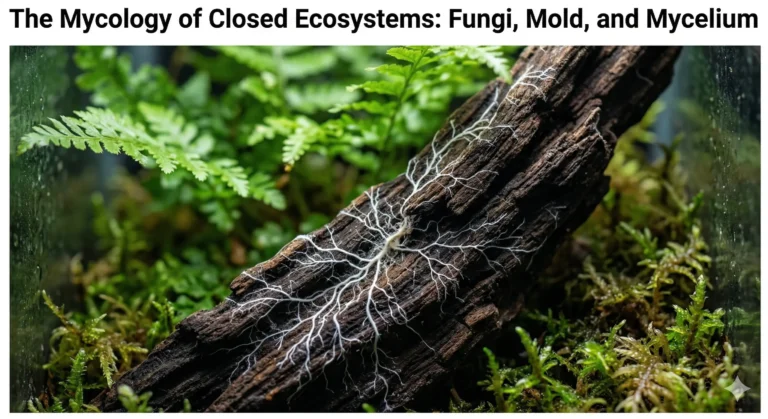
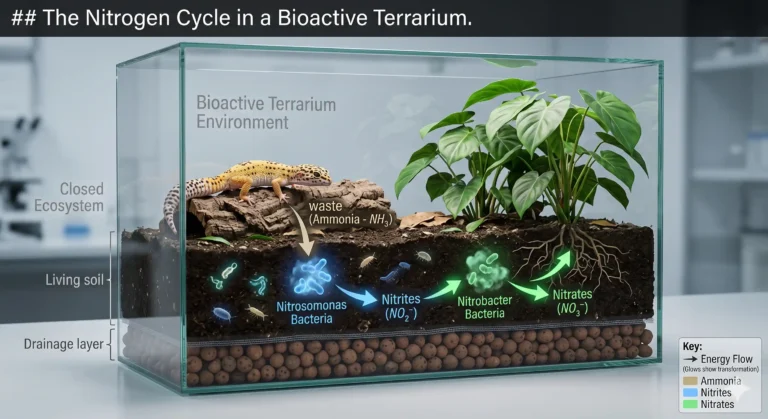
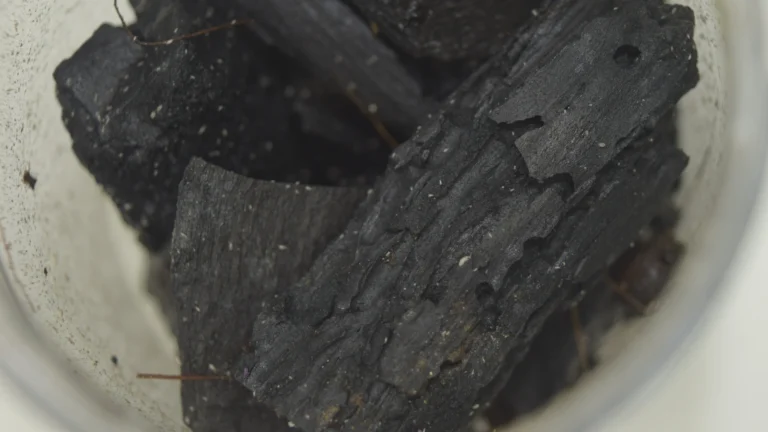
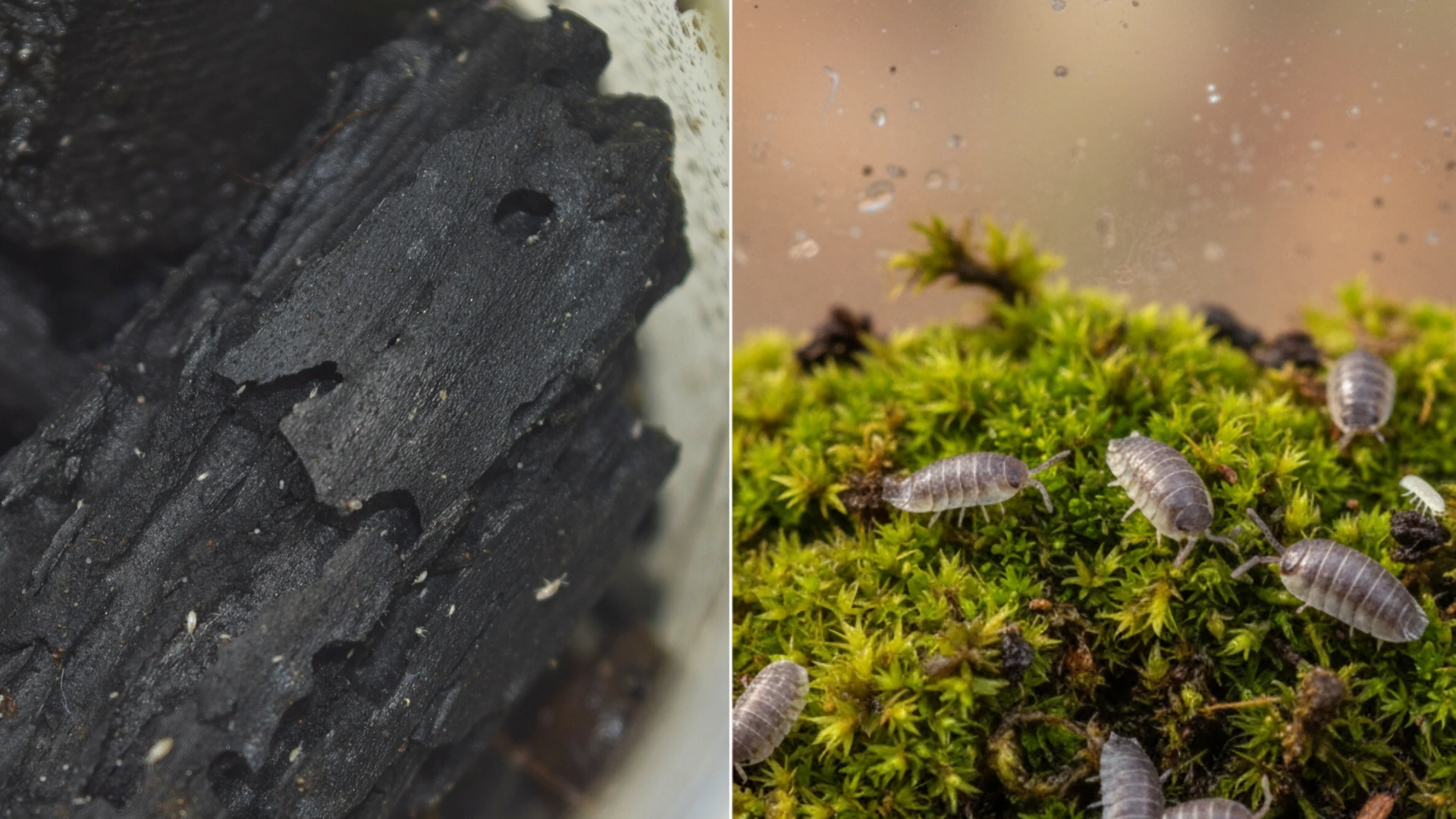
While isopods handle coarse detritus, springtails excel at micro-scale sanitation and nutrient cycling in humid bioactive enclosures. You leverage their rapid population turnover (10–21 days per generation at 22–24°C) to intercept fungal blooms within 24–48 hours. They graze spores, hyphae, and bacteria, delivering measurable Mold Suppression; expect visible mycelium reduction >70% in test dishes by day three. By tunneling through top 1–3 cm, they enhance Soil Aeration, lowering bulk density and increasing infiltration rates. Their frass mobilizes nitrogen and micronutrients, elevating nitrate by 10–25% in leachate assays. During gut passage they inoculate fragments with microbiota, and excreted NH4+ and mucus stimulate ammonification and nitrification, further accelerating nutrient release in the enclosure. Maintain RH 85–98%, pH 5.5–7.2, and leaf litter/charcoal matrices for ideal biofilm access. You’ll seed 50–200 individuals per liter of substrate and scale to bioload appropriately, avoiding nutrient bottlenecks. Monitor populations weekly and adjust moisture inputs accordingly.
Isopod Strengths and Roles in the Micro Cleanup Crew
Fragmenting coarse detritus, isopods act as the enclosure’s macro-saprophages, converting leaf litter, feces, and shed exuviae into microbe-ready particles. You leverage their mandible-driven comminution to accelerate Litter Breakdown, boosting microbial respiration and nitrification rates. Their coprophagy enriches substrate with partially digested lignocellulose and calcium carbonate, promoting fungal hyphae and stable aggregates. Across temperate and tropical species, gut transit times of 12–48 h and consumption rates of ~5–15% body mass/day translate to measurable Nutrient Redistribution.
- Carbon flux: frass C:N of 18–25 elevates plant-available nitrogen.
- Calcium cycling: molts add CaCO3, buffering pH toward 6.5–7.2.
- Structure: tunneling increases porosity 10–20%, enhancing gas exchange.
- Throughput: litter mass loss rises 20–40% at 50–150 isopods per liter.
Pair densities to enclosure volume for efficient detrital processing.
Complement these macro-saprophage functions with springtails—Nature’s janitors—which graze fungal hyphae and biofilms, modulate moisture, and rapidly boost microbial processing in bioactive setups to reduce mold blooms.
Limitations and Risks: When Each Option Falls Short
Because enclosure goals vary, both groups have clear failure modes you should quantify. Springtails crash rapidly under chemical residues; their Pesticide Sensitivity is high to copper, pyrethroids, and quaternary ammonium disinfectants, so you can lose 90–100% within days after routine treatments. They also plateau in detritus-rich systems, leaving proteins and lipids to foul if inputs exceed grazing capacity. Isopods introduce different risks: they can rasp live roots and delicate moss, scavenge soft eggs or molts, and outcompete slower microfauna. Larger species produce dense frass that accumulates faster than microbial turnover, requiring manual export. Both groups can mediate Pathogen Transmission by transporting spores, nematodes, or opportunistic bacteria across microhabitats, especially when you co-source cultures; quarantine, rinse protocols, and batch testing reduce event frequency and impact. Pairing both groups can enhance trophic buffering and accelerate humification, stabilizing bioactive systems under variable inputs.
Habitat Variables: Humidity, Temperature, and Bio-Load
Typically, humidity and temperature set the ceiling for both performance and survivorship in springtails and isopods. You’ll benchmark conditions by logging air RH, substrate water content, and surface temperatures at multiple depths. Springtails peak above 85% RH with minimal desiccation stress; many isopods tolerate 70–90% RH if they access damp refugia. Use Microclimate Mapping to locate cold, wet, and warm, dry zones, then tune ventilation and misting to stabilize Thermal Gradients and reduce mortality. Bio-load matters: higher waste and leaf-litter inputs raise microbial heat and CO2, accelerating oxygen demand and mold risk. Calibrate inputs to the crew’s processing rate.
When choosing springtail species, temperate lineages tolerate wider diel swings (operative ~5–28°C) and intermittent moisture, while tropical lineages perform best at 20–26°C with high RH and low vapor pressure deficit.
1) RH: 75–95% target bands by taxon.
2) Thermal Gradients: 18–26°C.
3) Substrate: 40–60% water holding capacity.
4) Bio-load: ≤2% enclosure mass per week maximum.
Pairing Strategies: Species Combinations That Work
When you pair springtails with isopods, select taxa that partition space and diet under your measured RH and thermal gradients to maximize detritus throughput and minimize interference. Empirically, epedaphic springtails (e.g., Entomobrya, Seira) complement macro-litter grazers like Porcellio scaber in 55–70% RH, 18–24°C, reducing mold incidence by ~30% in mixed trials. For high-RH systems (80–95%, 22–28°C), Sinella curviseta with Trichorhina tomentosa yields rapid spore suppression and fine-particulate turnover. In saturated leaf-litter, Folsomia candida pairs efficiently with Porcellionides pruinosus, which tolerates transient anoxia. Apply Size Matching: dwarf isopods with small-bodied springtails; larger Armadillidium with robust Entomobrya to limit trampling artifacts. Use Color Coordination for field counts: contrasting morphs raise detection probability and bias-correct your occupancy estimates without altering function. Maintain species provenance to reduce aggression. At calibrated springtail stocking (0.5–2 per g substrate), expect 30–60% reductions in mold cover within 7–10 days, reinforcing microbial balance alongside isopods.
Care and Maintenance: Feeding, Substrate, and Population Control
Building on species combinations that partition space and diet, you now standardize feeding, substrate, and population control to match the RH–temperature setpoints above. You’ll align inputs to measured consumption, not habit. Weigh food, log residues, and adjust Feeding Schedules weekly by ±10% based on 48‑hour disappearance and NH3/VOC readings.
- Feed: 0.5–1.5% biomass/day; protein ≤20% DM to limit frass nitrogen. Offer microbe-heavy flakes for springtails; lignocellulose for isopods.
- Substrate Sterilization: Bake 80–90°C for 60 minutes or pressure‑steam 15 psi for 20 minutes. Re‑inoculate with a known microbial starter.
- Moisture: Maintain springtail zones at 85–95% RH; isopod zones at 70–85% RH; verify with data loggers.
- Population control: Cull or rehome when catches exceed 5 per pitfall/hour; reduce feed 15%, add leaf‑litter refugia, and quarantine escapees promptly.
During hot spells in India, track culture temperatures because Folsomia candida fecundity drops when weekly means exceed 28–30°C; deploy heat‑safe culture setups to keep springtail zones near 22–26°C and 85–95% RH.
Frequently Asked Questions
Are Springtails or Isopods More Cost-Effective to Start and Maintain?
Springtails are more cost-effective—who’d guess frugal decomposers win? Initial costs run $5–15 per starter culture; Ongoing expenses average <$1/month for yeast and charcoal. You’ll pay more for isopods: $15–50 stock, calcium, leaf litter, bins, protein.
What Legal or Regulatory Restrictions Apply to Keeping Isopods or Springtails?
You must follow pet regulations and conservation laws: check invasive species lists, obtain permits for collection, avoid interstate transport of restricted taxa (e.g., Lacey Act), document source, quarantine cultures, sterilize substrates, and don’t release organisms.
Can These Microfauna Trigger Human Allergies or Indoor Air Issues?
Yes, but rarely—like Pandora’s box, fear exceeds data. You’ll see minimal Aeroallergen Release; studies show low antigenicity versus dust mites. Moist enclosures elevate mold spores and particulates, trigger Asthma Exacerbation in sensitized people. Ventilate, dehumidify.
How Do Shipping and Seasonal Temperatures Affect Ordering Live Cultures?
You’ll adjust orders to seasonal extremes; low thermal tolerance increases mortality below 5°C or above 32°C. Use insulated packaging, heat/cold packs, and 1–3 day delivery timing. Avoid weekend holds; always request DOA guarantees with documentation.
What Signs Indicate Ethical, Sustainable Sourcing From Reputable Suppliers?
You’d look for signs where Traceable Origins and Transparent Practices coincide: third-party certifications, audit reports, batch-level chain-of-custody, COAs, legal permits, welfare standards, LCA data, supplier scorecards, corrective-action logs, published impact metrics, and responsive, time-stamped documentation.
Conclusion
You don’t pick a winner; you tune a system. Treat springtails and isopods like complementary gears, meshing to drive nutrient cycling. You deploy springtails for fungal control and microfragmentation under 80–100% RH; you leverage isopods for macro-detritus and calcium recycling at 70–85°F with leaf-litter inputs >1 g/ft²/wk. Track CO2, ammonia, and mold incidence; adjust moisture, aeration, and feeding. Pair species by size and molt rate, and cull densities >200/ft² to prevent damage and resource crashes.