The integration of bioactive herpetoculture into the husbandry of the ball python (Python regius) represents a significant advancement from traditional keeping methodologies. Rather than relying on inert materials like paper towels or reptile carpet, a bioactive enclosure cultivates a functional, self-sustaining micro-ecosystem. This framework utilizes a biologically active substrate matrix, live botanical elements, and a detritivorous microfauna population—commonly referred to as the clean-up crew—to metabolize organic waste, manage fungal growth, and regulate ambient environmental conditions.
Here at our Springtails.in facility in India, I regularly speak with keepers struggling to manage the immense bioload of a heavy-bodied constrictor. Traditional sterile setups require constant maintenance, but a well-designed bioactive approach transforms the enclosure into a self-cleaning ecosystem. However, engineering this habitat for a ball python presents distinct biological challenges. Maintaining these complex, high-humidity ecosystems across the Indian subcontinent requires advanced meteorological anticipation, as keepers must navigate the extreme thermal spikes of summer and the saturated atmospheric conditions of the monsoon season.
How deep should bioactive substrate be for snakes?
Bioactive substrate for a ball python should be maintained at a depth of 4 to 6 inches. This exact measurement ensures adequate space for live plant root systems to anchor firmly, provides a stable moisture gradient for the microfauna clean-up crew, and prevents heavy constrictors from crushing the drainage layer.
Formulating an Ecologically Sound Substrate Matrix
The substrate acts as the primary bioreactor within the vivarium, facilitating the nitrogen cycle and harboring beneficial microbial populations. The substrate must strike a precise balance between moisture retention, aeration, and structural integrity. The optimal bioactive substrate composition for a ball python relies on specific ratios to prevent compaction under the animal’s weight.
To build a resilient foundation, follow this step-by-step process:
- Install the Drainage Layer: Pour a 1.5 to 2-inch basal drainage layer composed of expanded clay aggregates or lightweight gravel. This aquifer captures excess water percolating through the soil, preventing anaerobic bacteria buildup.
- Secure the Mesh Barrier: Position a permeable synthetic mesh barrier between the drainage aquifer and the organic substrate. This prevents soil migration into the water layer.
- Mix the Primary Organic Soil: Combine 40% to 50% organic topsoil (free of chemical fertilizers) with 20% to 30% coconut coir. The topsoil provides bulk density and mineral content for plants, while the coconut coir delivers exceptional moisture retention without rapid decomposition.
- Add Aeration Components: Blend in 15% to 20% orchid bark and 5% to 10% horticultural charcoal. The bark creates interstitial air pockets so the heavy constrictor does not compact the soil. The charcoal acts as a carbon reservoir, filtering chemical impurities and offering massive surface area for beneficial bacterial colonization.
- Incorporate Hydration Stations: Mix in 5% long-fiber sphagnum moss. This retains localized pockets of high hydration, supporting the reproductive cycles of moisture-dependent microfauna. For additional details on optimizing these mixtures, you can review our dedicated guide on the best bioactive substrate for springtails.
- Apply the Biodegradable Surface Layer: Cover the substrate with a generous layer of dried leaf litter. Leaf litter serves as the primary nutritional driver for the detritivore population and provides essential security cover for the python.
To prevent the introduction of predatory centipedes or pathogenic fungi into the sterile enclosure environment, all locally foraged leaves must be subjected to thermal sterilization. You can bake the leaves at 140°F for twenty minutes or submerge them in boiling water for ten minutes.
Managing Humidity: The Summer Heat vs. The Indian Monsoon
Python regius requires precise thermal and hygrometric gradients to facilitate digestion and immune function. The ideal enclosure parameters dictate a cool side ambient temperature of 78-82°F, a localized warm basking zone of 88-92°F, and a constant relative humidity of 60-80%. Maintaining these conditions against the extremes of the Indian climate requires proactive husbandry adjustments.
Combating Extreme Summer Heatwaves During the peak summer months, regions across the subcontinent frequently endure ambient temperatures exceeding 100°F. Because reptiles are ectothermic, an ambient enclosure temperature rising above 85°F on the cool side eliminates the snake’s ability to thermoregulate, rapidly inducing fatal heat stress.
- Always regulate primary heating elements with high-quality proportional thermostats.
- If you lack room air conditioning during a severe heatwave, physically move the enclosure to the lowest, coolest level of your home, away from exterior walls.
- During grid power outages, deploy emergency localized cooling. Insulate frozen water bottles in thick towels to prevent direct scale frostbite, and place them inside the enclosure to introduce a thermal sink that safely draws heat from the ambient air.
Surviving the High-Humidity Monsoon Conversely, the onset of the southwest monsoon introduces a completely different environmental hazard. Coastal and central cities experience sustained relative humidity above 85%, often coupled with drops in barometric pressure. In a bioactive terrarium, a heavily saturated, stagnant substrate quickly degrades the python’s ventral lipid barrier, resulting in necrotizing dermatitis, commonly known as “scale rot”. Additionally, stagnant, hyper-humid air acts as a primary vector for respiratory infections, identifiable by audible wheezing, excessive yawning, and glottal mucus discharge.
- Restrict all moisture input during the monsoon. Abandon automated misting systems and limit watering strictly to the plant root zones.
- Increase ambient ventilation by adjusting the enclosure’s top screen covers.
- Transition from under-tank heating to overhead Ceramic Heat Emitters (CHEs). Overhead heating effectively lowers relative humidity by actively drying the uppermost substrate layers.
Building Your Clean-Up Crew for Heavy Bioloads
The functionality of the entire ecosystem rests upon the microfauna. A ball python’s biological output necessitates a robust, multi-tiered detritivore population to process organic waste efficiently.
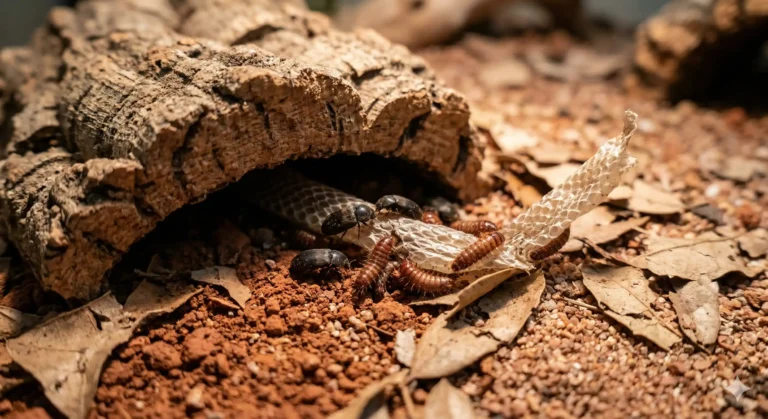
Macro-Decomposers: Isopods Isopods function as the macro-decomposers, utilizing their mandibular strength to consume shed snake skin, decaying botanical matter, and solid fecal deposits. Due to the heavy bioload and the physical weight of the python, delicate isopod species often suffer population collapses. Hardy, prolific species commercially available in India—such as Porcellionides pruinosus (Powder Blue or Powder Orange) and Porcellio laevis (Dairy Cow)—demonstrate excellent tolerance for the 80-90°F thermal gradient. They reproduce rapidly enough to sustain their numbers despite the snake’s mechanical disruption.
Secondary Processors: Springtails Springtails (Collembola) operate as secondary processors and obligate fungivores. In the humid, warm confines of a python enclosure, saprophytic fungi and mold rapidly colonize uneaten organic matter. Springtails graze aggressively on these fungal spores, acting as the primary biological defense against enclosure putrefaction. To understand the exact mechanics of this relationship, read our breakdown on the role of springtails in bioactive setups.
When establishing this microfauna population, biosecurity must be your primary consideration. Wild-caught or poorly sourced insects often harbor predatory mites, including the hematophagous snake mite (Ophionyssus natricis), which can decimate a reptile collection. To establish this ecosystem safely and calculate exactly how many springtails to seed for your tank size, we recommend you source your crew securely. For best results, we highly recommend you buy springtails in India directly from our facility. Our cultures are Pest-Free, Lab-Grown in India, and backed by a Live Arrival Guarantee. With our Pan-India Express Shipping, you can confidently inoculate your vivarium without risking pathogen transmission.
Selecting Sturdy Plants for a Heavy-Bodied Constrictor
Adult Python regius specimens routinely exceed 1,500 grams and exhibit nocturnal foraging behaviors characterized by indiscriminately flattening delicate flora. Thin-stemmed terrarium plants and fragile ferns will not survive this mechanical trauma. Botanical integration must prioritize rapid root establishment and high tensile strength.
Here are the top plant selections for heavy constrictors:
- Epipremnum aureum (Pothos): This trailing vine exhibits rapid regeneration. It provides excellent cryptic cover and tolerates significant physical trampling.
- Sansevieria trifasciata (Snake Plant): The rigid, sword-like leaves withstand lateral pressure without snapping. It is highly tolerant of fluctuating moisture levels.
- Dracaena spp.: These plants feature strong central stalks that act as physical anchor points for climbing. They thrive in the ambient 80-90°F heat required for python enclosures.
To secure these plants against uprooting, allow the enclosure to cycle without the snake for a minimum of four weeks. This permits the root systems to anchor firmly into the drainage mesh. Positioning heavy, flat slate or cork bark directly over the root crowns provides physical armor against the python’s burrowing tendencies.
Frequently Asked Questions (FAQ)
Can springtails and isopods process all of the snake’s waste?
While a healthy clean-up crew consumes shed skin and standard fecal matter, they cannot metabolize solid uric acid (urates). These concentrated white mineral deposits require manual spot-cleaning by the keeper to prevent ammonia accumulation and substrate toxicity.
How do I eradicate fungus gnats during the Indian monsoon?
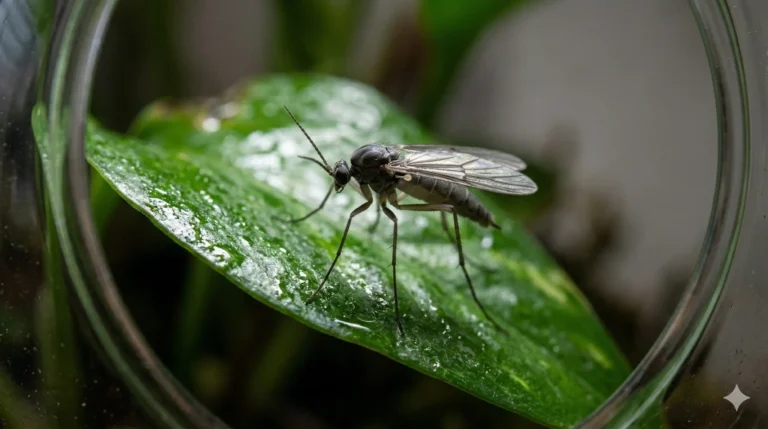
Fungus gnats (Bradysia spp.) proliferate during the humid monsoon season, laying eggs in damp topsoil. The most effective eradication protocol involves restricting moisture to allow the top two inches of substrate to desiccate, breaking the larval reproductive cycle. Supplemental watering with Bacillus thuringiensis israelensis (BTI)—often found in mosquito bits—targets and neutralizes dipteran larvae without harming the beneficial springtails, isopods, or the snake. You can read more about dealing with micro-infestations in our guide on .
Should a ball python be fed inside a bioactive enclosure?
Yes. Removing a ball python to a separate, sterile container for feeding induces severe post-ingestion handling stress, significantly elevating the risk of regurgitation. To prevent the snake from accidentally ingesting the bioactive soil matrix during the strike, present prey items on a designated, flat feeding surface, such as a large piece of sterilized cork bark or a ceramic plate placed temporarily within the enclosure.
Frequently Asked Questions (FAQ)
Can springtails and isopods process all of the snake’s waste?
While a healthy clean-up crew consumes shed skin and standard fecal matter, they cannot metabolize solid uric acid (urates). These concentrated white mineral deposits require manual spot-cleaning by the keeper to prevent ammonia accumulation and substrate toxicity.
How do I eradicate fungus gnats during the Indian monsoon?
Fungus gnats (Bradysia spp.) proliferate during the humid monsoon season, laying eggs in damp topsoil. The most effective eradication protocol involves restricting moisture to allow the top two inches of substrate to desiccate, breaking the larval reproductive cycle. Supplemental watering with Bacillus thuringiensis israelensis (BTI)—often found in mosquito bits—targets and neutralizes dipteran larvae without harming the beneficial springtails, isopods, or the snake. You can read more about dealing with micro-infestations in our guide on .
Should a ball python be fed inside a bioactive enclosure?
Yes. Removing a ball python to a separate, sterile container for feeding induces severe post-ingestion handling stress, significantly elevating the risk of regurgitation. To prevent the snake from accidentally ingesting the bioactive soil matrix during the strike, present prey items on a designated, flat feeding surface, such as a large piece of sterilized cork bark or a ceramic plate placed temporarily within the enclosure.