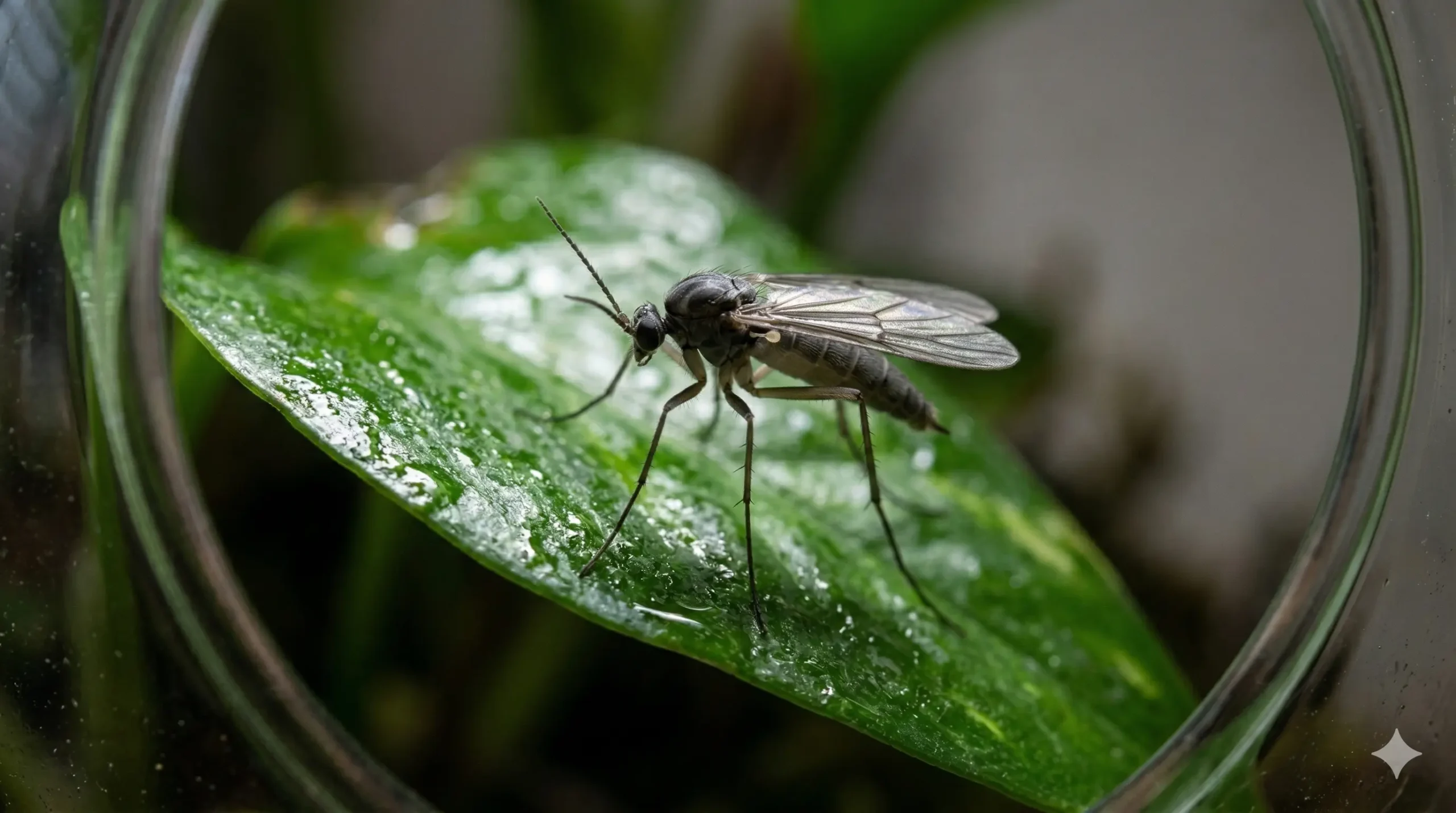
The stability of a bioactive terrarium relies entirely on the precise equilibrium of its microfauna, substrate chemistry, and moisture levels. When this equilibrium fractures, opportunistic pests rapidly colonize the environment. Among the most pervasive and destructive of these invaders are fungus gnats. These persistent insects transform carefully cultivated habitats into breeding grounds, compromising plant health, irritating inhabitants, and destabilizing primary cleanup crews. To kill fungus gnats naturally and restore ecological balance, keepers must bypass superficial chemical sprays and implement systemic biological controls.
Here at our Trenoya culturing facility in India, founder Amitabh and the team have spent years developing protocols to combat these exact issues. We understand that managing a closed ecosystem requires specialized knowledge. This report provides a detailed framework for diagnosing, managing, and permanently eliminating a fungus gnats terrarium infestation, with specialized protocols adapted for extreme seasonal fluctuations.
Morphological and Behavioral Profiling of Fungus Gnats
To effectively neutralize terrarium pests, exact taxonomic identification is required. Misidentifying fungus gnats as fruit flies or shore flies often leads to the deployment of ineffective treatments.
Fungus gnats belong primarily to the families Sciaridae and Mycetophilidae, with Bradysia impatiens and Bradysia ocellaris being the most dominant species encountered in indoor horticulture and bioactive setups.
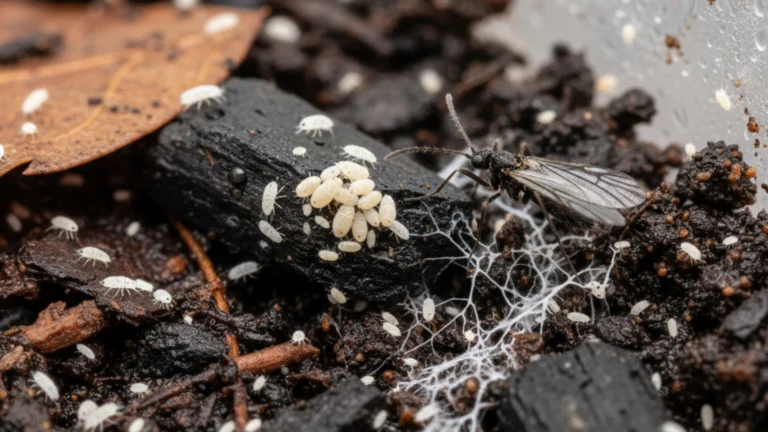
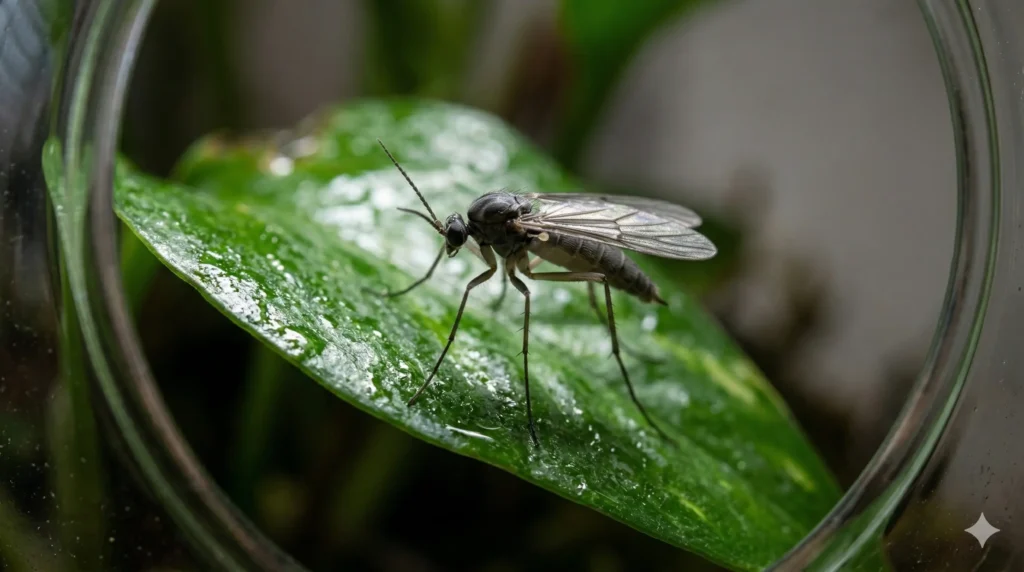
Adults are small, delicate flies measuring approximately 1.5 to 3.0 millimeters in length. They are characterized by:
- A mosquito-like appearance with long, segmented antennae that extend beyond the head.
- Long, dangling legs and a frail, dark-gray to black body.
- Distinctive wing venation, specifically a prominent Y-shaped vein near the tip of their transparent wings.
- Weak, erratic flight patterns, preferring to sprint across the substrate surface or rest on lower foliage.
The adult flies are primarily a cosmetic nuisance; the actual destruction occurs beneath the soil surface. Fungus gnat larvae represent the active feeding stage. They appear as translucent to whitish, legless maggots reaching up to 6 millimeters in length, possessing a highly distinct, shiny black head capsule. They reside exclusively in the top 2 to 5 centimeters of damp substrate.
The Pathogenesis of Gnat Infestations
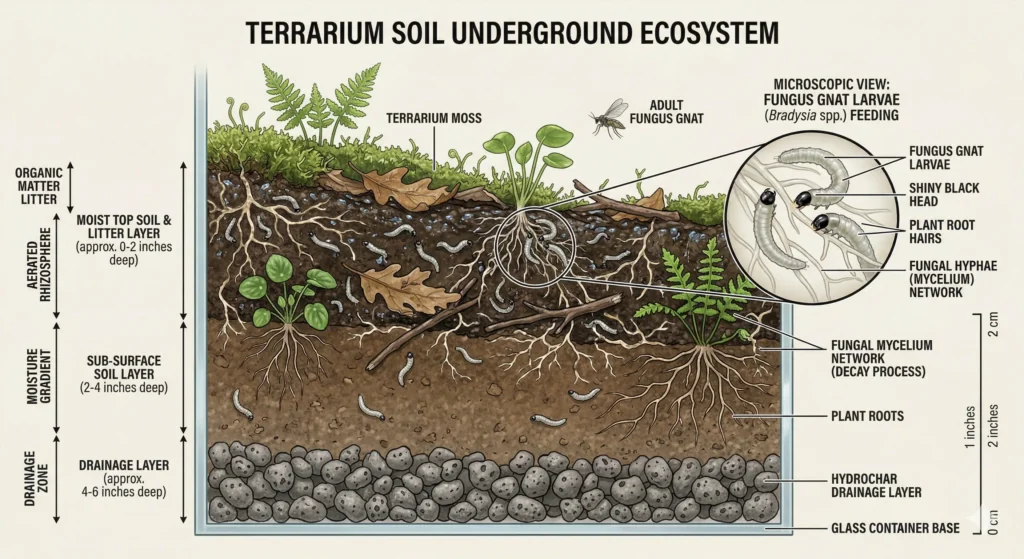
Fungus gnats are biologically programmed to seek out damp, decaying organic matter. In a terrarium, the combination of high humidity, decomposing leaf litter, and botanical root systems provides an optimal nursery. The pathogenesis of an infestation occurs through direct physical trauma and pathogen transmission.
Larvae utilize their chewing mouthparts to consume fungal mycelium and decaying plant matter. When populations surge and primary food sources deplete, the larvae turn their attention to living plant tissue. They systematically strip delicate root hairs from tropical plants, ferns, and mosses. This mechanical damage stunts plant growth, induces sudden wilting, and causes the yellowing of lower foliage.
Furthermore, fungus gnats are highly efficient vectors for virulent soil-borne pathogens. Larvae ingest spores of Pythium (water mold), Fusarium, and Thielaviopsis (black root rot). These spores remain viable within the digestive tract of the insect and are deposited deep into the substrate through fecal excretion, frequently resulting in rapid plant collapse.
Do springtails eat fungus gnat larvae?
Springtails do not consume fungus gnat larvae. As obligate detritivores, springtails lack predatory anatomical structures. Instead, dense springtail populations manage fungus gnats through intense resource competition by rapidly consuming the decaying organic matter, soil fungi, and mold that gnat larvae require for early-stage development and survival.
Resource Competition and Bioactive Integration
The fundamental principle of bioactive terrarium maintenance is competitive exclusion. A sterile environment does not exist in nature; every available biological niche will be filled. If beneficial microfauna do not occupy the substrate, pathogenic fungi and invasive pests will.
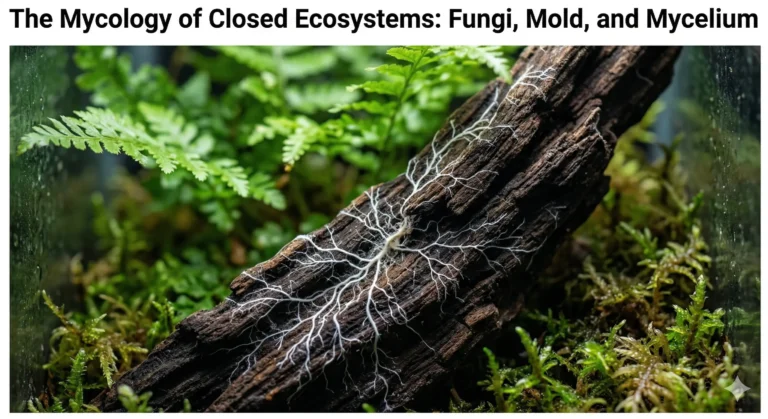
Springtails (Collembola) are the primary defense mechanism against fungus gnats. These wingless microarthropods are highly efficient fungivores. By heavily seeding a terrarium with an established bioactive cleanup crew, these organisms consume the exact fungal networks that adult gnats seek out for oviposition and that gnat larvae require for nutrition.
To ensure this competitive barrier is immediately effective, we supply Trenoya Live Springtails that are strictly Lab-Grown in India. Cultured specifically as a Pest-Free cleanup crew, they are packaged in specialized 200ml pet jars. Rather than leaving keepers to guess how to maintain their ecosystem janitors, every jar features dedicated QR-code care guides printed directly on the lid. We ensure that every container delivers dense, active colony sizes of 30 to 100+ adults and juveniles. Recognizing the logistical challenges of transporting live organisms across diverse climatic zones, we secure every order with a Live Arrival Guarantee, facilitated by our Pan-India Express Shipping network.
Navigating the Indian Climate: Monsoon Humidity and Summer Heat
Managing a bioactive ecosystem in India requires specialized environmental engineering. Extreme seasonal shifts heavily influence the reproductive cycles of terrarium pests.
Monsoon Humidity Management
The Indian monsoon season introduces ambient relative humidity (RH) levels frequently exceeding 85%. For closed or semi-closed terrariums, this external moisture drastically limits the evaporation rate of the internal substrate. Substrates that normally dry out within three days may remain saturated for weeks. The prolonged dampness of the topsoil creates an infinite breeding ground for Sciaridae, accelerating fungal blooms and providing unlimited food for gnat larvae.
During the monsoon, implementing precise monsoon springtail culture care is necessary. Keepers must actively intervene by increasing mechanical airflow, utilizing micro-fans to disrupt the boundary layer of stagnant, humid air resting on the soil.
Summer Heat and Thermal Stress
Conversely, the intense heat of the Indian summer, where ambient temperatures regularly exceed 35°C, presents an opposing threat. High temperatures increase the vapor pressure deficit, causing the terrarium substrate to dry out rapidly. Many keepers overcompensate by aggressively misting the enclosure. This overwatering floods the lower drainage layers, turning the substrate anaerobic. The combination of heat and stagnant water accelerates root rot and bacterial decay, instantly attracting swarms of fungus gnats. Hydration must be applied directly to the root zones via targeted injection, leaving the top two centimeters of the substrate bone-dry to deter egg-laying females.
| Season | Primary Threat | Environmental Impact | Management Strategy |
| Monsoon | High Ambient RH (>85%) | Substrate remains saturated; rapid fungal blooming. | Increase mechanical ventilation; withhold heavy misting. |
| Summer | Extreme Heat (>35°C) | Substrate desiccates; overwatering floods drainage layers. | Target hydration to root zones; maintain a dry topsoil cap. |
Targeted Eradication: Bacillus thuringiensis israelensis (Bti)
When a fungus gnats terrarium infestation has successfully entrenched itself within the substrate, resource competition alone is insufficient. The most effective, scientifically validated method to kill fungus gnats naturally is the application of Bacillus thuringiensis subspecies israelensis (Bti).
Bti is a naturally occurring soil bacterium. During its sporulation phase, Bti produces parasporal crystals containing highly specific protein toxins. When a fungus gnat larva ingests the Bti spores, the highly alkaline environment of the larva’s midgut dissolves the crystalline matrix, releasing active toxins. These toxins bind to receptor proteins on the gut lining, causing the cells to rupture. The larva stops feeding within minutes and dies of starvation within 24 to 48 hours.
The biological brilliance of Bti lies in its extreme specificity. The receptor proteins required for the toxins to bind do not exist in the digestive tracts of mammals, reptiles, amphibians, or plants. More importantly, Bti is entirely harmless to isopods and springtails, ensuring the bioactive integrity of the terrarium remains intact.
To apply Bti effectively:
- Steep 4 tablespoons of Bti granules (commonly sold as mosquito bits) in one gallon of warm, dechlorinated water for 24 to 48 hours.
- Strain the liquid to remove solid corn-cob carriers, which can mold.
- Drench the terrarium substrate heavily, ensuring penetration into the top 5 centimeters.
- Repeat this application once a week for four consecutive weeks to systematically break the entire life cycle of the gnats.
The Predatory Mite Paradox
A frequently proposed biological control for fungus gnats is the introduction of predatory mites, most notably Stratiolaelaps scimitus (formerly Hypoaspis miles). These soil-dwelling mites aggressively hunt and consume fungus gnat larvae.
While highly effective in commercial monoculture greenhouses, their application in a bioactive terrarium presents a significant ecological paradox. Stratiolaelaps scimitus is a generalist predator. Once the population of fungus gnat larvae is depleted, these mites switch their dietary focus to the next available protein source: the springtail colony. Predatory mites possess the speed to hunt down and consume juvenile springtails, and their introduction frequently results in the total eradication of the terrarium’s primary cleanup crew. Predatory mites should be viewed as an absolute last resort.
Advanced Diagnostics and Culture Auditing
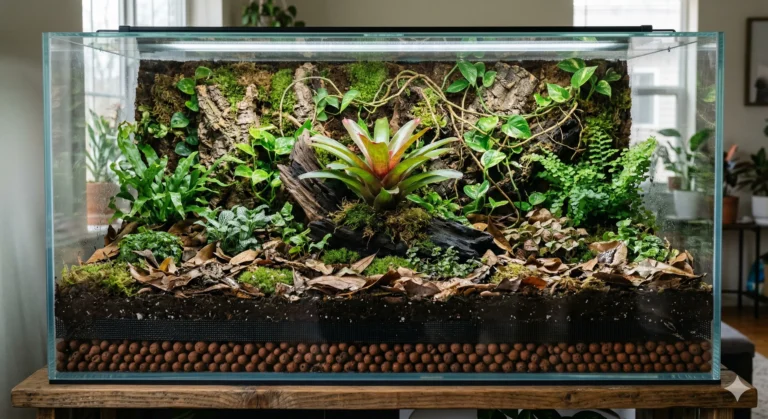
Prevention remains the most effective cure. Structuring the abiotic elements of the terrarium correctly suppresses pest populations without requiring intervention. Integrating significant volumes of horticultural charcoal, calcined clay (LECA), and coarse orchid bark creates macroscopic air pockets within the soil matrix, ensuring the top layer of the substrate dries quickly.
When addressing severe infestations or scaling up production, isolation protocols become necessary. Facilities and hobbyists must audit their substrates regularly to differentiate between harmless microfauna and invasive species. To establish a baseline of hygiene and isolate compromised enclosures before they infect your main displays, we recommend reviewing our targeted protocols for managing springtail pests like gnats and mites in India.
Procuring microfauna from questionable sources frequently introduces dormant pest eggs into the terrarium. Sourcing verified, pest-free specimens guarantees that cultures are untainted by wild soil contaminants, maintaining the highest standard of terrarium hygiene.
Frequently Asked Questions (FAQ)
Will bit mosquito dunks harm my isopods or reptiles?
No. Bacillus thuringiensis israelensis targets a specific alkaline receptor found exclusively in the midgut of dipteran larvae (flies, mosquitoes, and gnats). Isopods, springtails, reptiles, amphibians, and plants completely lack these receptors, making Bti 100% safe for all non-target organisms in your bioactive enclosure.
How long does it take for Bti to eradicate a fungus gnat infestation?
Bti acts rapidly on the larvae, causing them to stop feeding within minutes and die within 48 hours. However, Bti does not kill adult gnats or unhatched eggs. Because the complete life cycle of a fungus gnat takes up to four weeks, you must apply Bti drenches weekly for 28 to 30 days to catch and kill all newly hatching larvae.
Can I use hydrogen peroxide to kill fungus gnats in a bioactive setup?
While a diluted hydrogen peroxide soil drench will kill fungus gnat eggs and larvae on contact by oxidizing their cell walls, it is entirely non-selective. Hydrogen peroxide will also instantly kill your springtails, dwarf isopods, beneficial soil bacteria, and mycorrhizal fungi. It effectively sterilizes the soil, destroying the bioactive nature of the terrarium.
Do carnivorous plants help control fungus gnat populations?
Yes, integrating small carnivorous plants like Butterworts (Pinguicula spp.) or Sundews (Drosera spp.) can serve as an excellent supplementary control method. The sticky, glandular leaves of these plants naturally attract and trap adult fungus gnats. However, they only address the adult flying stage and must be combined with a larval control method for complete eradication.